



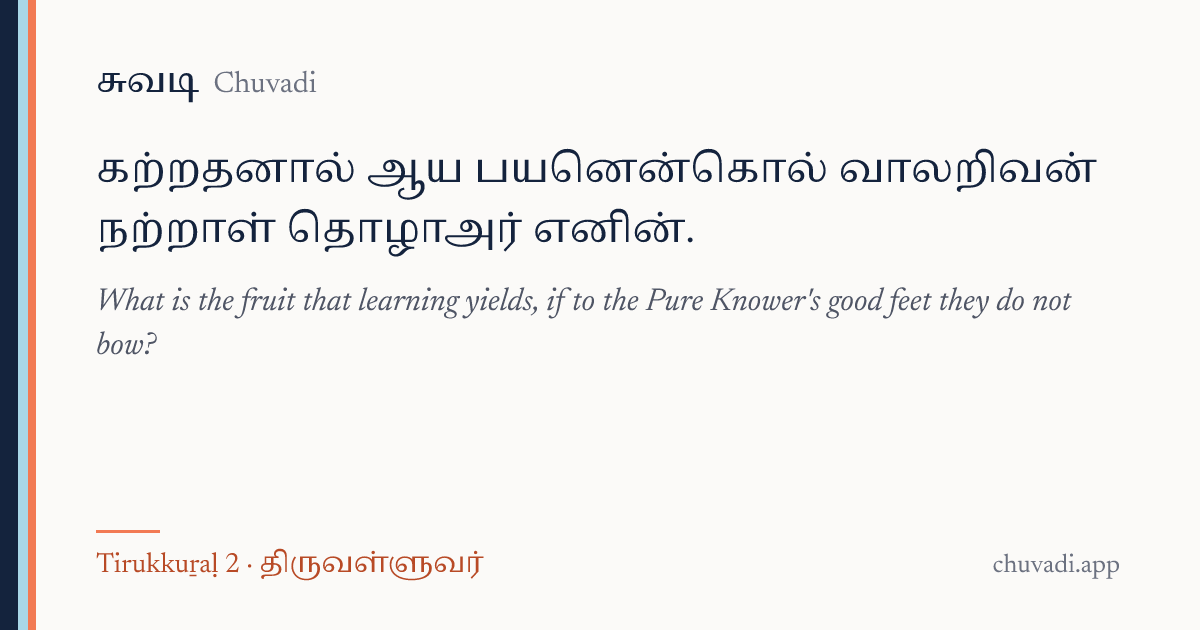
திருக்குறள் 2
பாடல் · The poem
Tap a word to see where else it occurs.
பொருள் · Meaning in TamilAI
தூய அறிவின் வடிவான இறைவனின் நல்ல திருவடிகளை வணங்காதவர்களாக இருந்தால், அவர்கள் எவ்வளவு கற்றிருந்தாலும் அந்தக் கல்வியால் அவர்களுக்குக் கிடைக்கும் பயன்தான் என்ன?
கடவுள் வாழ்த்து அதிகாரத்தில் கல்வியின் முடிவான பயனைச் சுட்டும் குறள். ‘வாலறிவன்’ என்றால் குற்றமற்ற முழுமையான அறிவு உடையவன்; அறிவைத் தேடும் கல்வி, அறிவின் முழுமையை வணங்குவதில் நிறைவடைய வேண்டும் என்பது கருத்து. கேள்வி வடிவம் ‘பயன் இல்லை’ என்பதை அழுத்திச் சொல்கிறது.
ஆங்கிலம் · English translationAI
Translation
- What is the fruit that learning yields, if to the Pure Knower's
- good feet they do not bow?
What the poem says
A rhetorical question turns on the purpose of education. Learning, the couplet suggests, is not an end in itself: if it does not lead a person to worship, its fruit is nothing.
The title given to God is vāl-aṟivaṉ, 'the one whose knowledge is pure' (vāl is literally 'white, clean'). The choice is pointed: in a couplet about human learning, God is named by perfect knowledge, so the lesser knowledge is meant to bow to the greater. 'Feet' (tāḷ) here and throughout the chapter stands for the deity approached in humility, the usual Indian gesture of reverence.
யாப்பு · Metre: veṇpā scansion
வெண்பா Scans as a veṇpā as printed: every சீர் is one a veṇpā allows, and every join keeps வெண்டளை.
நேர் one letter, short or long, with any consonant after it · நிரை a short letter with the letter after it · a final உ before a vowel is dropped, and ஐ after a word's first letter counts as short.