



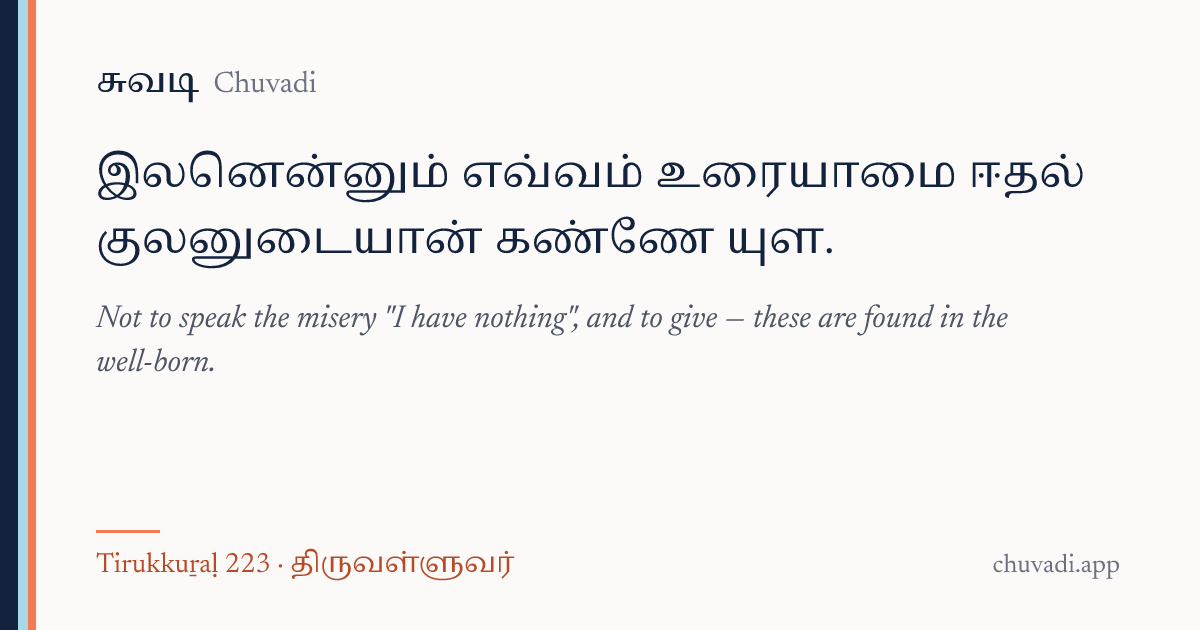
திருக்குறள் 223
பாடல் · The poem
Tap a word to see where else it occurs.
பொருள் · Meaning in TamilAI
‘என்னிடம் இல்லை’ என்னும் துயரச் சொல் சொல்லப்படாதபடி கொடுக்கும் பண்பு, நற்குடியில் பிறந்தவரிடமே காணப்படும்.
ஈகை அதிகாரத்தின் இந்தக் குறளுக்கு இரு பொருள் கொள்ளப்படுகிறது: இரப்பவன் தன் இல்லாமையைச் சொல்லி வருந்தும் முன்பே கொடுப்பது என்றும், கொடுப்பவன் ‘என்னிடம் இல்லை’ என்று தட்டிக்கழிக்காமல் கொடுப்பது என்றும் புரிந்துகொள்ளப்படுகிறது.
ஆங்கிலம் · English translationAI
Translation
- Not to speak the misery "I have nothing", and to give —
- these are found in the well-born.
What the poem says
The well-born, kulaṉuṭaiyāṉ, give, and do not say "I have nothing".
The line is read in two main ways. Some traditional commentators take it as the giver's restraint: he never refuses a petitioner with the excuse of poverty. Others read it as the giver sparing the asker the humiliation: he gives before the poor man has to speak his misery, evvam. Both readings make giving an act of tact as well as generosity; the Tamil does not decide between them.
யாப்பு · Metre: veṇpā scansion
வெண்பா Scans as a veṇpā as printed: every சீர் is one a veṇpā allows, and every join keeps வெண்டளை.
நேர் one letter, short or long, with any consonant after it · நிரை a short letter with the letter after it · a final உ before a vowel is dropped, and ஐ after a word's first letter counts as short.