



திருக்குறள் 227
பாடல் · The poem
Tap a word to see where else it occurs.
பொருள் · Meaning in TamilAI
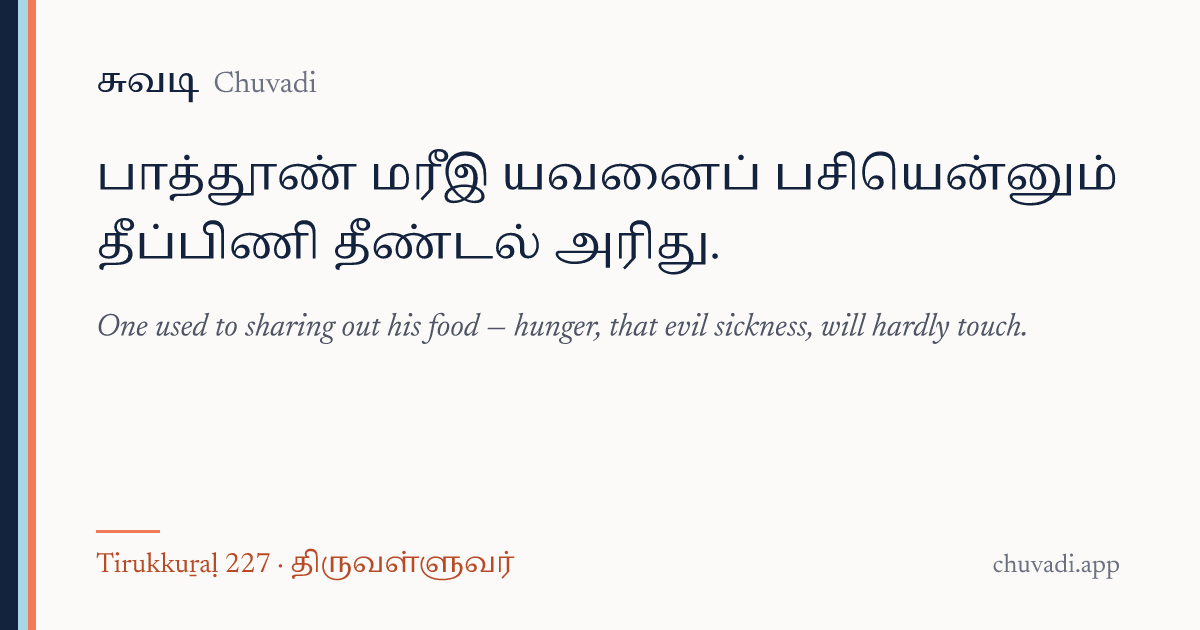
தன் உணவைப் பிறரோடு பகிர்ந்து உண்ணும் பழக்கம் உடையவனைப் பசி என்னும் கொடிய நோய் தீண்டுவது அரிது.
பசியை ஒரு கொடிய நோயாக உருவகப்படுத்துகிறது ஈகை அதிகாரம். ‘பாத்தூண்’ என்பது பகுத்துப் பிறர்க்கும் கொடுத்து உண்ணும் உணவு.
ஆங்கிலம் · English translationAI
Translation
- One used to sharing out his food — hunger,
- that evil sickness, will hardly touch.
What the poem says
Pāttūṇ is food divided and shared. The man accustomed, marīi, to sharing his meals will not be touched by the evil disease called hunger.
The couplet calls hunger a tīppiṇi, a fiery or evil disease. Its claim may be meant literally (the generous man will always find food, since others will share with him) or morally (the merit of sharing protects him from want). The tone is reassuring rather than threatening.
யாப்பு · Metre: veṇpā scansion
வெண்பா Scans as a veṇpā as printed: every சீர் is one a veṇpā allows, and every join keeps வெண்டளை.
நேர் one letter, short or long, with any consonant after it · நிரை a short letter with the letter after it · a final உ before a vowel is dropped, and ஐ after a word's first letter counts as short.