



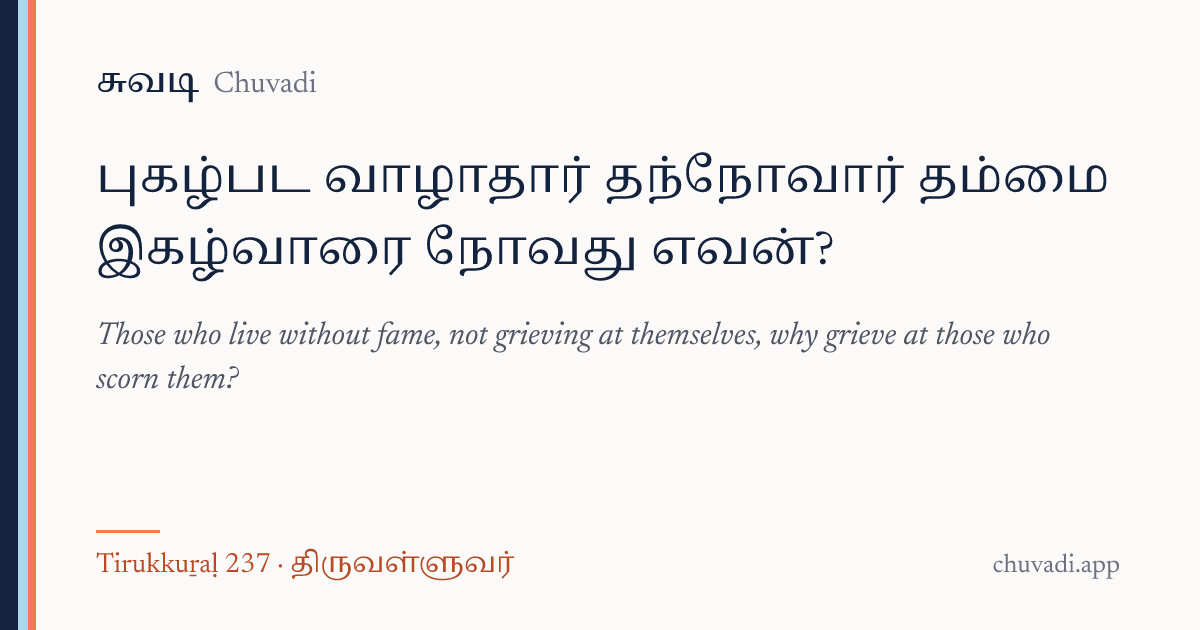
திருக்குறள் 237
பாடல் · The poem
Tap a word to see where else it occurs.
பொருள் · Meaning in TamilAI
புகழ் உண்டாகும்படி வாழாதவர்கள் தம்மைத் தாமே நொந்துகொள்ளாமல், தம்மை இகழ்பவர்களை நொந்துகொள்வது ஏன்?
இகழ்ச்சிக்குக் காரணம் பிறர் அல்ல, தன் வாழ்க்கையே என்று புகழ் அதிகாரம் சுட்டிக்காட்டுகிறது. பிறரை நோகாமல் தன்னைத் திருத்திக்கொள்வதே வழி என்பது இந்தக் கேள்வியின் உட்பொருள்.
ஆங்கிலம் · English translationAI
Translation
- Those who live without fame, not grieving at themselves,
- why grieve at those who scorn them?
What the poem says
The person who fails to win a good name blames others for scorning him. The couplet asks why: the fault is his own.
Tam nōvār, "not paining themselves" or "not blaming themselves", is the reproach. The verb nō, "to suffer, to blame", appears in both lines. The couplet turns criticism back on the one who complains of it, and recalls kural.190, where people are urged to see their own faults.
யாப்பு · Metre: veṇpā scansion
வெண்பா · புணர்ச்சியுடன் Scans as a veṇpā once a final குற்றியலுகரம் is dropped before a vowel, as prosody reads it (நின்று உலகம் → நின் றுலகம்).
நேர் one letter, short or long, with any consonant after it · நிரை a short letter with the letter after it · a final உ before a vowel is dropped, and ஐ after a word's first letter counts as short.