



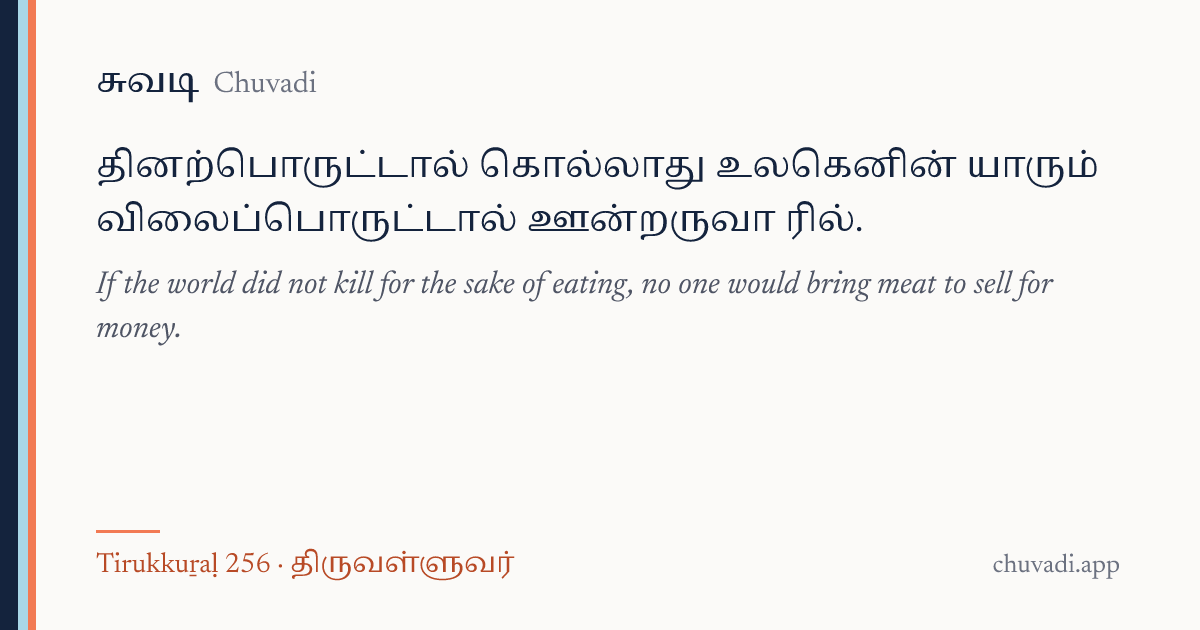
திருக்குறள் 256
பாடல் · The poem
Tap a word to see where else it occurs.
பொருள் · Meaning in TamilAI
உண்பதற்காக உலகத்தார் உயிர்களைக் கொல்லாமல் இருந்தால், விலைக்காக ஊனை விற்க யாரும் கொண்டுவர மாட்டார்கள்.
‘நான் கொல்லவில்லை, வாங்கித்தானே உண்கிறேன்’ என்ற வாதத்திற்கு விடையாக, உண்பவரே கொலைக்குக் காரணம் என்று புலான்மறுத்தல் அதிகாரம் காட்டுகிறது. கொல்பவனையும் உண்பவனையும் பிரித்துப் பார்க்க முடியாது என்பதே இந்தக் குறளின் வாதம்.
ஆங்கிலம் · English translationAI
Translation
- If the world did not kill for the sake of eating, no one
- would bring meat to sell for money.
What the poem says
An argument from supply and demand. The meat-eater may say he does not kill; but if no one bought meat to eat, no one would kill animals to sell their flesh.
The couplet answers the defence of those who eat but leave the killing to others. It places responsibility on the consumer. Vilaipporuṭṭāl, "for the sake of price", and tiṉaṟporuṭṭāl, "for the sake of eating", are matched phrases that link the buyer and the seller.
யாப்பு · Metre: veṇpā scansion
வெண்பா · புணர்ச்சியுடன் Scans as a veṇpā once a final குற்றியலுகரம் is dropped before a vowel, as prosody reads it (நின்று உலகம் → நின் றுலகம்).
நேர் one letter, short or long, with any consonant after it · நிரை a short letter with the letter after it · a final உ before a vowel is dropped, and ஐ after a word's first letter counts as short.