



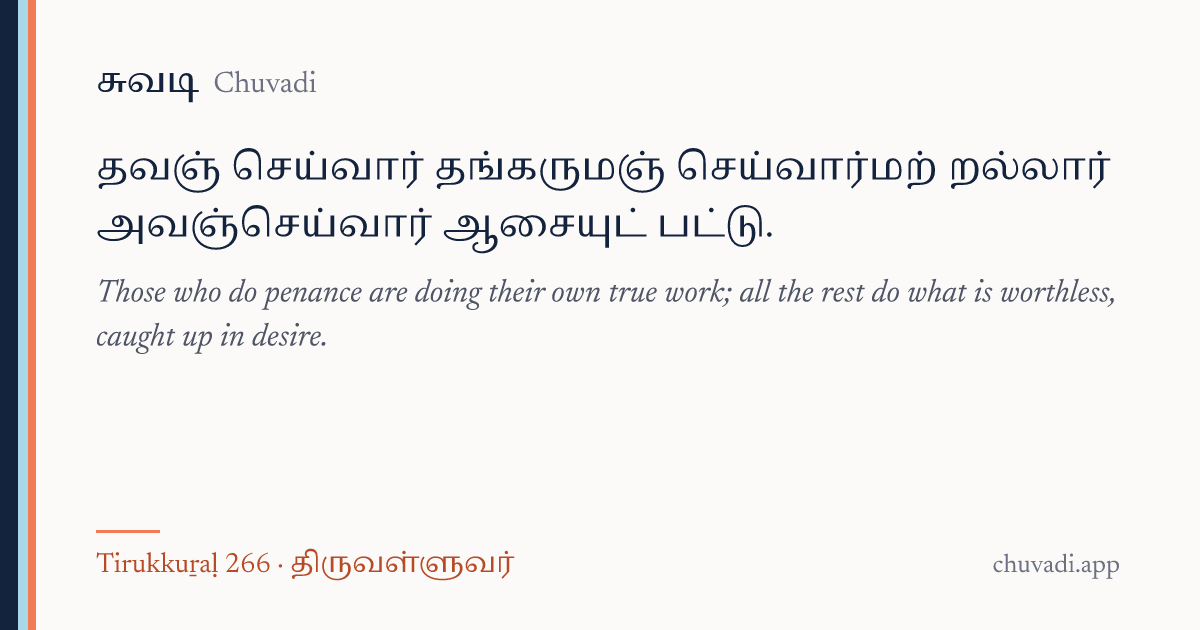
திருக்குறள் 266
பாடல் · The poem
Tap a word to see where else it occurs.
பொருள் · Meaning in TamilAI
தவம் செய்பவர்களே உண்மையில் தமக்குரிய கடமையைச் செய்பவர்கள்; மற்றவர்கள் ஆசையில் சிக்கிக்கொண்டு பயனற்ற செயல்களைச் செய்கிறார்கள்.
தவம் அதிகாரத்தில் ‘தவம்’, ‘அவம்’ என்ற ஓசை ஒத்த இரண்டு சொற்களை எதிரெதிராக நிறுத்துகிறார். அவம் என்பது வீண், கேடு. ஆசைக்குள் சிக்கியவன் தான் பெரிதாக உழைப்பதாக நினைத்தாலும், அது தன் உண்மையான கடமையிலிருந்து விலகிய உழைப்பு என்பது கருத்து.
ஆங்கிலம் · English translationAI
Translation
- Those who do penance are doing their own true work; all the rest
- do what is worthless, caught up in desire.
What the poem says
The contrast rests on a near-rhyme in the Tamil: tavam, penance, against avam, the useless or vain. Those who practise austerity attend to taṅ karumam, their own real task, the business that actually concerns the self.
Everyone else, the second line says, is busy too, but with futility, because they have fallen into the grip of desire. The verse turns the usual judgment around: the worldly man who seems productive is the idle one, and the ascetic who seems to do nothing is the only one at work. It is one of the chapter's sharpest statements.
யாப்பு · Metre: veṇpā scansion
வெண்பா · சீர் இணைத்து Scans as a veṇpā once a word printed in two parts is read as one சீர்.
நேர் one letter, short or long, with any consonant after it · நிரை a short letter with the letter after it · a final உ before a vowel is dropped, and ஐ after a word's first letter counts as short.