



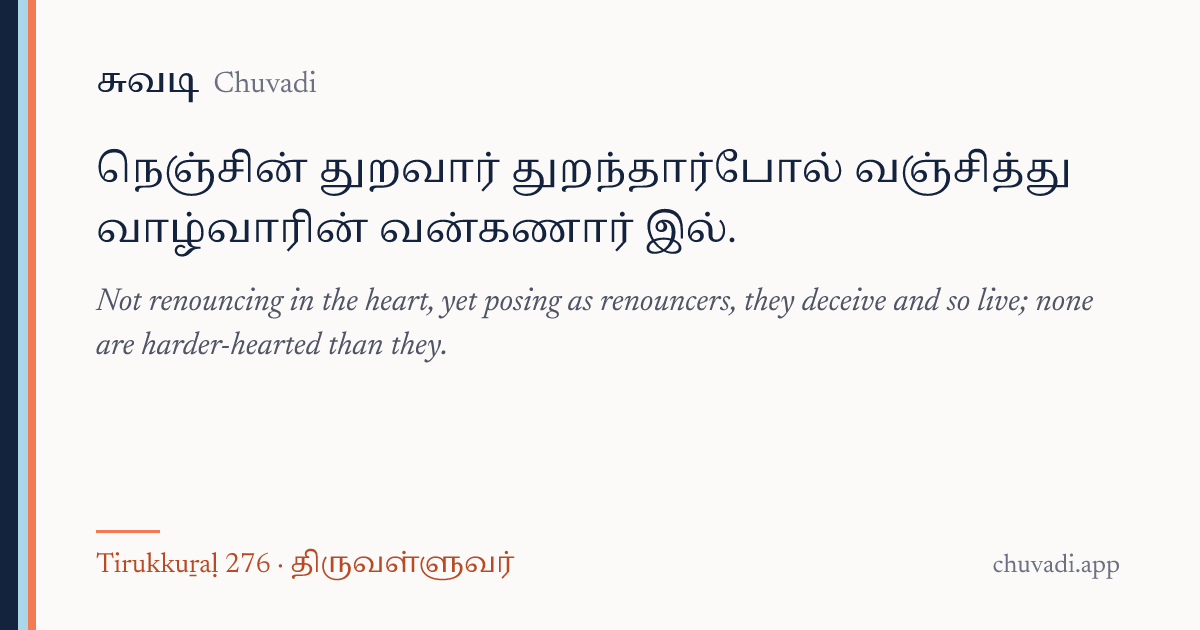
திருக்குறள் 276
பாடல் · The poem
Tap a word to see where else it occurs.
பொருள் · Meaning in TamilAI
உள்ளத்தில் துறக்காமல், துறந்தவர் போல நடித்து ஏமாற்றி வாழ்பவர்களைவிட இரக்கமற்றவர்கள் வேறு யாரும் இல்லை.
கூடாவொழுக்கம் அதிகாரத்தில் ‘வன்கணார்’ என்பது கல் நெஞ்சம் கொண்ட கொடியவர். நம்பி வருவோரின் நம்பிக்கையையே கருவியாக்குவதால் இது பெருங்கொடுமை என்கிறது. வெளிப்படையான தீயவனைவிட, நல்லவன் போல் நடிக்கும் தீயவன் ஆபத்தானவன் என்பது இதன் உட்கருத்து.
ஆங்கிலம் · English translationAI
Translation
- Not renouncing in the heart, yet posing as renouncers, they deceive
- and so live; none are harder-hearted than they.
What the poem says
The couplet names the core of the chapter: renunciation of the body and dress without renunciation of the heart. People who live by such deception are judged the most hard-hearted of all.
Vaṉkaṇār, literally 'hard-eyed ones', means the cruel or pitiless. The choice is telling. One might expect the hypocrite to be called foolish or weak, but Tiruvaḷḷuvar calls him cruel, because he exploits the trust and generosity that the true ascetic's life depends on. His deceit wrongs others, not merely himself.
யாப்பு · Metre: veṇpā scansion
வெண்பா Scans as a veṇpā as printed: every சீர் is one a veṇpā allows, and every join keeps வெண்டளை.
நேர் one letter, short or long, with any consonant after it · நிரை a short letter with the letter after it · a final உ before a vowel is dropped, and ஐ after a word's first letter counts as short.