



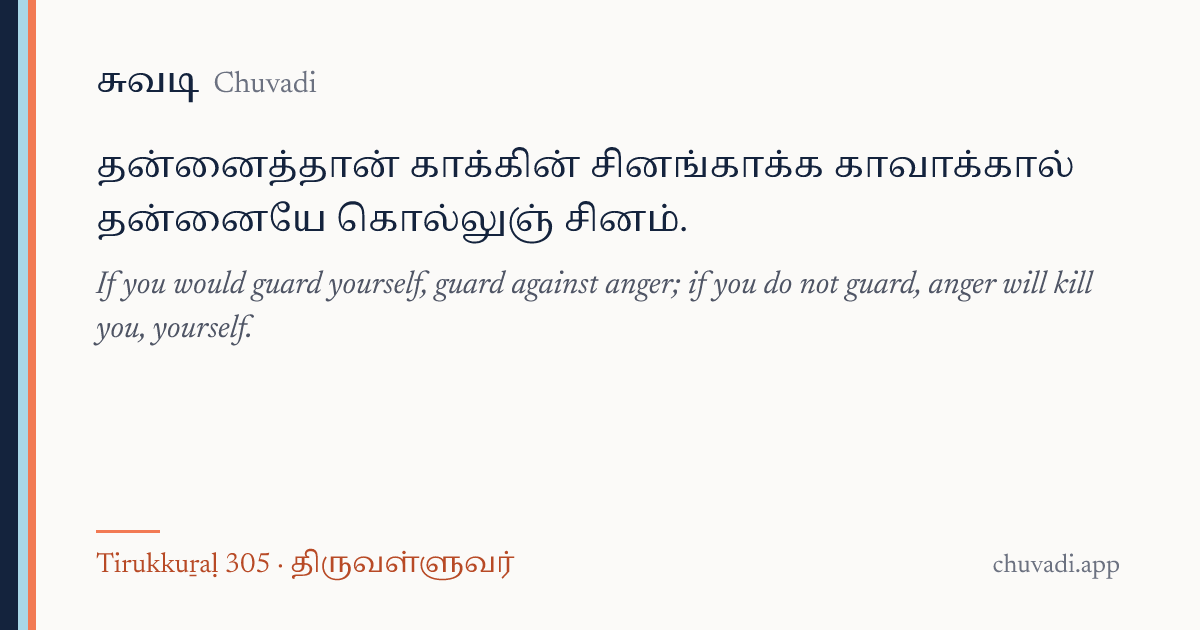
திருக்குறள் 305
பாடல் · The poem
Tap a word to see where else it occurs.
பொருள் · Meaning in TamilAI
ஒருவன் தன்னைத் தானே காத்துக்கொள்ள விரும்பினால் சினம் வராமல் காக்க வேண்டும்; காக்காவிட்டால் அந்தச் சினமே அவனைக் கொன்றுவிடும்.
வெகுளாமை அதிகாரத்தில் ‘காத்தல்’ என்ற சொல் மீண்டும் மீண்டும் வருகிறது. சினத்தைக் காப்பதே தன்னைக் காப்பது என்று இரண்டையும் ஒன்றாக்குகிறது. சினம் பிறரைத் தாக்குவதாகத் தோன்றினாலும், அதன் இறுதி இலக்கு சினம் கொண்டவனே என்பது கருத்து.
ஆங்கிலம் · English translationAI
Translation
- If you would guard yourself, guard against anger; if you do not guard,
- anger will kill you, yourself.
What the poem says
A blunt warning built on the verb kā, to guard. Protect yourself by restraining anger; otherwise anger will turn and destroy the one who harbours it.
The repetition of taṉṉai, 'oneself', in both lines frames the verse: guarding the self and the self being killed. Anger is pictured as a weapon that wounds its wielder. Commentators note that the killing need not be literal: it may be the ruin of one's reputation, health or moral standing. The verse turns the chapter's concern from harm to others toward harm to oneself.
யாப்பு · Metre: veṇpā scansion
வெண்பா Scans as a veṇpā as printed: every சீர் is one a veṇpā allows, and every join keeps வெண்டளை.
நேர் one letter, short or long, with any consonant after it · நிரை a short letter with the letter after it · a final உ before a vowel is dropped, and ஐ after a word's first letter counts as short.