



திருக்குறள் 307
பாடல் · The poem
Tap a word to see where else it occurs.
பொருள் · Meaning in TamilAI
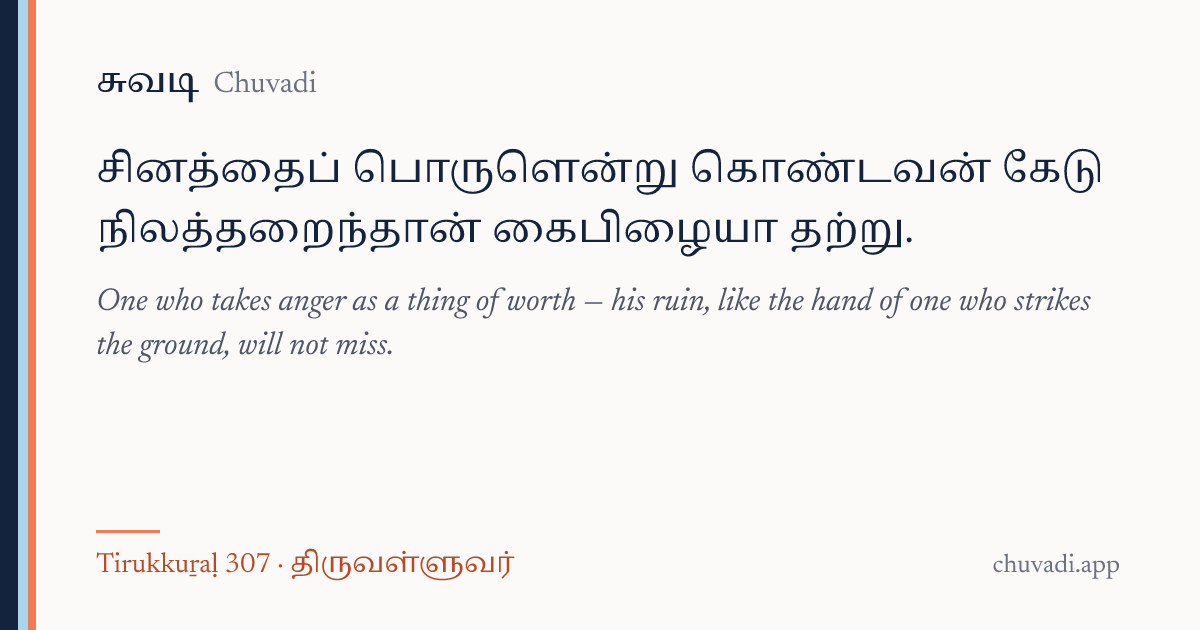
சினத்தை ஒரு பெரிய பொருளாகக் கருதிப் போற்றுபவன் அடையும் கேடு, தரையில் ஓங்கி அறைந்தவனின் கை அடிபடாமல் தப்ப முடியாதது போல உறுதியானது.
வெகுளாமை அதிகாரத்தின் இந்த உவமையில், நிலத்தை அடிப்பவனுக்கு நிலம் நோவதில்லை, தன் கையே நோகும். சினம் கொண்டவனுக்கும் அதன் விளைவு தன்னையே தாக்கும்.
ஆங்கிலம் · English translationAI
Translation
- One who takes anger as a thing of worth — his ruin, like the hand
- of one who strikes the ground, will not miss.
What the poem says
A homely comparison: someone who slaps the earth in a fit of temper hurts only his own hand, and that hurt is certain. So too the person who values anger, poruḷ eṉṟu koṇṭavaṉ, treating it as something useful, is sure of his own ruin.
The image suggests both the futility and the self-injury of rage. The ground is unaffected; only the striker suffers. Kai piḻaiyātu, 'the hand does not escape', stresses inevitability. The verse continues the chapter's insistence that anger harms most those who indulge it.
யாப்பு · Metre: veṇpā scansion
வெண்பா Scans as a veṇpā as printed: every சீர் is one a veṇpā allows, and every join keeps வெண்டளை.
நேர் one letter, short or long, with any consonant after it · நிரை a short letter with the letter after it · a final உ before a vowel is dropped, and ஐ after a word's first letter counts as short.