



திருக்குறள் 312
பாடல் · The poem
Tap a word to see where else it occurs.
பொருள் · Meaning in TamilAI
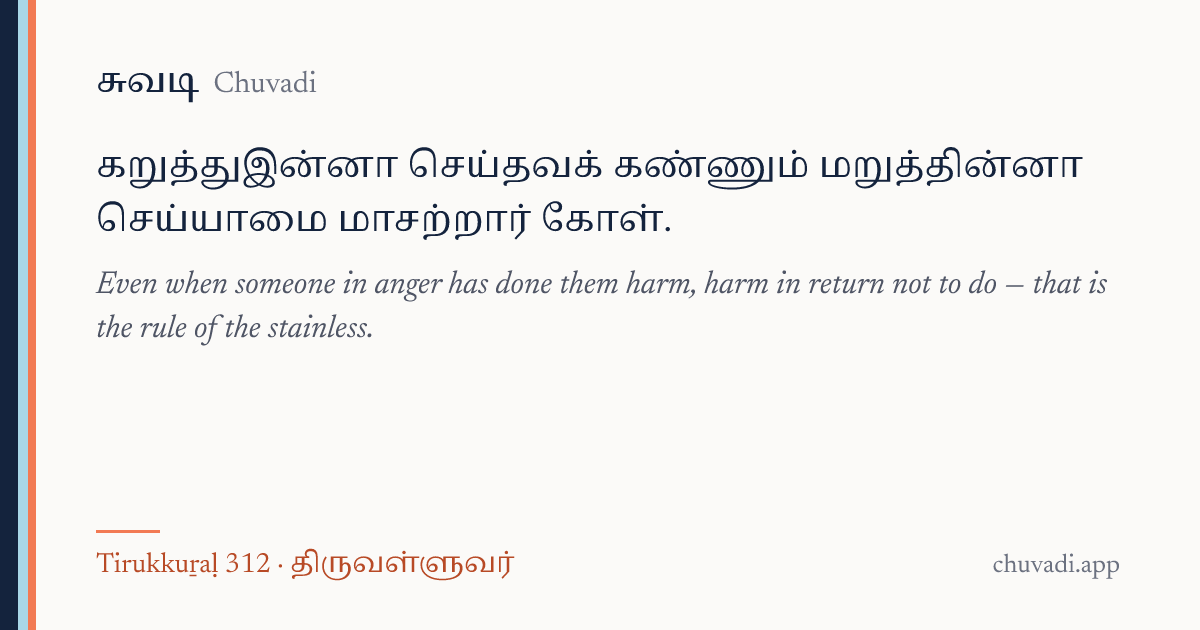
பகைமை கொண்டு ஒருவர் தமக்குத் தீங்கு செய்தபோதும், அவருக்குத் திருப்பித் தீங்கு செய்யாமல் இருப்பதே மாசற்றவர்களின் கொள்கை.
இன்னாசெய்யாமை அதிகாரத்தில் முந்தைய குறளின் ஈற்றடியே இங்கும் வருகிறது. முன்னது ஆதாயத்துக்காகத் தீங்கு செய்யாமை, இது பழிவாங்கத் தீங்கு செய்யாமை. ‘கறுத்து’ என்பது சினம் கொண்டு; பகைவர் சினந்து தீங்கு செய்தாலும் மாசற்றவர் அமைதி காப்பர்.
ஆங்கிலம் · English translationAI
Translation
- Even when someone in anger has done them harm, harm in return
- not to do — that is the rule of the stainless.
What the poem says
The second test of the principle. Even when another has harmed them out of hostility, the pure-hearted refrain from retaliation.
The verse repeats the closing phrase of the previous couplet exactly, so the two form a pair: no harm for profit, and no harm in revenge. Kaṟuttu, 'having grown dark' with rage, describes the offender's anger. Together the couplets cover the two main reasons people hurt others, gain and grievance, and rule out both.
யாப்பு · Metre: veṇpā scansion
வெண்பா Scans as a veṇpā as printed: every சீர் is one a veṇpā allows, and every join keeps வெண்டளை.
நேர் one letter, short or long, with any consonant after it · நிரை a short letter with the letter after it · a final உ before a vowel is dropped, and ஐ after a word's first letter counts as short.