



திருக்குறள் 317
பாடல் · The poem
Tap a word to see where else it occurs.
பொருள் · Meaning in TamilAI
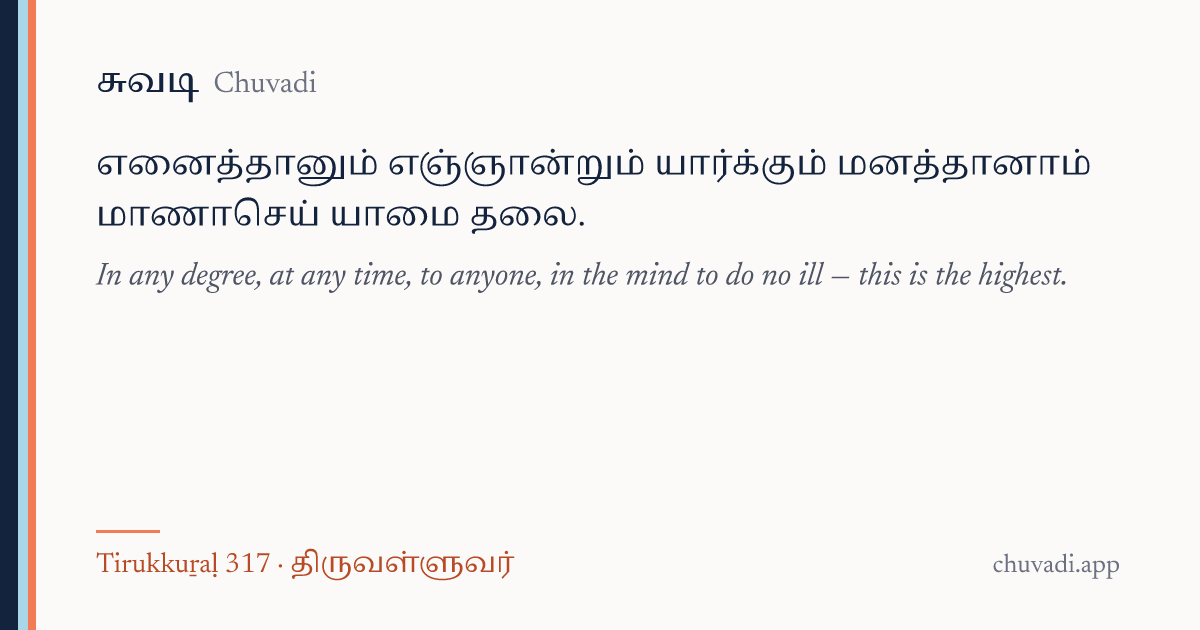
எவ்வளவு சிறிதாயினும், எந்தக் காலத்திலும், யாருக்கும், மனத்தால்கூடத் தீங்கு நினைக்காமல் இருப்பதே தலைசிறந்த அறம்.
இன்னாசெய்யாமை அதிகாரத்தின் இந்தக் குறள் அளவு, காலம், ஆள், வழி என்ற நான்கு எல்லைகளையும் ஒருசேர மூடுகிறது. ‘மாணா’ என்பது மாட்சி இல்லாத, தீய. செயலால் மட்டுமல்ல, எண்ணத்தாலும் தீங்கு நினையாமையே அறத்தின் உச்சநிலை என்கிறது.
ஆங்கிலம் · English translationAI
Translation
- In any degree, at any time, to anyone, in the mind
- to do no ill — this is the highest.
What the poem says
The three sweeping terms of the first line, eṉaittāṉum, 'however little', eññāṉṟum, 'at any time', and yārkkum, 'to anyone', leave no exception. The verse then pushes the prohibition inward: not even in thought should one wrong another.
Māṇā, 'what is not excellent', is a mild word for wrongdoing, which makes the demand quietly comprehensive. Calling this talai, 'the head' or the foremost virtue, places mental harmlessness at the top of the chapter, consistent with the Kuṟaḷ's repeated emphasis on the mind as the source of action.
யாப்பு · Metre: veṇpā scansion
வெண்பா Scans as a veṇpā as printed: every சீர் is one a veṇpā allows, and every join keeps வெண்டளை.
நேர் one letter, short or long, with any consonant after it · நிரை a short letter with the letter after it · a final உ before a vowel is dropped, and ஐ after a word's first letter counts as short.