



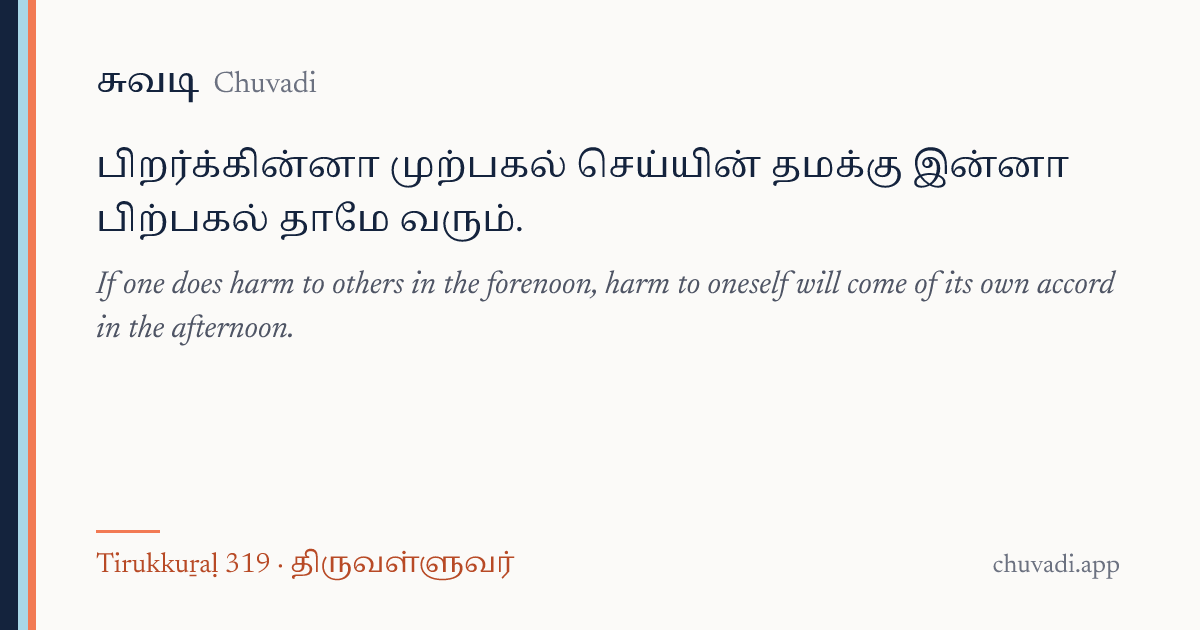
திருக்குறள் 319
பாடல் · The poem
Tap a word to see where else it occurs.
பொருள் · Meaning in TamilAI
முற்பகலில் பிறருக்குத் துன்பம் செய்தால், பிற்பகலிலேயே அதே போன்ற துன்பம் தானாகவே தம்மைத் தேடி வரும்.
இன்னாசெய்யாமை அதிகாரத்தின் நன்கு அறியப்பட்ட குறள். முற்பகல், பிற்பகல் என்ற குறுகிய காலம், தீமையின் விளைவு விரைவில் திரும்பும் என்பதைக் காட்டுகிறது. ‘தாமே வரும்’ என்ற சொற்கள், யாரும் தேடிக் கொண்டுவர வேண்டியதில்லை, விளைவு தானே வந்து சேரும் என்பதைக் காட்டுகின்றன.
ஆங்கிலம் · English translationAI
Translation
- If one does harm to others in the forenoon, harm to oneself
- will come of its own accord in the afternoon.
What the poem says
One of the best-known couplets. Harm done to others in the first half of the day returns to the doer in the second half, by itself, without anyone needing to send it back.
The image of morning and afternoon compresses the working of consequence into a single day, making retribution seem swift and natural. Tāmē, 'of themselves', is the key: the return of harm is not punishment by another but the course of things. Commentators often read it as a figure for karma, though the verse itself names no mechanism.
யாப்பு · Metre: veṇpā scansion
வெண்பா · சீர் இணைத்து Scans as a veṇpā once a word printed in two parts is read as one சீர்.
நேர் one letter, short or long, with any consonant after it · நிரை a short letter with the letter after it · a final உ before a vowel is dropped, and ஐ after a word's first letter counts as short.