



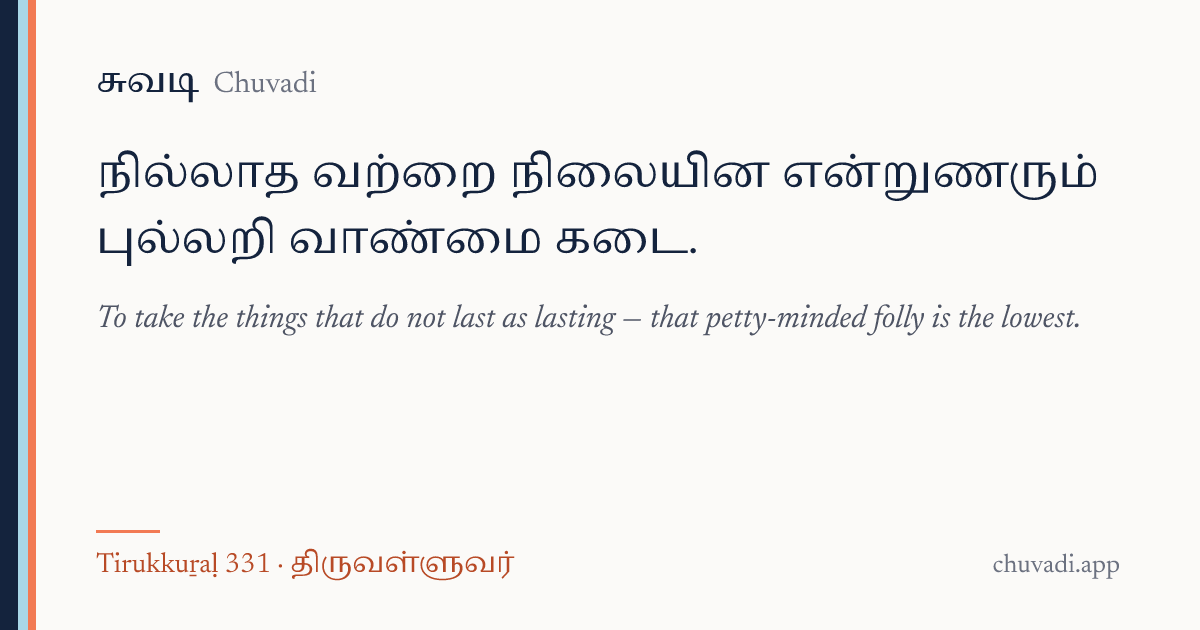
திருக்குறள் 331
பாடல் · The poem
Tap a word to see where else it occurs.
பொருள் · Meaning in TamilAI
நிலைத்து நிற்காதவற்றை நிலையானவை என்று நம்பும் அற்ப அறிவு, அறிவுகளிலேயே மிகத் தாழ்ந்தது.
நிலையாமை அதிகாரத்தின் முதல் குறள். செல்வம், இளமை, உடல் என எல்லாம் மாறக்கூடியவை என்ற அதிகாரத்தின் கருத்துக்கு இது வாயிலாக அமைகிறது. ‘புல்லறிவு’ என்பது புல்லைப் போன்ற சிறிய அறிவு.
ஆங்கிலம் · English translationAI
Translation
- To take the things that do not last as lasting —
- that petty-minded folly is the lowest.
What the poem says
The chapter on nilaiyāmai, impermanence, opens by naming its opposite as the worst error: believing that what passes away will endure.
Pul aṟivu, 'grass-like' or petty understanding, is a striking phrase: such knowledge is as flimsy as a blade of grass. Āṇmai, usually strength or mastery, is used ironically, as if to say 'the prowess of a feeble mind'. Kaṭai, the lowest, is the verdict. The chapter goes on to show what does not last: wealth, youth, the body, life itself.
யாப்பு · Metre: veṇpā scansion
வெண்பா Scans as a veṇpā as printed: every சீர் is one a veṇpā allows, and every join keeps வெண்டளை.
நேர் one letter, short or long, with any consonant after it · நிரை a short letter with the letter after it · a final உ before a vowel is dropped, and ஐ after a word's first letter counts as short.