



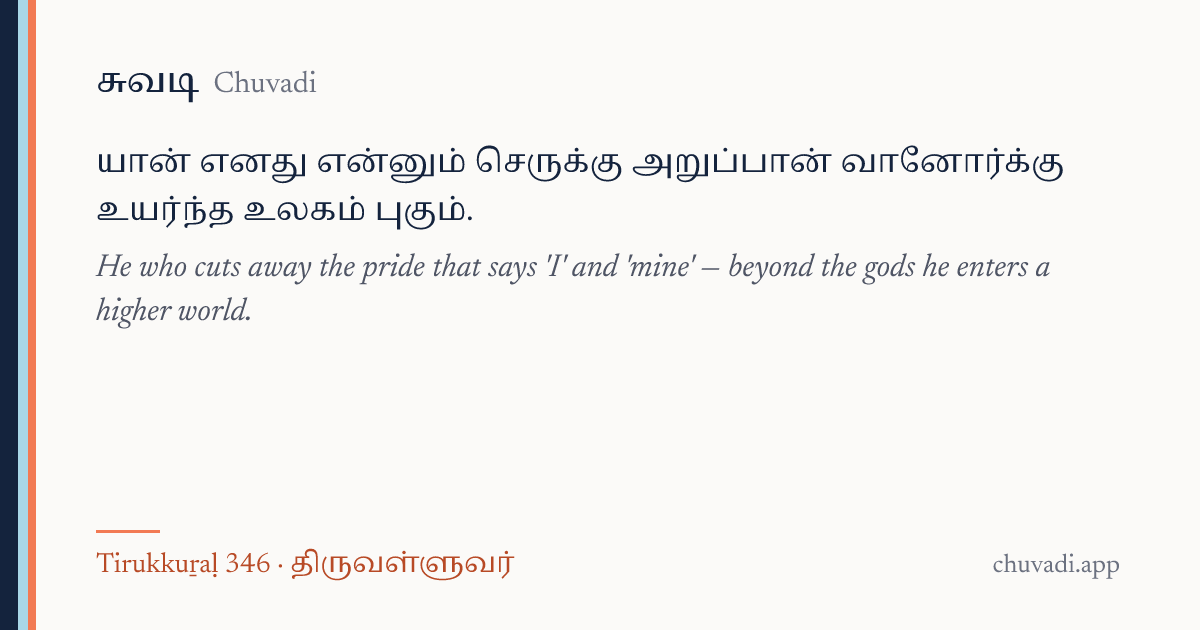
திருக்குறள் 346
பாடல் · The poem
Tap a word to see where else it occurs.
பொருள் · Meaning in TamilAI
‘நான்’, ‘எனது’ என்னும் செருக்கை அறுத்தவன், வானவர்க்கும் எட்டாத உயர்ந்த உலகத்தை அடைவான்.
துறவு அதிகாரத்தின் இந்தக் குறள் அகப்பற்று, புறப்பற்று இரண்டையும் இரண்டு சொற்களில் அடக்குகிறது: ‘யான்’ என்பது தன்னைப் பற்றிய செருக்கு, ‘எனது’ என்பது பொருள்களைப் பற்றிய செருக்கு. ‘வானோர்க்கு உயர்ந்த உலகம்’ என்பது தேவர் உலகையும் கடந்த வீடுபேறு.
ஆங்கிலம் · English translationAI
Translation
- He who cuts away the pride that says 'I' and 'mine' — beyond the gods
- he enters a higher world.
What the poem says
The deepest form of renunciation is cutting away cerukku, the arrogance contained in the words yāṉ, 'I', and eṉatu, 'mine'. One who does so reaches a world higher even than that of the vāṉōr, the celestials.
The pairing of 'I' and 'mine' names the two roots of attachment: to the self and to possessions. The higher world is usually understood as liberation, which lies above even the heavens of the gods. The verse places inner renunciation, of ego, above outer renunciation of goods.
யாப்பு · Metre: veṇpā scansion
சரிபார்க்க இயலவில்லை Does not scan with the rules checked here. It may need a sandhi reading the checker does not model yet, or the text may differ from the edition prosodists use.
- line 1 has 6 சீர், a வெண்பா line needs 4
- «யான்» (நேர்) is not a சீர் a வெண்பா allows
- «எனது» → «என்னும்» breaks வெண்டளை
- «அறுப்பான்» → «வானோர்க்கு» breaks வெண்டளை
- «வானோர்க்கு» → «உயர்ந்த» breaks வெண்டளை
நேர் one letter, short or long, with any consonant after it · நிரை a short letter with the letter after it · a final உ before a vowel is dropped, and ஐ after a word's first letter counts as short.