



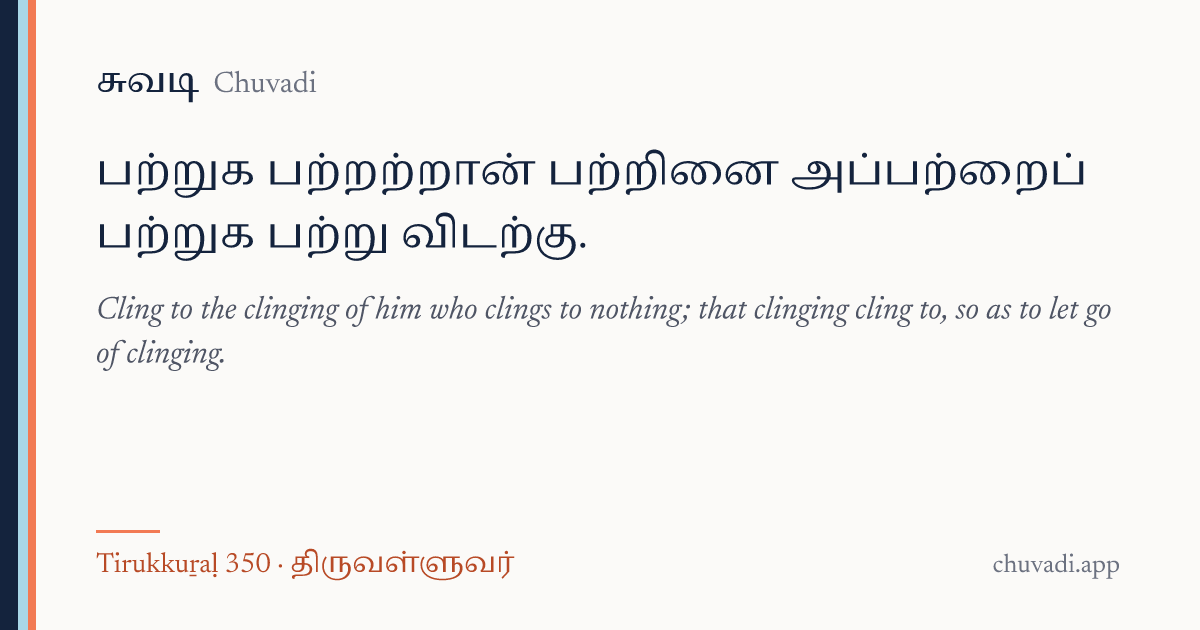
திருக்குறள் 350
பாடல் · The poem
Tap a word to see where else it occurs.
பொருள் · Meaning in TamilAI
பற்று இல்லாதவனாகிய இறைவனின் பற்றையே பற்றிக்கொள்ள வேண்டும்; மற்றப் பற்றுகளை விடுவதற்காகவே அந்தப் பற்றைப் பற்ற வேண்டும்.
துறவு அதிகாரத்தின் நிறைவுக் குறள். ‘பற்று’ என்ற சொல் ஆறு முறை வருகிறது: ஒரு பற்றை விட இன்னொரு உயர்ந்த பற்றையே கருவியாகக் கொள்ள வேண்டும் என்பது முரணின் அழகு.
ஆங்கிலம் · English translationAI
Translation
- Cling to the clinging of him who clings to nothing; that clinging
- cling to, so as to let go of clinging.
What the poem says
The chapter's closing verse plays on paṟṟu, holding or attachment, six times. Hold fast to the hold of the one who is without attachment; hold that hold, in order to release all other holds.
The paradox is that one attachment, rightly placed, is the means to end all attachment. Who is paṟṟaṟṟāṉ, 'the one without clinging'? Traditional commentators usually take it as God; others as a perfected teacher or the ideal of detachment itself. The verse is one of the Kuṟaḷ's most quoted and is often read as its clearest gesture toward devotion.
யாப்பு · Metre: veṇpā scansion
வெண்பா Scans as a veṇpā as printed: every சீர் is one a veṇpā allows, and every join keeps வெண்டளை.
நேர் one letter, short or long, with any consonant after it · நிரை a short letter with the letter after it · a final உ before a vowel is dropped, and ஐ after a word's first letter counts as short.