



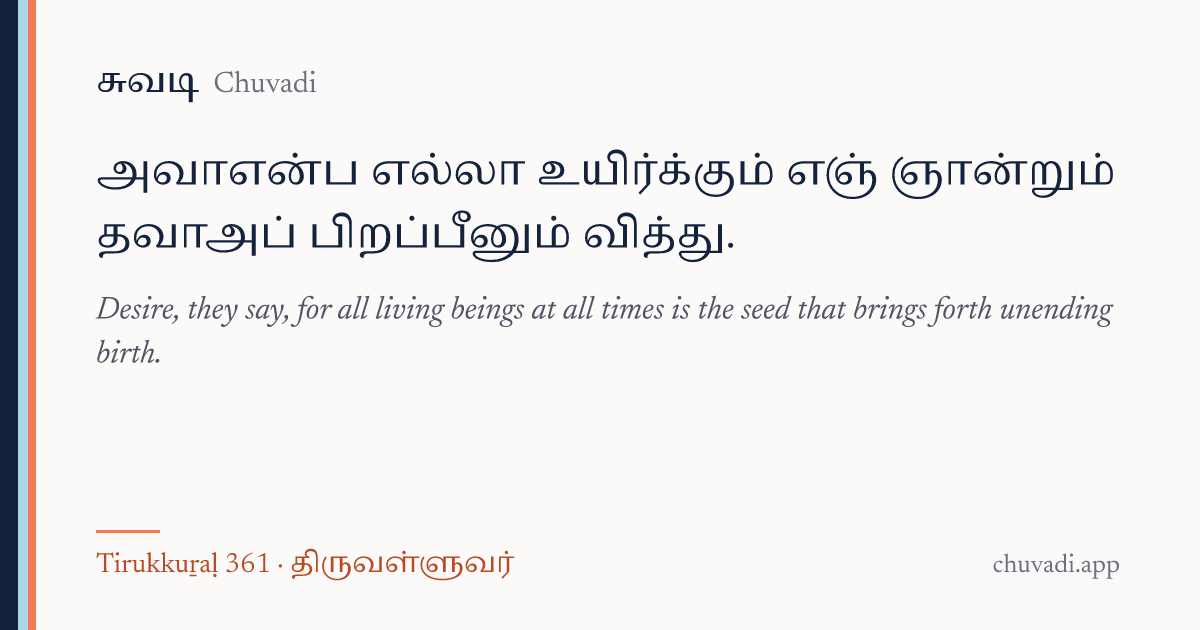
திருக்குறள் 361
பாடல் · The poem
Tap a word to see where else it occurs.
பொருள் · Meaning in TamilAI
எல்லா உயிர்களுக்கும் எல்லாக் காலத்திலும் ஓயாத பிறவியை விளைவிக்கும் விதை ஆசையே என்று அறிந்தோர் சொல்வார்கள்.
அவாவறுத்தல் அதிகாரத்தின் முதல் குறள். ஆசையை விதையாகவும் பிறவியை அது முளைத்து வளரும் பயிராகவும் காட்டுகிறது; ‘தவாஅ’ என்பது முடிவில்லாத. ‘எஞ்ஞான்றும்’ என்பது எல்லாப் பிறவிகளிலும் எல்லாக் காலத்திலும் தொடர்வதைக் காட்டுகிறது.
ஆங்கிலம் · English translationAI
Translation
- Desire, they say, for all living beings at all times
- is the seed that brings forth unending birth.
What the poem says
The chapter on avā aṟuttal, cutting off desire, opens with an image from agriculture. Avā, craving, is the vittu, the seed, from which the endless crop of births grows, for every creature and in every age.
The adjective tavā, 'unfailing' or 'never-ceasing', describes the cycle of rebirth as a harvest that never ends while the seed remains. Eṉpa, 'they say', presents this as accepted wisdom. The chapter that follows draws the consequence: to stop the crop, one must destroy the seed.
யாப்பு · Metre: veṇpā scansion
வெண்பா · சீர் இணைத்து Scans as a veṇpā once a word printed in two parts is read as one சீர்.
நேர் one letter, short or long, with any consonant after it · நிரை a short letter with the letter after it · a final உ before a vowel is dropped, and ஐ after a word's first letter counts as short.