



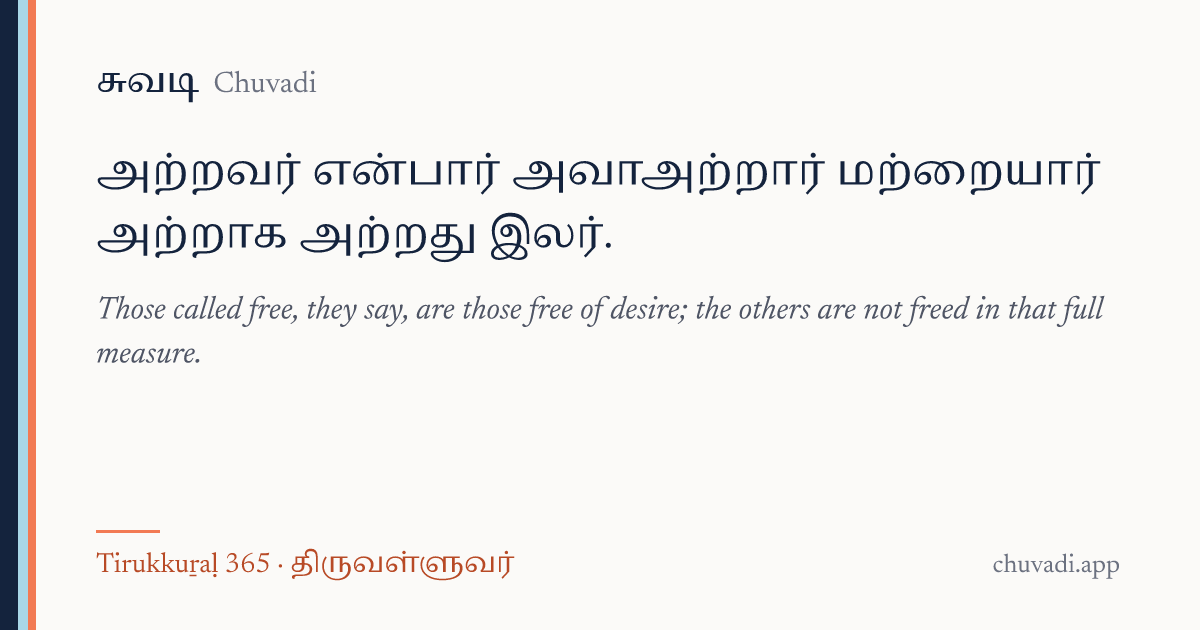
திருக்குறள் 365
பாடல் · The poem
Tap a word to see where else it occurs.
பொருள் · Meaning in TamilAI
பற்று அற்றவர் என்று சொல்லப்படுபவர்கள் ஆசையை அறுத்தவர்களே; மற்றவர்கள் சிலவற்றை விட்டிருந்தாலும், அந்த அளவுக்கு முழுமையாக அற்றவர்கள் அல்லர்.
அவாவறுத்தல் அதிகாரத்தில் ‘அற்றவர்’, ‘அவாஅற்றார்’, ‘அற்றாக’, ‘அற்றது’ என்று அறுதல் என்ற வினை தொடர்ந்து வருகிறது. உடைமையை விடுவது துறவின் தொடக்கம், ஆசையை விடுவதே நிறைவு என்பது கருத்து.
ஆங்கிலம் · English translationAI
Translation
- Those called free, they say, are those free of desire; the others
- are not freed in that full measure.
What the poem says
The word aṟṟavar, 'those who are cut off' or 'free', is often used for renunciants. True renunciants, the verse says, are those who have cut away desire. Others may have given up possessions, but they are not free in the same complete way.
The chain of aṟṟār, aṟṟāka and aṟṟatu, all from aṟu, 'to be severed', makes the verse sound like a refinement of definitions. The distinction is between outer renunciation of things and inner renunciation of craving, a theme the Kuṟaḷ returns to throughout the ascetic chapters.
யாப்பு · Metre: veṇpā scansion
வெண்பா · புணர்ச்சியுடன் Scans as a veṇpā once a final குற்றியலுகரம் is dropped before a vowel, as prosody reads it (நின்று உலகம் → நின் றுலகம்).
நேர் one letter, short or long, with any consonant after it · நிரை a short letter with the letter after it · a final உ before a vowel is dropped, and ஐ after a word's first letter counts as short.