



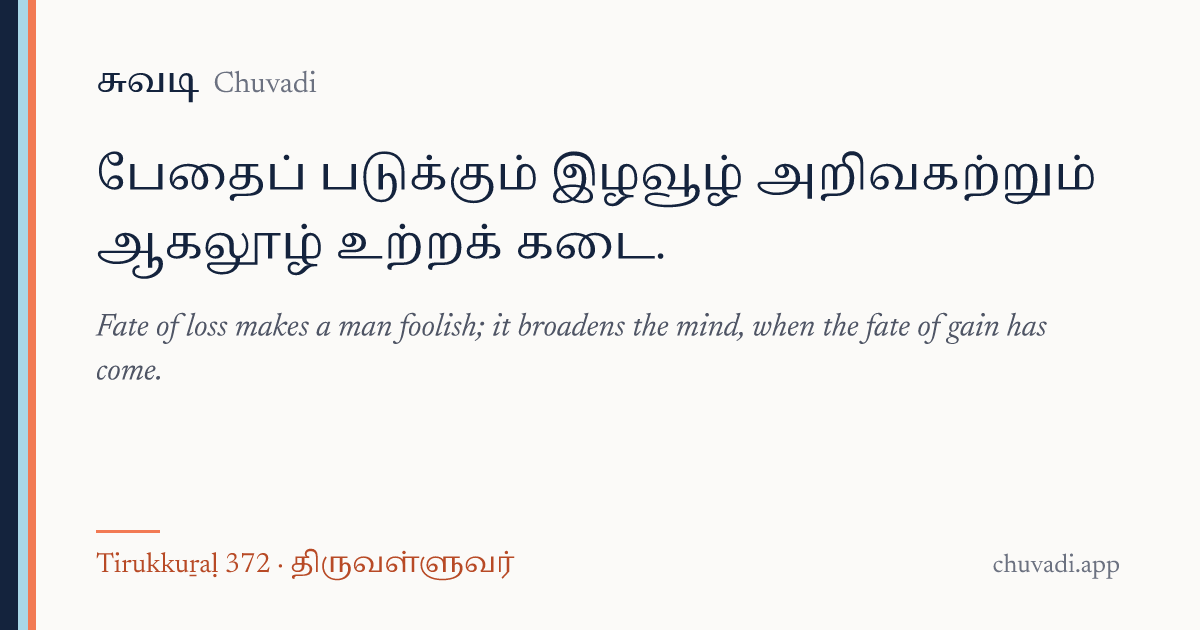
திருக்குறள் 372
பாடல் · The poem
Tap a word to see where else it occurs.
பொருள் · Meaning in TamilAI
பொருளை இழக்கச் செய்யும் ஊழ் ஒருவனை அறிவற்றவனாக்கும்; பொருள் சேரச் செய்யும் ஊழ் வந்தால் அவன் அறிவு விரிவடையும்.
ஊழ் அதிகாரத்தின் இந்தக் குறளில் ‘அகற்றும்’ என்ற சொல் விரிவாக்கும் என்றும் நீக்கும் என்றும் இருபொருள் தருவதால், இதற்கு வேறு பொருளும் கொள்ளப்படுகிறது.
ஆங்கிலம் · English translationAI
Translation
- Fate of loss makes a man foolish; it broadens the mind,
- when the fate of gain has come.
What the poem says
Another pair of fates, iḻavūḻ and ākalūḻ, the fate of losing and the fate of gaining. The first makes a person pētai, a fool; the second, when it arrives, enlarges understanding.
The verb akaṟṟum is the crux. It can mean 'to widen' or 'to expand', but also 'to remove' or 'to drive away'. Most readers take it in the first sense, matching the contrast with folly. If read in the second sense, it would mean that fate removes understanding, which spoils the antithesis. The verse extends the claim of the previous couplet: even intelligence is shaped by fate.
யாப்பு · Metre: veṇpā scansion
வெண்பா Scans as a veṇpā as printed: every சீர் is one a veṇpā allows, and every join keeps வெண்டளை.
நேர் one letter, short or long, with any consonant after it · நிரை a short letter with the letter after it · a final உ before a vowel is dropped, and ஐ after a word's first letter counts as short.