



திருக்குறள் 375
பாடல் · The poem
Tap a word to see where else it occurs.
பொருள் · Meaning in TamilAI
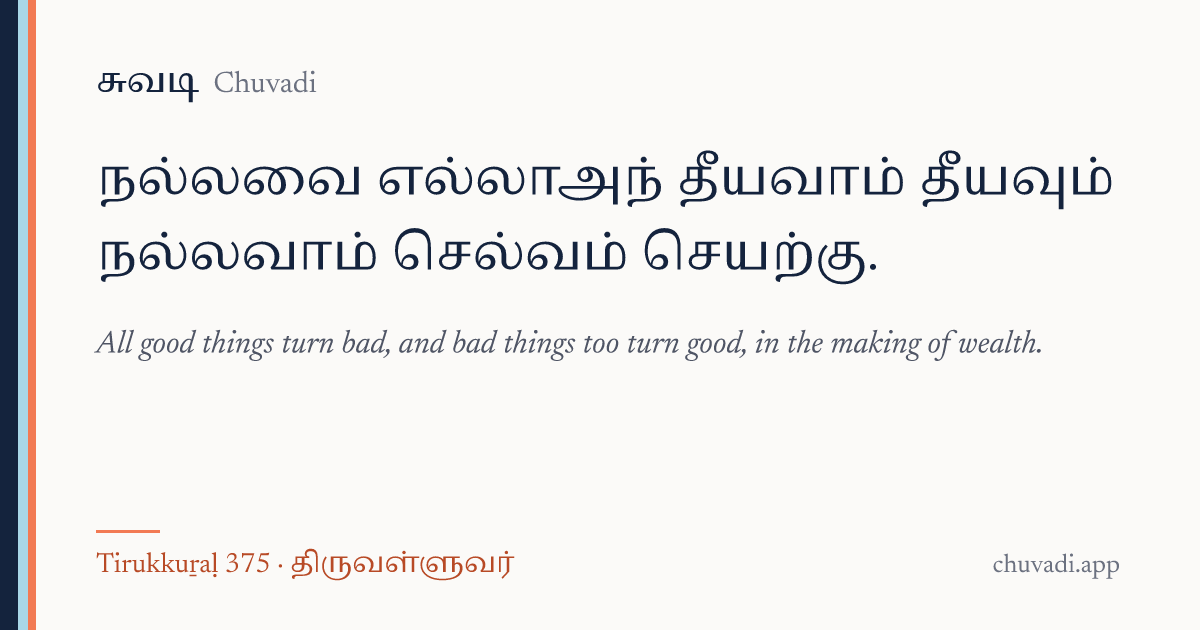
செல்வம் சேர்க்க முயலும்போது, ஊழின் காரணமாக நல்லவை எல்லாம் தீயவையாக மாறுவதும், தீயவையும் நல்லவையாக மாறுவதும் உண்டு.
ஊழ் அதிகாரத்தின் இந்தக் குறளில் ‘நல்லவை’, ‘தீயவை’ என்பவை பொருள் சேர்ப்பதற்கு உதவும், தடையாகும் சூழல்கள். ஊழ் நல்லதாக இருந்தால் தடையும் உதவியாகும் என்பது கருத்து.
ஆங்கிலம் · English translationAI
Translation
- All good things turn bad, and bad things too
- turn good, in the making of wealth.
What the poem says
In the effort to acquire wealth, everything favourable can turn against you, and everything unfavourable can turn to your advantage, depending on fate.
The verse is about the unpredictability of fortune. Nallavai and tīyavai, 'good things' and 'bad things', refer to circumstances, means or efforts. Celvam ceyaṟku, 'for making wealth', specifies the sphere: in commerce or enterprise, the outcome does not follow reliably from the conditions. Some readers take the good and bad as moral qualities, but the context of fate supports the reading of circumstances.
யாப்பு · Metre: veṇpā scansion
வெண்பா Scans as a veṇpā as printed: every சீர் is one a veṇpā allows, and every join keeps வெண்டளை.
நேர் one letter, short or long, with any consonant after it · நிரை a short letter with the letter after it · a final உ before a vowel is dropped, and ஐ after a word's first letter counts as short.