



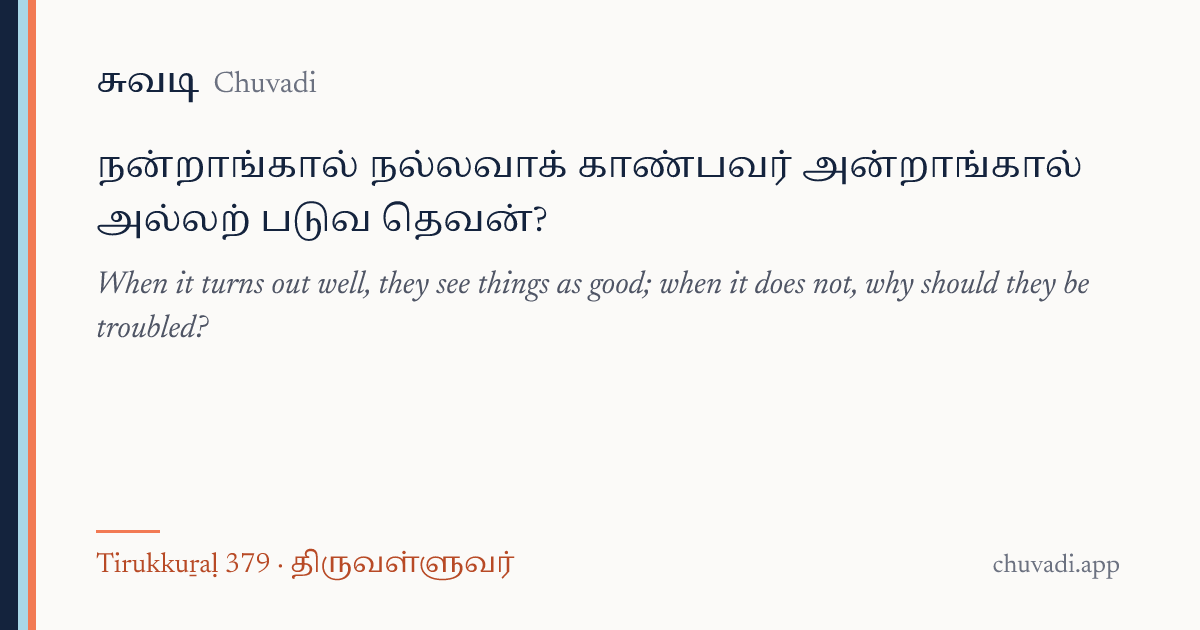
திருக்குறள் 379
பாடல் · The poem
Tap a word to see where else it occurs.
பொருள் · Meaning in TamilAI
நல்லது நடக்கும்போது அதை நல்லதென்று மகிழ்ந்து ஏற்பவர்கள், தீயது நடக்கும்போது மட்டும் கலங்கித் துன்பப்படுவது ஏன்?
ஊழ் அதிகாரத்தின் இந்தக் குறள் கேள்வி வடிவில் சமநிலையைக் கற்பிக்கிறது: இன்பமும் துன்பமும் ஒரே ஊழின் விளைவுகள் என்றால், இரண்டையும் ஒரே மனத்தோடு ஏற்க வேண்டும்.
ஆங்கிலம் · English translationAI
Translation
- When it turns out well, they see things as good; when it does not,
- why should they be troubled?
What the poem says
People accept good fortune as good and rejoice in it. Why then should they suffer when fortune turns the other way?
The argument is that both outcomes come from the same source, ūḻ, so consistency demands that one meet bad fortune with the same calm as good. Allal, distress, is presented as irrational given that one welcomed the favourable result without question. The verse offers a practical consolation within the chapter's somewhat stern view of fate.
யாப்பு · Metre: veṇpā scansion
வெண்பா Scans as a veṇpā as printed: every சீர் is one a veṇpā allows, and every join keeps வெண்டளை.
நேர் one letter, short or long, with any consonant after it · நிரை a short letter with the letter after it · a final உ before a vowel is dropped, and ஐ after a word's first letter counts as short.