



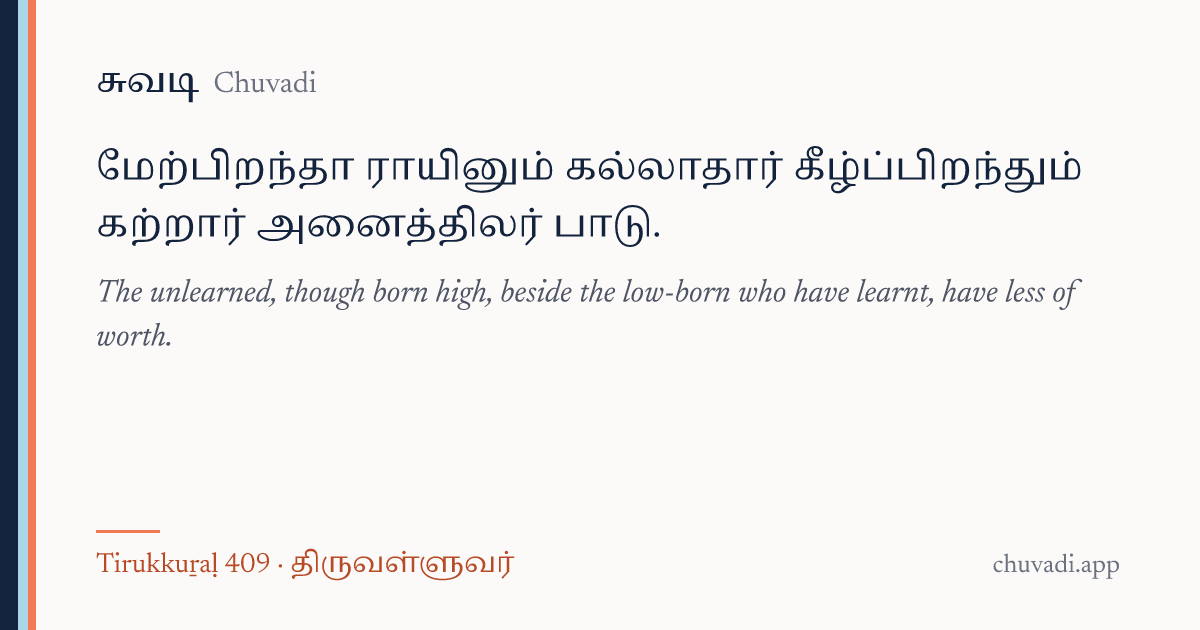
திருக்குறள் 409
பாடல் · The poem
Tap a word to see where else it occurs.
பொருள் · Meaning in TamilAI
உயர்ந்த குடியில் பிறந்தவர்களாக இருந்தாலும் கல்லாதவர்கள், தாழ்ந்த குடியில் பிறந்தும் கற்றவர்கள் பெற்றுள்ள பெருமையை அடைய மாட்டார்கள்.
கல்லாமை அதிகாரம். பிறப்பால் வரும் உயர்வைவிடக் கல்வியால் வரும் உயர்வே மேலானது என்று வள்ளுவர் தெளிவாகச் சொல்கிறார். ‘பாடு’ என்பது பெருமை, சிறப்பு.
ஆங்கிலம் · English translationAI
Translation
- The unlearned, though born high, beside the low-born
- who have learnt, have less of worth.
What the poem says
Birth is set against learning. An unlearned person of high birth has less standing, pāṭu, than a learned person of low birth.
The line plays with the words mēl, 'above', and kīḻ, 'below'. In a society that took birth very seriously, the couplet makes learning the true measure of rank. It does not abolish the language of high and low, but it makes it secondary. The English 'have less of worth' follows the sense of aṉaittu ilar, 'do not have that much', as most commentators understand it, comparing the two groups directly.
யாப்பு · Metre: veṇpā scansion
வெண்பா Scans as a veṇpā as printed: every சீர் is one a veṇpā allows, and every join keeps வெண்டளை.
நேர் one letter, short or long, with any consonant after it · நிரை a short letter with the letter after it · a final உ before a vowel is dropped, and ஐ after a word's first letter counts as short.