



திருக்குறள் 418
பாடல் · The poem
Tap a word to see where else it occurs.
பொருள் · Meaning in TamilAI
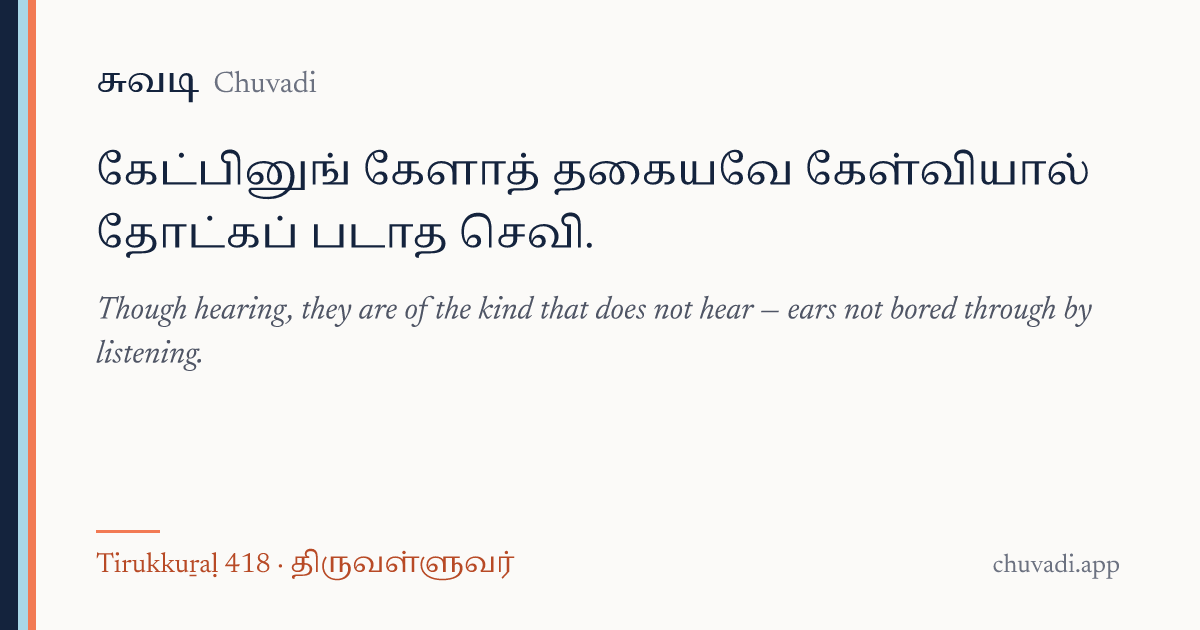
கேள்வியால் துளைக்கப்படாத காதுகள், ஒலியைக் கேட்டாலும் கேளாத காதுகளுக்குச் சமமானவையே.
கேள்வி அதிகாரம். ‘தோட்கப்படாத’ என்பது துளைக்கப்படாத; அணிகலனுக்காகக் காது குத்துவது போல, நல்ல கேள்வியே காதுக்கு உண்மையான துளை என்பது அழகிய சொல்விளையாட்டு. ‘கேட்பினும் கேளா’ என்பதில் கேட்டல், உணர்தல் என்ற இரு பொருள்கள் விளையாடுகின்றன.
ஆங்கிலம் · English translationAI
Translation
- Though hearing, they are of the kind that does not hear — ears
- not bored through by listening.
What the poem says
The image is of ear-piercing, which in Tamil custom opened the ear for ornaments. An ear not 'pierced' by listening, tōṭkappaṭāta, may still hear sounds, but it is closed to understanding.
The paradox of the first line, 'though hearing, not hearing', is common to many traditions. The Tamil adds a physical twist: true listening goes through the ear like a piercing, leaving a lasting opening. Ears that have never been opened in this way pass sound by. The chapter draws a line between hearing and kēḷvi, listening that enters and stays.
யாப்பு · Metre: veṇpā scansion
வெண்பா Scans as a veṇpā as printed: every சீர் is one a veṇpā allows, and every join keeps வெண்டளை.
நேர் one letter, short or long, with any consonant after it · நிரை a short letter with the letter after it · a final உ before a vowel is dropped, and ஐ after a word's first letter counts as short.