



திருக்குறள் 43
பாடல் · The poem
Tap a word to see where else it occurs.
பொருள் · Meaning in TamilAI
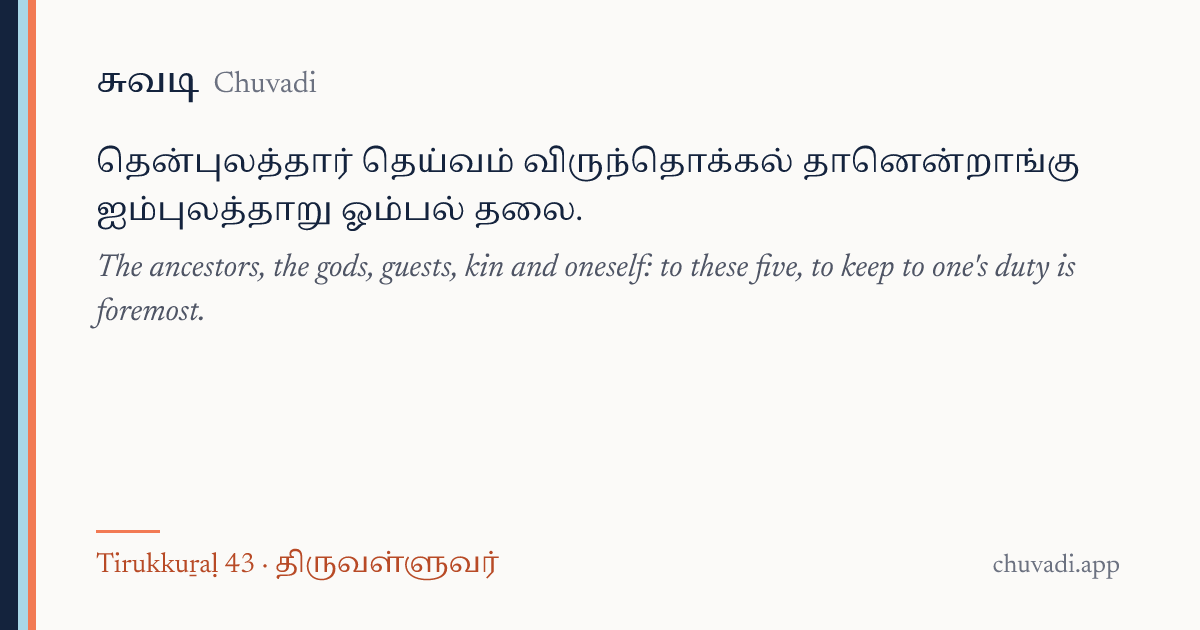
மறைந்த முன்னோர், தெய்வம், விருந்தினர், சுற்றத்தார், தான் என்னும் ஐந்து இடங்களிலும் உரிய கடமைகளைத் தவறாமல் போற்றுவது இல்வாழ்வானுக்கு முதன்மையான அறம்.
‘தென்புலத்தார்’ என்பது தென்திசையில் உறைவதாகக் கருதப்பட்ட முன்னோர். இல்வாழ்க்கை அதிகாரம் இல்லறத்தானின் கடமைகளை ஐந்தாக வகுக்கிறது; அவற்றுள் ‘தான்’ என்பதும் இடம்பெறுவது, தன்னைப் பேணுவதும் அறமே என்பதைக் காட்டுகிறது.
ஆங்கிலம் · English translationAI
Translation
- The ancestors, the gods, guests, kin and oneself: to these
- five, to keep to one's duty is foremost.
What the poem says
Five duties of the householder are listed. Teṉpulattār, literally 'those of the southern region', are the ancestors, because in Indian tradition the realm of the dead lies to the south. Then come teyvam (the gods), viruntu (guests), okkal (relatives) and tāṉ, oneself.
Keeping the way (āṟu) toward these five is called talai, 'the head', the chief thing. Including oneself at the end of the list is notable: the householder's own wellbeing is a legitimate duty, but it comes last, after the dead, the divine, strangers and family. Each of these obligations, especially to guests, gets fuller treatment in the chapters that follow.
யாப்பு · Metre: veṇpā scansion
வெண்பா · புணர்ச்சியுடன் Scans as a veṇpā once a final குற்றியலுகரம் is dropped before a vowel, as prosody reads it (நின்று உலகம் → நின் றுலகம்).
நேர் one letter, short or long, with any consonant after it · நிரை a short letter with the letter after it · a final உ before a vowel is dropped, and ஐ after a word's first letter counts as short.