



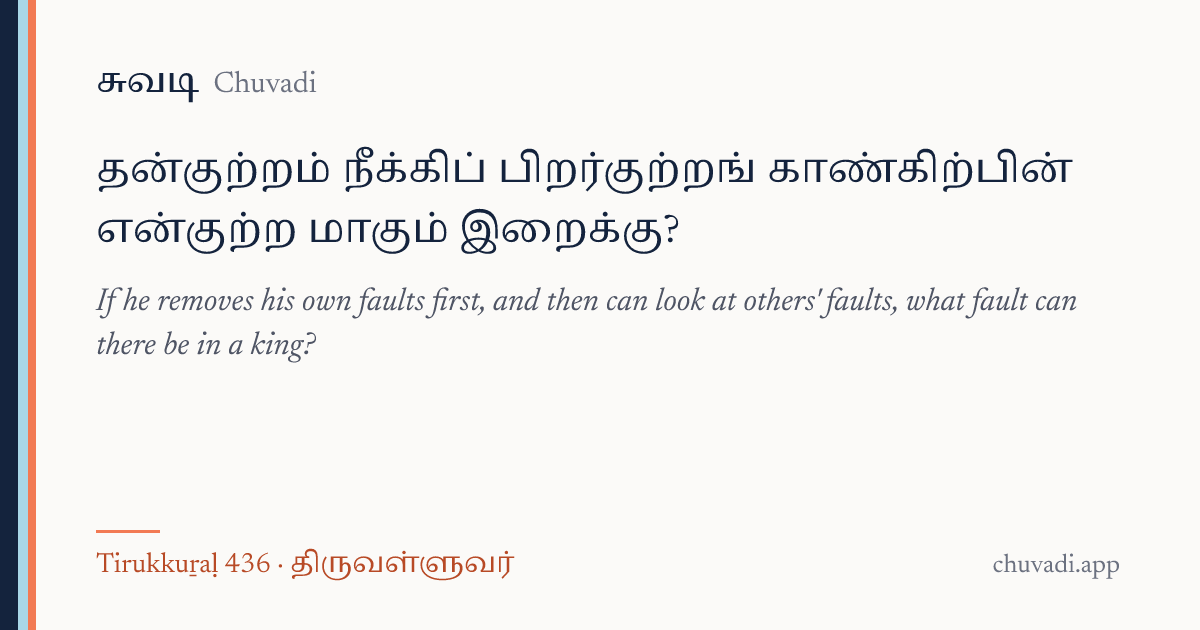
திருக்குறள் 436
பாடல் · The poem
Tap a word to see where else it occurs.
பொருள் · Meaning in TamilAI
முதலில் தன் குற்றத்தை நீக்கிக்கொண்டு, அதன் பிறகு பிறர் குற்றத்தை ஆராய வல்லவனானால், அந்த அரசனுக்கு என்ன குற்றம் வரும்?
குற்றங்கடிதல் அதிகாரம். பிறரைத் திருத்தும் முன் தன்னைத் திருத்திக்கொள்வதே ஆள்பவரின் முதல் கடமை என்கிறது. இறுதிக் கேள்வி, அப்படிப்பட்டவனிடம் குறை காண இடமில்லை என்பதைக் காட்டுகிறது.
ஆங்கிலம் · English translationAI
Translation
- If he removes his own faults first, and then can look at others' faults,
- what fault can there be in a king?
What the poem says
The order matters. A ruler who corrects his own faults first and only then examines the faults of others has nothing left to reproach in himself.
The couplet is a check on the powerful. A king has many opportunities to judge others, and it is easy to see their faults while ignoring one's own. By making self-correction the condition for judging others, the couplet links this chapter's personal discipline to fair government. The closing question, eṉ kuṟṟam ākum, 'what fault would there be?', implies that such a king would be beyond blame.
யாப்பு · Metre: veṇpā scansion
வெண்பா Scans as a veṇpā as printed: every சீர் is one a veṇpā allows, and every join keeps வெண்டளை.
நேர் one letter, short or long, with any consonant after it · நிரை a short letter with the letter after it · a final உ before a vowel is dropped, and ஐ after a word's first letter counts as short.