



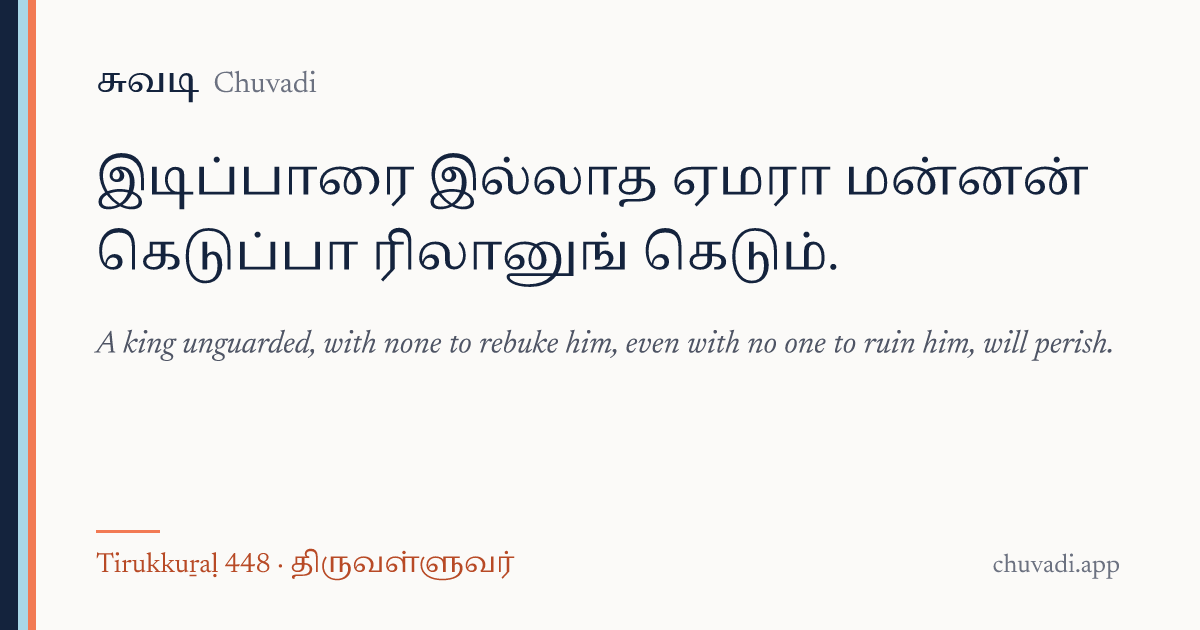
திருக்குறள் 448
பாடல் · The poem
Tap a word to see where else it occurs.
பொருள் · Meaning in TamilAI
இடித்துரைக்கும் துணை இல்லாத, காவலற்ற அரசன், அவனை அழிக்கும் பகைவர் யாரும் இல்லாவிட்டாலும் தானாகவே அழிந்துவிடுவான்.
பெரியாரைத் துணைக்கோடல் அதிகாரம். முந்தைய குறளின் மறுபக்கம் இது: திருத்துபவர் இல்லாதவனுக்கு அவனுடைய தவறுகளே பகையாகிவிடும். ‘ஏமரா’ என்பது காவல் இல்லாத.
ஆங்கிலம் · English translationAI
Translation
- A king unguarded, with none to rebuke him,
- even with no one to ruin him, will perish.
What the poem says
This is the converse of the couplet before. A king without people to rebuke him is unprotected, ēmarā, and he will fall even if no enemy works against him.
The surprise lies in the second line. One might think that the absence of enemies would keep a ruler safe. But without critics, a king's own errors grow unchecked and destroy him from within. Keṭuppār ilāṉum keṭum, 'he perishes even without destroyers', is a neat paradox. It echoes the chapter on faults, where a ruler's own failings were called his worst enemy.
யாப்பு · Metre: veṇpā scansion
வெண்பா Scans as a veṇpā as printed: every சீர் is one a veṇpā allows, and every join keeps வெண்டளை.
நேர் one letter, short or long, with any consonant after it · நிரை a short letter with the letter after it · a final உ before a vowel is dropped, and ஐ after a word's first letter counts as short.