



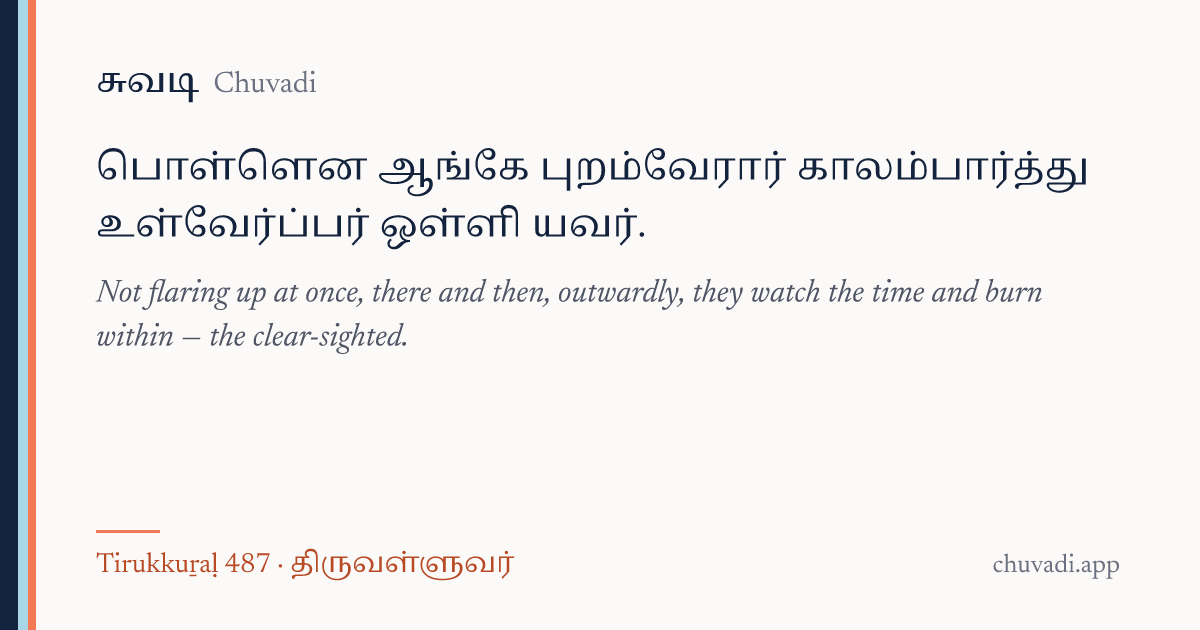
திருக்குறள் 487
பாடல் · The poem
Tap a word to see where else it occurs.
பொருள் · Meaning in TamilAI
அறிவுக்கூர்மை உடையவர்கள், பகைவர் தீங்கு செய்த அந்த இடத்திலேயே உடனே வெளிப்படையாகச் சினம் காட்ட மாட்டார்கள்; தகுந்த காலத்தை எதிர்பார்த்து உள்ளுக்குள் சினத்தை வைத்திருப்பார்கள்.
காலமறிதல் அதிகாரம். ‘புறம் வேரார்’, ‘உள் வேர்ப்பர்’ என்ற எதிர் இணை, வெளியே அமைதியும் உள்ளே விழிப்பும் என்ற நிலையைக் காட்டுகிறது. ‘வேர்த்தல்’ என்பது சினத்தால் கொதித்தல்.
ஆங்கிலம் · English translationAI
Translation
- Not flaring up at once, there and then, outwardly, they watch the time
- and burn within — the clear-sighted.
What the poem says
The wise, oḷḷiyavar, do not show anger immediately, poḷḷeṉa, when provoked. They hide it, watch for the right moment and keep it burning inside.
The verb vēr means to sweat, and by extension to burn or rage. Puṟam vērār, 'they do not sweat outwardly', contrasts with uḷ vērppar, 'they sweat within'. The image is of heat held in rather than released. The couplet does not ask the wise to give up anger; it asks them to control its timing. In the political setting of this chapter, this means waiting until a response can succeed.
யாப்பு · Metre: veṇpā scansion
வெண்பா · புணர்ச்சியுடன் Scans as a veṇpā once a final குற்றியலுகரம் is dropped before a vowel, as prosody reads it (நின்று உலகம் → நின் றுலகம்).
நேர் one letter, short or long, with any consonant after it · நிரை a short letter with the letter after it · a final உ before a vowel is dropped, and ஐ after a word's first letter counts as short.