



திருக்குறள் 506
பாடல் · The poem
Tap a word to see where else it occurs.
பொருள் · Meaning in TamilAI
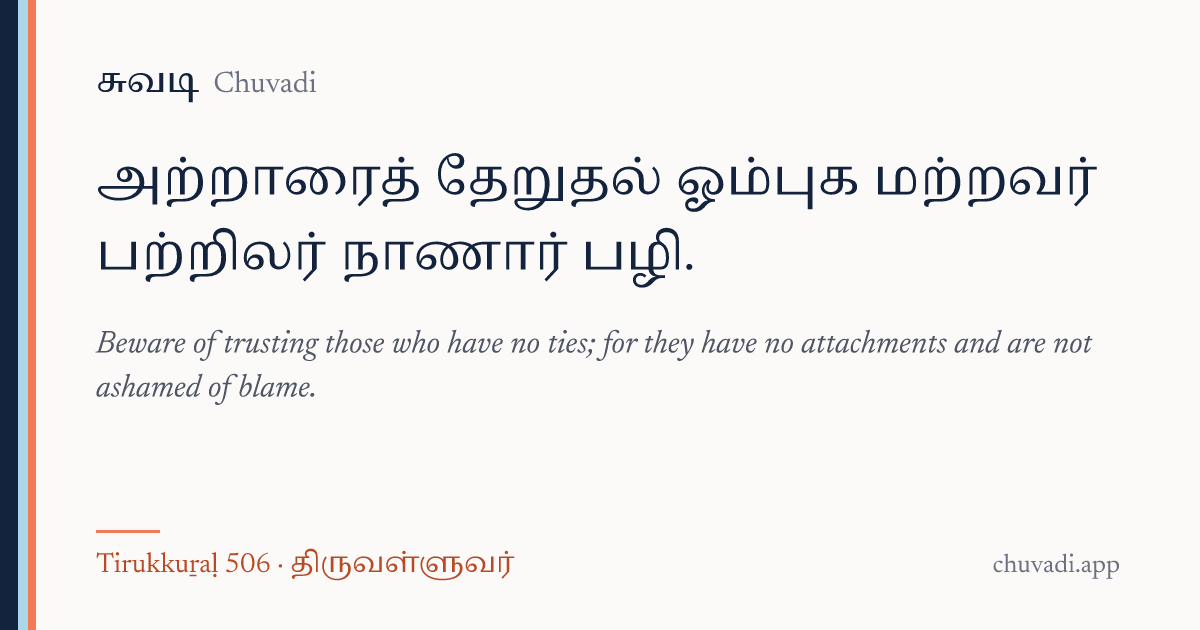
சுற்றமும் பற்றும் இல்லாதவர்களை நம்புவதைத் தவிர்க்க வேண்டும்; அவர்கள் உலகத்தோடு பிணைப்பு இல்லாதவர்கள், பழிக்கும் நாணாதவர்கள்.
தெரிந்துதெளிதல் அதிகாரம். உறவும் பொறுப்பும் உள்ளவரே பழிக்கு அஞ்சுவர் என்ற எண்ணம் இதன் அடிப்படை. ‘அற்றார்’ என்ற சொல்லுக்கு வேறு பொருளும் கொள்ளப்படுகிறது.
ஆங்கிலம் · English translationAI
Translation
- Beware of trusting those who have no ties; for they
- have no attachments and are not ashamed of blame.
What the poem says
Aṟṟār means 'those who are cut off' or 'those without', and here it is usually taken as people without family or social bonds. Such people should not be trusted, because they have no attachments, paṟṟu, and therefore do not fear the shame of blame, paḻi.
The reasoning is that bonds create responsibility. A person with family and community has something to lose by misconduct. Aṟṟār can also mean the destitute, which would make the warning about people with nothing to lose in a material sense. The reading 'without kin' fits best with paṟṟilar in the second line.
யாப்பு · Metre: veṇpā scansion
வெண்பா Scans as a veṇpā as printed: every சீர் is one a veṇpā allows, and every join keeps வெண்டளை.
நேர் one letter, short or long, with any consonant after it · நிரை a short letter with the letter after it · a final உ before a vowel is dropped, and ஐ after a word's first letter counts as short.