



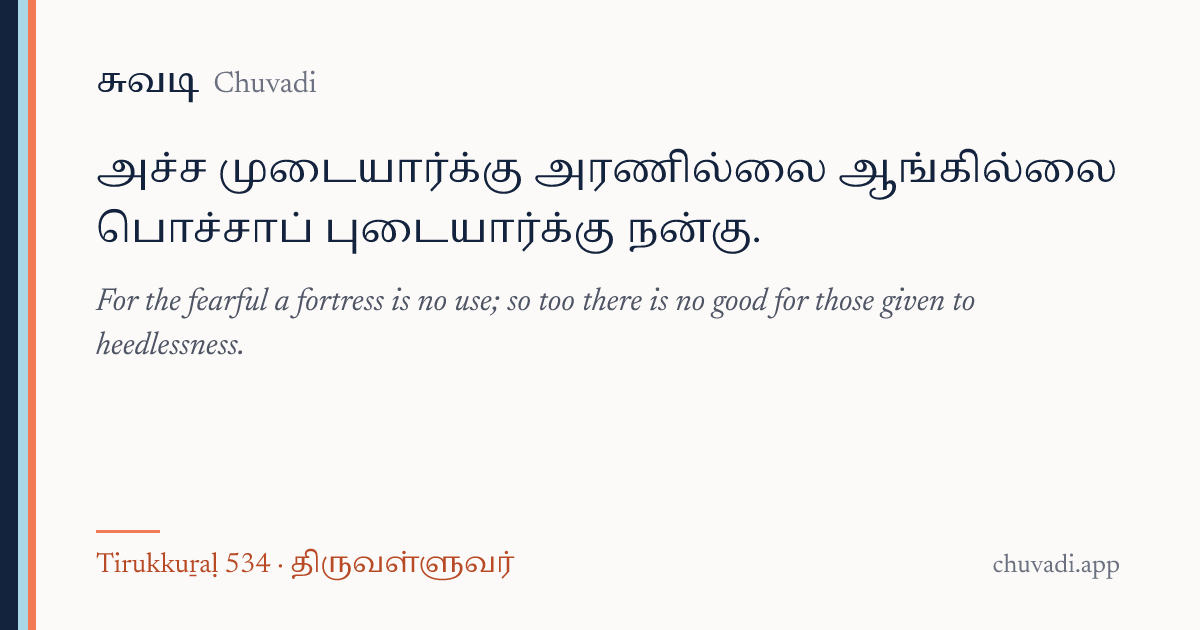
திருக்குறள் 534
பாடல் · The poem
Tap a word to see where else it occurs.
பொருள் · Meaning in TamilAI
அஞ்சும் நெஞ்சம் உடையவருக்குக் கோட்டை இருந்தும் பயன் இல்லை; அதுபோல மறதி உடையவருக்கு எந்த நலமும் நிலைக்காது.
கோட்டையைக் காக்கத் துணிவு வேண்டும்; நன்மைகளைக் காக்க விழிப்பு வேண்டும் என்பதே உவமையின் நுட்பம். கையில் உள்ள நலமும் கவனம் இல்லாவிட்டால் நழுவிப் போகும் என்கிறது பொச்சாவாமை அதிகாரம்.
ஆங்கிலம் · English translationAI
Translation
- For the fearful a fortress is no use; so too there is no
- good for those given to heedlessness.
What the poem says
A fortress protects only those with the courage to defend it; a coward behind high walls is still lost. In the same way, every advantage (naṉku, "good") is useless to the careless, because they will not use it when it matters.
The structure is a plain analogy, but its edge is in āṅku, "just so, likewise", which joins the two halves. Fear and forgetfulness are paired as inner failings that make outward strength worthless, and this sets heedfulness among the king's real defences.
யாப்பு · Metre: veṇpā scansion
வெண்பா · புணர்ச்சியுடன் Scans as a veṇpā once a final குற்றியலுகரம் is dropped before a vowel, as prosody reads it (நின்று உலகம் → நின் றுலகம்).
நேர் one letter, short or long, with any consonant after it · நிரை a short letter with the letter after it · a final உ before a vowel is dropped, and ஐ after a word's first letter counts as short.