



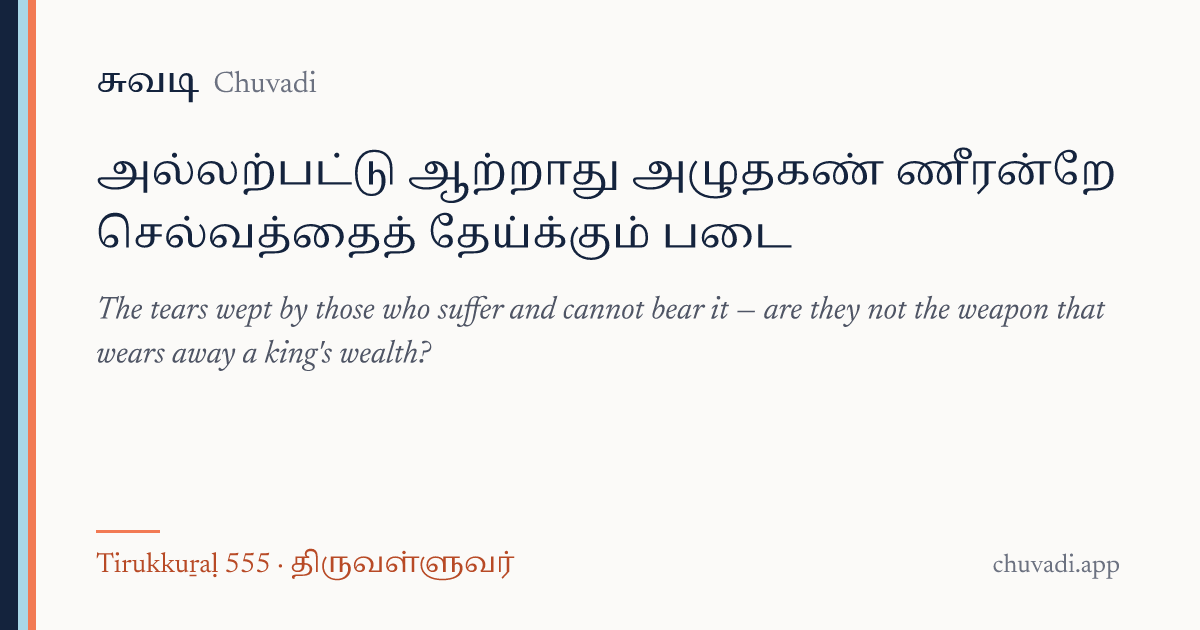
திருக்குறள் 555
பாடல் · The poem
Tap a word to see where else it occurs.
பொருள் · Meaning in TamilAI
துன்பத்தால் வருந்தி, தாங்க முடியாமல் மக்கள் அழுது சிந்தும் கண்ணீர் அல்லவா, கொடிய அரசனின் செல்வத்தைத் தேய்த்து அழிக்கும் படை!
கொடுங்கோன்மை அதிகாரத்தின் மிகவும் அறியப்பட்ட குறள். ஆயுதம் இல்லாத எளியவரின் கண்ணீரே வலிய அரசனை வீழ்த்தும் படையாக மாறுகிறது என்பது உருவகத்தின் வலிமை.
ஆங்கிலம் · English translationAI
Translation
- The tears wept by those who suffer and cannot bear it — are they not
- the weapon that wears away a king's wealth?
What the poem says
This is one of the most quoted couplets on tyranny. The tears of people in distress, who can no longer endure their suffering, are themselves the army or weapon (paṭai) that wears down the oppressor's fortune.
The power of the image comes from turning helplessness into force. The weeping subjects take no action, yet their tears do what no enemy could. Aṉṟē, "is it not so?", makes the line a rhetorical question. Tēykkum, "rubs away, erodes", suggests slow wearing rather than sudden ruin.
யாப்பு · Metre: veṇpā scansion
வெண்பா · புணர்ச்சியுடன் Scans as a veṇpā once a final குற்றியலுகரம் is dropped before a vowel, as prosody reads it (நின்று உலகம் → நின் றுலகம்).
நேர் one letter, short or long, with any consonant after it · நிரை a short letter with the letter after it · a final உ before a vowel is dropped, and ஐ after a word's first letter counts as short.