



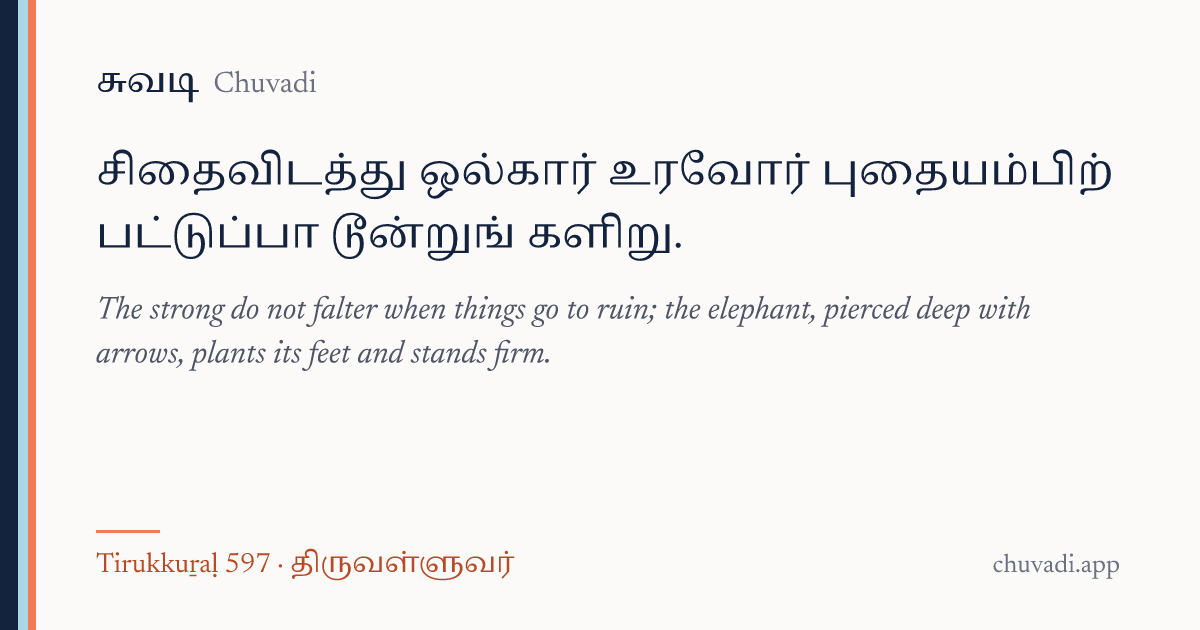
திருக்குறள் 597
பாடல் · The poem
Tap a word to see where else it occurs.
பொருள் · Meaning in TamilAI
உடல் முழுதும் அம்புகள் ஆழமாகப் பாய்ந்தாலும் யானை கால்களை ஊன்றி உறுதியாக நிற்கும்; அதுபோல மனவலிமை உடையவர்கள் அழிவு வந்த இடத்திலும் தளர மாட்டார்கள்.
போர்க்களத்துக் களிற்றின் படிமம், துன்பத்திலும் நிலைகுலையாத ஊக்கத்தைக் காட்டுகிறது. ஊக்கமுடைமை அதிகாரத்தில் ‘உரவோர்’ என்பது மனத் திண்மை உடையவர்.
ஆங்கிலம் · English translationAI
Translation
- The strong do not falter when things go to ruin; the elephant,
- pierced deep with arrows, plants its feet and stands firm.
What the poem says
Men of strength (uravōr) do not give way when they meet destruction. They are like a war elephant which, though arrows are buried deep in its flesh, holds its ground.
Putai ampu, "buried arrows", gives a vivid picture of wounds sunk to the shaft. Pāṭu ūṉṟum, "plants its stance", may mean that the elephant stands firm or that it presses on to establish its glory; pāṭu can mean both "position" and "fame". The image of the elephant recurs in 599.
யாப்பு · Metre: veṇpā scansion
வெண்பா Scans as a veṇpā as printed: every சீர் is one a veṇpā allows, and every join keeps வெண்டளை.
நேர் one letter, short or long, with any consonant after it · நிரை a short letter with the letter after it · a final உ before a vowel is dropped, and ஐ after a word's first letter counts as short.