



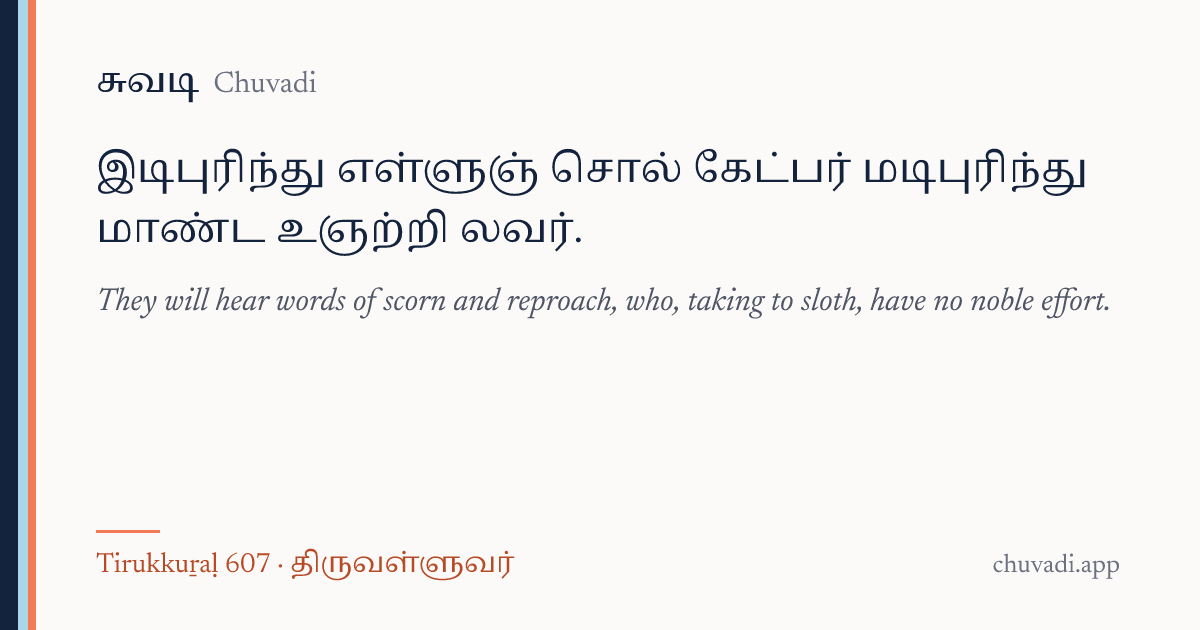
திருக்குறள் 607
பாடல் · The poem
Tap a word to see where else it occurs.
பொருள் · Meaning in TamilAI
சோம்பலை விரும்பி, சிறந்த முயற்சி இல்லாதவர்கள், பிறர் இடித்துரைத்து இகழும் சொற்களைக் கேட்க நேரும்.
சோம்பலுக்குக் கிடைக்கும் சமூகத் தண்டனை பிறரின் இகழ்ச்சி என்று மடியின்மை அதிகாரம் காட்டுகிறது. ‘இடி’ என்பது இங்கே கடிந்துரை. செய்ய வேண்டியதைச் செய்யாதவன் பிறர் கடிந்துரையைப் பொறுத்துக் கேட்கும் நிலைக்குத் தள்ளப்படுவான் என்பது உட்கருத்து.
ஆங்கிலம் · English translationAI
Translation
- They will hear words of scorn and reproach, who, taking to sloth,
- have no noble effort.
What the poem says
The lazy will hear insults (iṭi) and mocking words (eḷḷum col). This is the social cost of idleness: contempt from others, even when their family or wealth remains.
The second line repeats a phrase from 604, māṇṭa uñaṟṟilavar, "those without noble effort", tying the two couplets together. Maṭi purintu, "having chosen sloth", makes laziness a deliberate choice, not a misfortune, and so the scorn it earns is deserved.
யாப்பு · Metre: veṇpā scansion
வெண்பா · சீர் இணைத்து Scans as a veṇpā once a word printed in two parts is read as one சீர்.
நேர் one letter, short or long, with any consonant after it · நிரை a short letter with the letter after it · a final உ before a vowel is dropped, and ஐ after a word's first letter counts as short.