



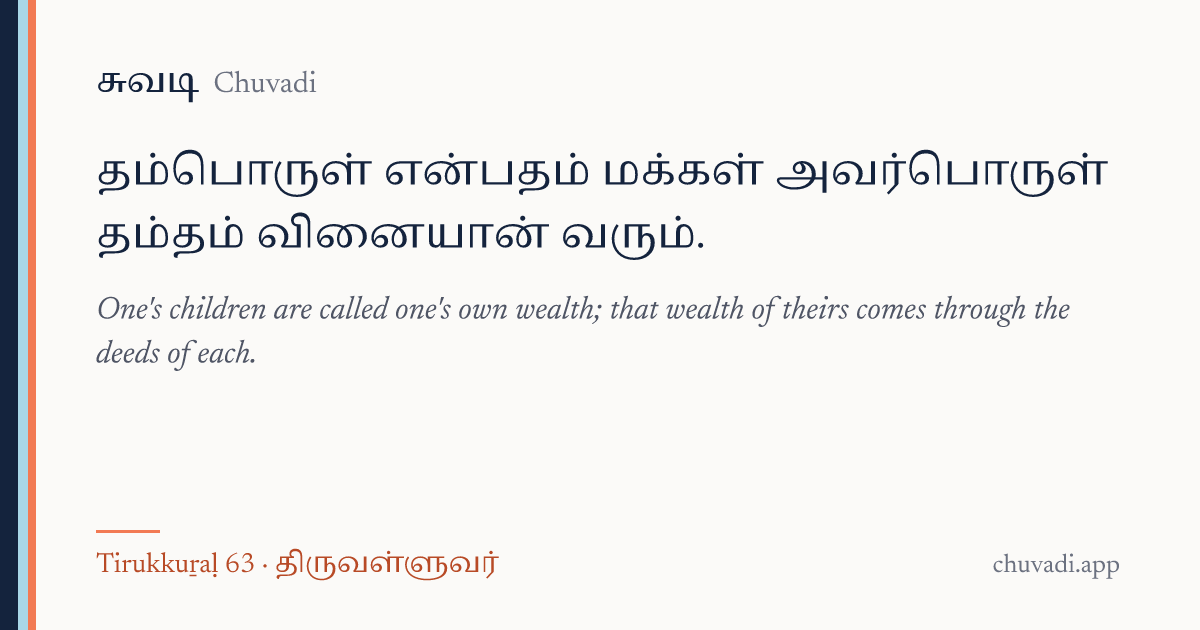
திருக்குறள் 63
பாடல் · The poem
Tap a word to see where else it occurs.
பொருள் · Meaning in TamilAI
ஒருவருக்குத் தம் செல்வம் என்று சொல்லத் தக்கவர்கள் அவருடைய மக்களே; அந்த மக்களால் வரும் செல்வமோ, அவரவர் செய்யும் வினைகளால் வந்து சேரும்.
‘பொருள்’ என்ற சொல் இருமுறை வருகிறது. ‘தம்தம் வினை’ என்பது மக்களின் செயல்களா, பெற்றோரின் முன்வினையா என்பது தெளிவாக இல்லை; பெற்றோர் செய்த நல்வினையின் பயனாகவே நல்ல மக்கள் வாய்க்கிறார்கள் என்று இதற்கு வேறு பொருளும் கொள்ளப்படுகிறது. புதல்வரைப் பெறுதல் அதிகாரம் மக்களை உண்மைச் செல்வமாகக் காட்டுகிறது.
ஆங்கிலம் · English translationAI
Translation
- One's children are called one's own wealth; that wealth of theirs
- comes through the deeds of each.
What the poem says
The first line gives a common saying: children are one's poruḷ, wealth or possession. The second qualifies it, but how is disputed.
One reading: the children's 'wealth', the good they bring, comes from their own deeds, so they are a parent's wealth only through the merit they themselves earn. Another reading takes tam tam viṉai as the parents' deeds: the good of one's children comes from one's own past acts, so a parent receives good children as the fruit of merit. Traditional commentators lean toward a version of the second. The Tamil, with its doubled tam tam, 'their own, each their own', leaves it open.
யாப்பு · Metre: veṇpā scansion
வெண்பா Scans as a veṇpā as printed: every சீர் is one a veṇpā allows, and every join keeps வெண்டளை.
நேர் one letter, short or long, with any consonant after it · நிரை a short letter with the letter after it · a final உ before a vowel is dropped, and ஐ after a word's first letter counts as short.