



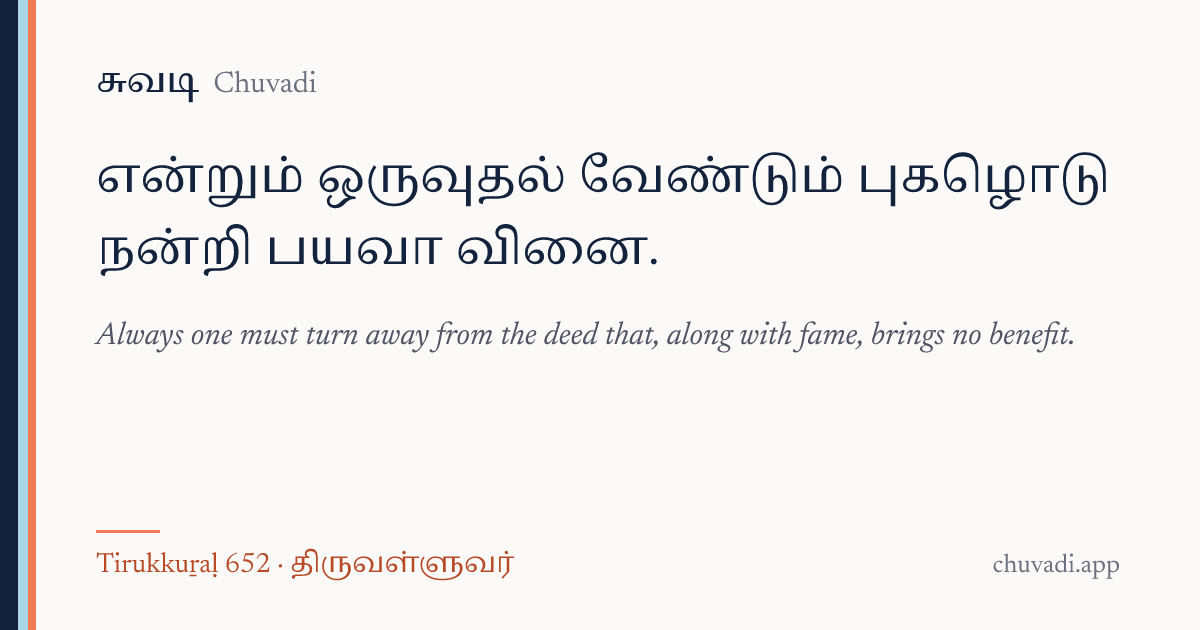
திருக்குறள் 652
பாடல் · The poem
Tap a word to see where else it occurs.
பொருள் · Meaning in TamilAI
புகழையும் நன்மையையும் ஒருசேரத் தராத செயலை எப்போதும் விலக்கிவிட வேண்டும்.
வினைத்தூய்மை அதிகாரம் தூய செயலின் இரண்டு பயன்களாகப் புகழையும் நன்மையையும் காட்டுகிறது. இவ்விரண்டையும் தராத செயல் உழைப்பை வீணாக்குவதோடு பெயரையும் கெடுக்கும் என்பது கருத்து. ‘என்றும்’ என்ற சொல் இதற்கு விதிவிலக்கே இல்லை என்பதை வலியுறுத்துகிறது.
ஆங்கிலம் · English translationAI
Translation
- Always one must turn away from the deed that, along with fame,
- brings no benefit.
What the poem says
Some acts win neither praise nor any real good. Those, the couplet says, should be avoided not now and then but always (eṉṟum). The two tests are named together: renown (pukaḻ) in this world and naṉṟi, benefit or merit, which may also look toward the life beyond.
Commentators differ on how to take the pairing. One reading is that an act must fail both tests to be shunned; another, closer to the chapter's strict tone, is that a deed lacking either fame or good is to be avoided. The Tamil allows both.
யாப்பு · Metre: veṇpā scansion
வெண்பா Scans as a veṇpā as printed: every சீர் is one a veṇpā allows, and every join keeps வெண்டளை.
நேர் one letter, short or long, with any consonant after it · நிரை a short letter with the letter after it · a final உ before a vowel is dropped, and ஐ after a word's first letter counts as short.