



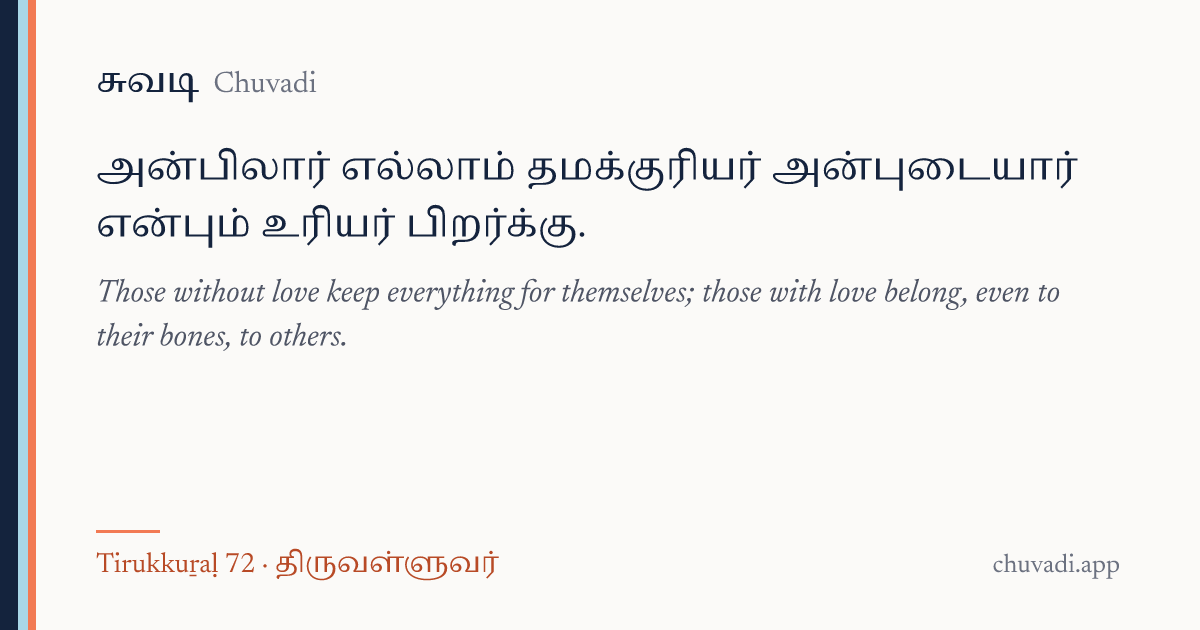
திருக்குறள் 72
பாடல் · The poem
Tap a word to see where else it occurs.
பொருள் · Meaning in TamilAI
அன்பில்லாதவர்கள் எல்லாவற்றையும் தமக்கே உரியதாகக் கொள்வர்; அன்புடையவர்களோ தம் எலும்பையும் பிறருக்கு உரியதாகத் தருவர்.
‘என்பு’ என்பது எலும்பு; உடம்பின் கடைசிப் பகுதியையும் பிறருக்காகக் கொடுக்கத் தயார் என்ற மிகைப்படுத்தல் அன்பின் ஆழத்தைக் காட்டுகிறது. அன்புடைமை அதிகாரம் தன்னலத்தையும் தன்னைத் தருதலையும் எதிரெதிராக நிறுத்துகிறது.
ஆங்கிலம் · English translationAI
Translation
- Those without love keep everything for themselves; those with love
- belong, even to their bones, to others.
What the poem says
The couplet divides people into two kinds. The loveless are tamakku uriyar, 'belonging to themselves': everything they have, they keep. The loving are piṟarkku uriyar, 'belonging to others', down to their very bones.
The 'bones' (eṉpu) make the claim physical and extreme. Traditional commentators connect it with stories of those who gave their bodies for others, such as the sage Dadhīci, who gave his bones to make a weapon for the gods, though the couplet names no one. The pun between aṉpu (love) and eṉpu (bone) runs through this chapter and reappears in 73, 77 and 80.
யாப்பு · Metre: veṇpā scansion
வெண்பா Scans as a veṇpā as printed: every சீர் is one a veṇpā allows, and every join keeps வெண்டளை.
நேர் one letter, short or long, with any consonant after it · நிரை a short letter with the letter after it · a final உ before a vowel is dropped, and ஐ after a word's first letter counts as short.