



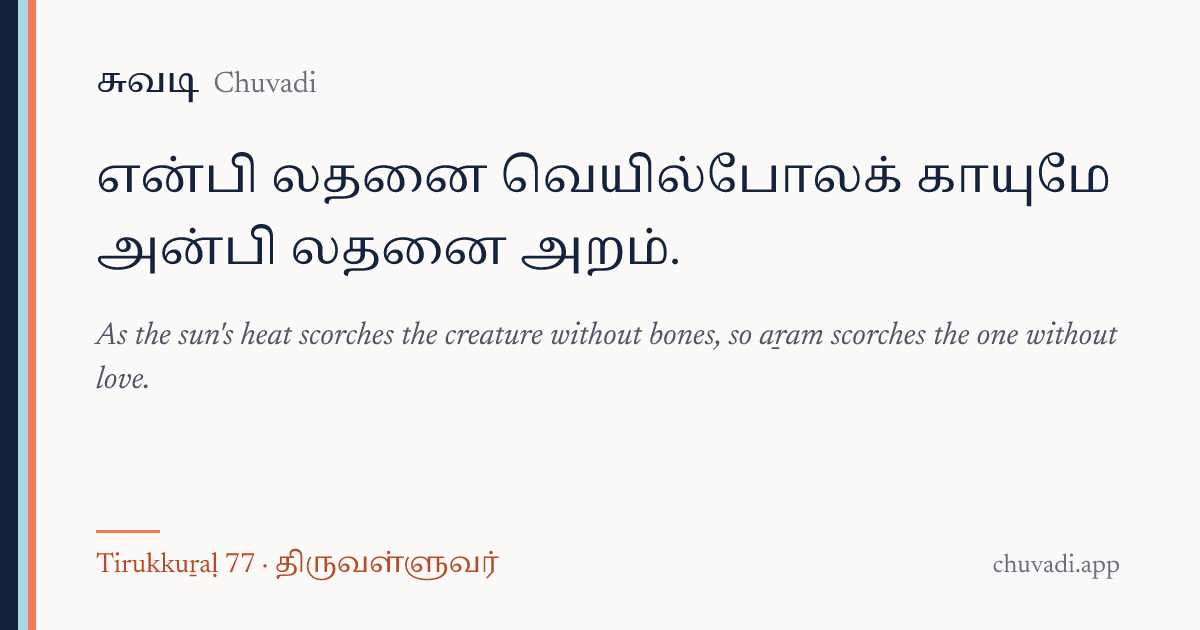
திருக்குறள் 77
பாடல் · The poem
Tap a word to see where else it occurs.
பொருள் · Meaning in TamilAI
எலும்பில்லாத புழுவை வெயில் வாட்டி வதைப்பது போல, அன்பில்லாத உயிரை அறம் வாட்டி வருத்தும்.
‘என்பிலது’, ‘அன்பிலது’ என்ற ஓசை ஒப்புமை உவமையை உறுதியாக்குகிறது. கடும் வெயிலிலிருந்து தப்ப முடியாத புழுவைப் போல, அன்பற்றவன் அறத்தின் தண்டனையிலிருந்து தப்ப முடியாது என்பது அன்புடைமை அதிகாரத்தின் கருத்து.
ஆங்கிலம் · English translationAI
Translation
- As the sun's heat scorches the creature without bones,
- so aṟam scorches the one without love.
What the poem says
A vivid comparison: just as the sun burns a boneless creature, such as a worm, so aṟam burns one who has no love.
The pun eṉpu / aṉpu, bone and love, gives the couplet its structure: eṉpilataṉai, 'that which has no bone', and aṉpilataṉai, 'that which has no love', are nearly the same sound. A worm in the sun has no protection and shrivels; a person without love has no shield when virtue, or moral law, comes to judge. Traditional commentators take aṟam here as the force of moral consequence, which punishes the loveless as surely as the sun dries the worm.
யாப்பு · Metre: veṇpā scansion
வெண்பா Scans as a veṇpā as printed: every சீர் is one a veṇpā allows, and every join keeps வெண்டளை.
நேர் one letter, short or long, with any consonant after it · நிரை a short letter with the letter after it · a final உ before a vowel is dropped, and ஐ after a word's first letter counts as short.