



திருக்குறள் 832
பாடல் · The poem
Tap a word to see where else it occurs.
பொருள் · Meaning in TamilAI
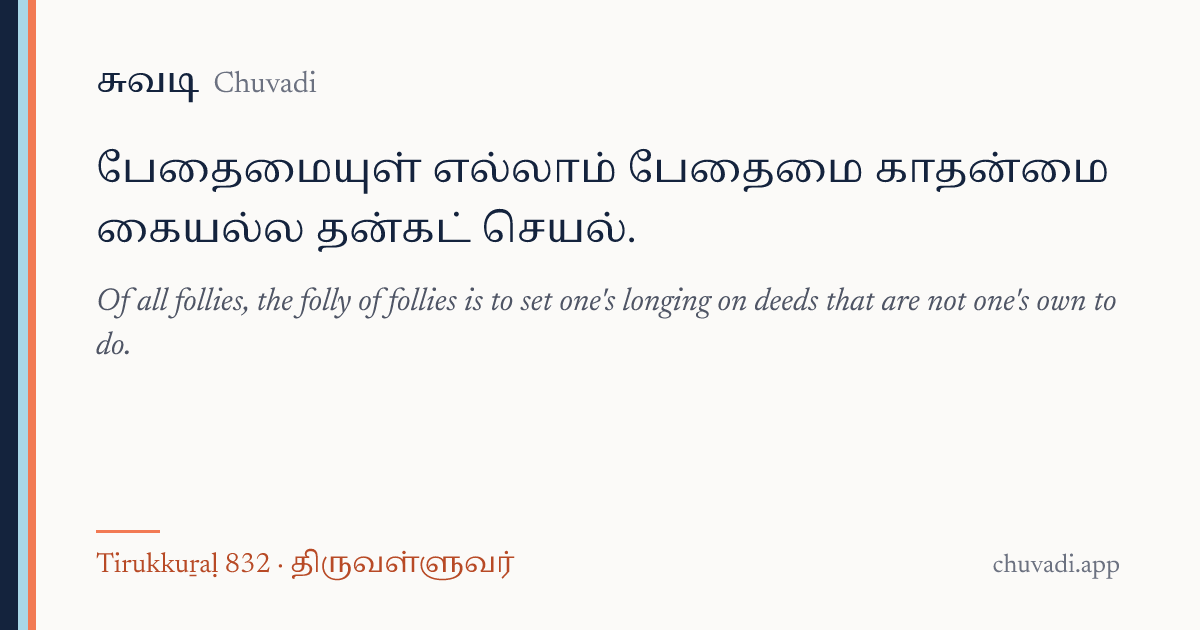
பேதைமைகள் எல்லாவற்றுள்ளும் தலையாய பேதைமை, தனக்குத் தகாத செயல்களின்மேல் ஆசை வைத்து அவற்றைச் செய்ய முனைவதே.
பேதைமை அதிகாரத்தில் 'கையல்ல' என்பதைத் தன் ஆற்றலுக்கு அப்பாற்பட்டவை என்றும், ஒழுக்கத்துக்கு மாறானவை என்றும் கொள்ளலாம்; இதற்கு வேறு பொருளும் கொள்ளப்படுகிறது.
ஆங்கிலம் · English translationAI
Translation
- Of all follies, the folly of follies is to set one's longing
- on deeds that are not one's own to do.
What the poem says
Among all the forms of folly, the greatest is desire for what lies outside one's proper conduct.
The phrase kaiyalla is the doubtful point. Kai means hand, and by extension one's way of acting. Kaiyalla may therefore mean actions improper to one's station and character, as traditional commentators usually take it, or simply things beyond one's grasp. The rendering tries to hold both: what is not one's own to do. Either way, the couplet locates the worst folly in misplaced desire.
யாப்பு · Metre: veṇpā scansion
சரிபார்க்க இயலவில்லை Does not scan with the rules checked here. It may need a sandhi reading the checker does not model yet, or the text may differ from the edition prosodists use.
- «எல்லாம்» → «பேதைமை» breaks வெண்டளை
நேர் one letter, short or long, with any consonant after it · நிரை a short letter with the letter after it · a final உ before a vowel is dropped, and ஐ after a word's first letter counts as short.