



திருக்குறள் 85
பாடல் · The poem
Tap a word to see where else it occurs.
பொருள் · Meaning in TamilAI
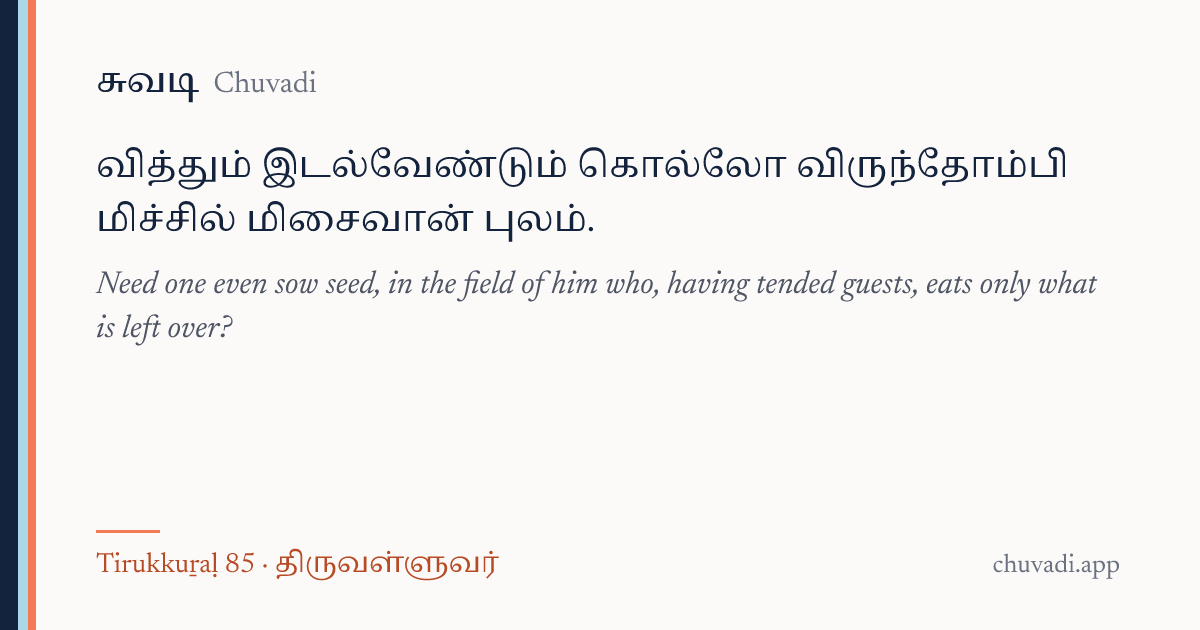
விருந்தினருக்கு முதலில் உணவளித்துவிட்டு மீதியை உண்பவனின் நிலத்தில் விதையும் விதைக்க வேண்டுமோ?
விடை சொல்லப்படாத இக்கேள்வி, விதைக்காமலே அவன் நிலம் விளையும் என்பதை உணர்த்துகிறது. விருந்தோம்பல் அதிகாரத்தின் இந்த மிகைப்படுத்தல் உழவு வாழ்வின் படிமத்தைக் கொண்டது. ‘மிச்சில்’ என்ற எளிய சொல் முரணைக் கூர்மையாக்குகிறது: குறைவாக எடுப்பவனுக்கே நிறைவாகக் கிடைக்கிறது.
ஆங்கிலம் · English translationAI
Translation
- Need one even sow seed, in the field of him who, having tended guests,
- eats only what is left over?
What the poem says
A rhetorical question. The man who feeds his guests first and eats only the leftovers (miccil) himself: does he even need to sow seed in his field? The implied answer is no; his field will yield by itself.
The image comes from farming life and is deliberately hyperbolic. The doubtful point is whether this is meant as literal promise, that the gods will make such a man's fields fruitful, or as a way of saying that his good fortune is assured. Traditional commentators tend toward the first. Miccil, 'remnants', can sound humble, even unappetising, which sharpens the paradox: the one who takes least receives most.
யாப்பு · Metre: veṇpā scansion
வெண்பா Scans as a veṇpā as printed: every சீர் is one a veṇpā allows, and every join keeps வெண்டளை.
நேர் one letter, short or long, with any consonant after it · நிரை a short letter with the letter after it · a final உ before a vowel is dropped, and ஐ after a word's first letter counts as short.