



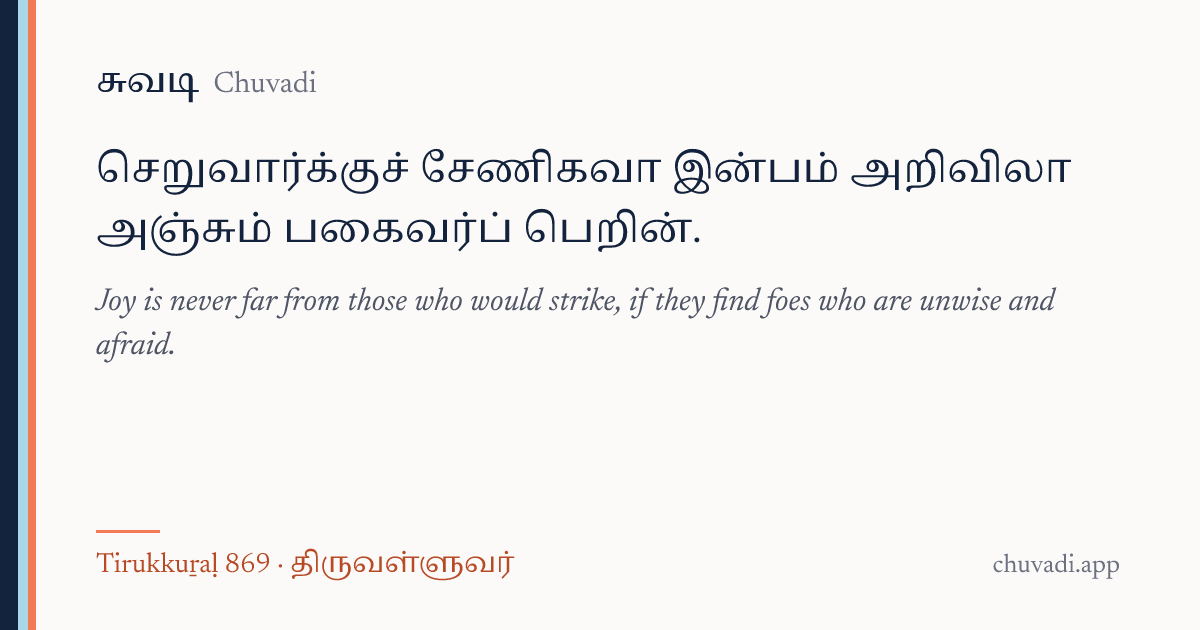
திருக்குறள் 869
பாடல் · The poem
Tap a word to see where else it occurs.
பொருள் · Meaning in TamilAI
அறிவில்லாத, அஞ்சுகின்ற பகைவர்கள் வாய்த்தால், அவர்களை எதிர்ப்பவர்களுக்கு இன்பம் தொலைவில் இருக்காது.
பகைமாட்சி அதிகாரத்தில், அறியாமையும் அச்சமும் பகைவனிடம் இருப்பதே நமக்குக் கிடைக்கும் பெரும் வாய்ப்பு என்கிறது. 'சேணிகவா' என்பது தொலைவில் விலகிப் போகாத, அதாவது அருகிலேயே உள்ள.
ஆங்கிலம் · English translationAI
Translation
- Joy is never far from those who would strike, if they find
- foes who are unwise and afraid.
What the poem says
For anyone set on conquest, enemies who are both foolish and timid are a constant source of pleasure.
Ceṟuvār, 'those who would crush', are the aggressors addressed in this chapter. Cēṇ ikavā, 'not departing far', means the joy is always near at hand. Aṟivilā añcum, 'unwise and fearful', is a pairing that recurs: fear without understanding makes an enemy helpless. The couplet continues the chapter's frank calculation of advantage.
யாப்பு · Metre: veṇpā scansion
வெண்பா Scans as a veṇpā as printed: every சீர் is one a veṇpā allows, and every join keeps வெண்டளை.
நேர் one letter, short or long, with any consonant after it · நிரை a short letter with the letter after it · a final உ before a vowel is dropped, and ஐ after a word's first letter counts as short.