



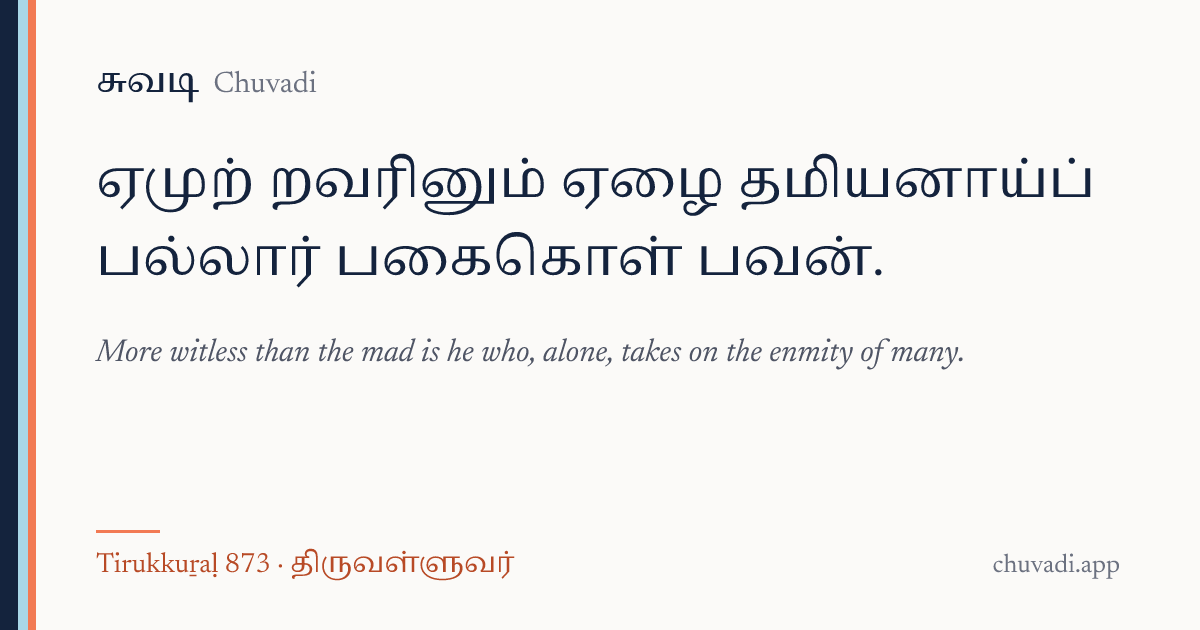
திருக்குறள் 873
பாடல் · The poem
Tap a word to see where else it occurs.
பொருள் · Meaning in TamilAI
துணையின்றித் தனியனாக இருந்துகொண்டு பலரோடு பகை கொள்பவன், பித்துப் பிடித்தவர்களைவிடவும் அறிவற்றவன்.
பகைத்திறந்தெரிதல் அதிகாரத்தில் 'ஏமுற்றவர்' என்பது மயக்கம் கொண்டவர், பித்தர்; 'ஏழை' என்பது இங்கே அறிவில் ஏழை, அதாவது பேதை. பலரோடு பகைப்பதே ஆபத்து; அதைத் தனியனாகச் செய்வது இரட்டிப்பு மடமை என்பது கருத்து.
ஆங்கிலம் · English translationAI
Translation
- More witless than the mad is he who, alone,
- takes on the enmity of many.
What the poem says
A man who makes many enemies while standing alone is more foolish than one who is out of his mind.
Ēmuṟṟavar, 'those who are deluded' or 'mad', are the benchmark against which folly is measured. Ēḻai, 'poor' or 'simple', here means pitiably foolish. Tamiyaṉāy, 'being alone', is the key condition: the error is not enmity as such but enmity without allies. The couplet reads as a practical rule of politics.
யாப்பு · Metre: veṇpā scansion
வெண்பா Scans as a veṇpā as printed: every சீர் is one a veṇpā allows, and every join keeps வெண்டளை.
நேர் one letter, short or long, with any consonant after it · நிரை a short letter with the letter after it · a final உ before a vowel is dropped, and ஐ after a word's first letter counts as short.