



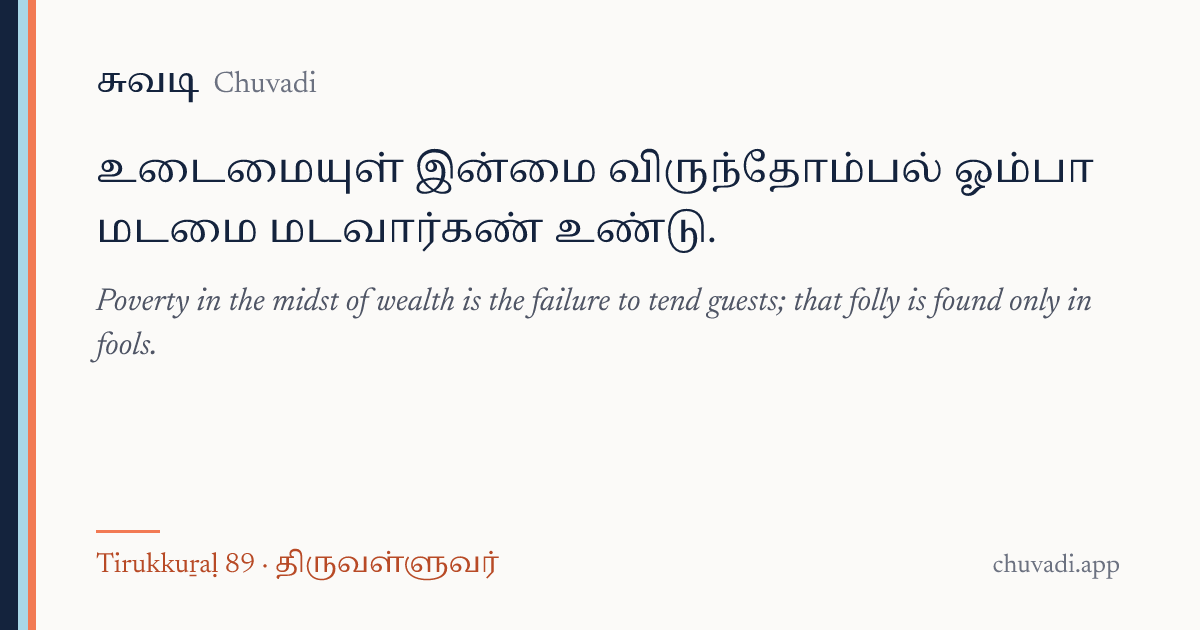
திருக்குறள் 89
பாடல் · The poem
Tap a word to see where else it occurs.
பொருள் · Meaning in TamilAI
செல்வம் இருக்கும்போதே வறுமை என்பது, விருந்தினரைப் போற்றாத அறியாமையே; அந்த அறியாமை அறிவில்லாதவர்களிடமே காணப்படும்.
‘உடைமையுள் இன்மை’ என்ற முரண்தொடர் விருந்தோம்பல் அதிகாரத்தின் இக்குறளின் மையம்: பொருள் இருந்தும் கொடுக்காதவன் உண்மையில் ஏழையே. ‘மடமை’, ‘மடவார்’ என்ற சொல் மீள்வு அந்த அறியாமையை அழுத்துகிறது.
ஆங்கிலம் · English translationAI
Translation
- Poverty in the midst of wealth is the failure to tend guests;
- that folly is found only in fools.
What the poem says
The couplet offers a paradox: uṭaimaiyuḷ iṉmai, 'having-nothing within having'. A rich man who will not look after guests is poor in the midst of his riches.
The second line names the cause as maṭamai, folly or ignorance, found in maṭavār, the foolish. The repetition is emphatic: such stupidity belongs to fools alone. The couplet does not call refusal of hospitality wicked, but stupid; it treats generosity as plain good sense. This fits the chapter's practical argument that hospitality enriches rather than impoverishes (83, 85).
யாப்பு · Metre: veṇpā scansion
வெண்பா Scans as a veṇpā as printed: every சீர் is one a veṇpā allows, and every join keeps வெண்டளை.
நேர் one letter, short or long, with any consonant after it · நிரை a short letter with the letter after it · a final உ before a vowel is dropped, and ஐ after a word's first letter counts as short.