



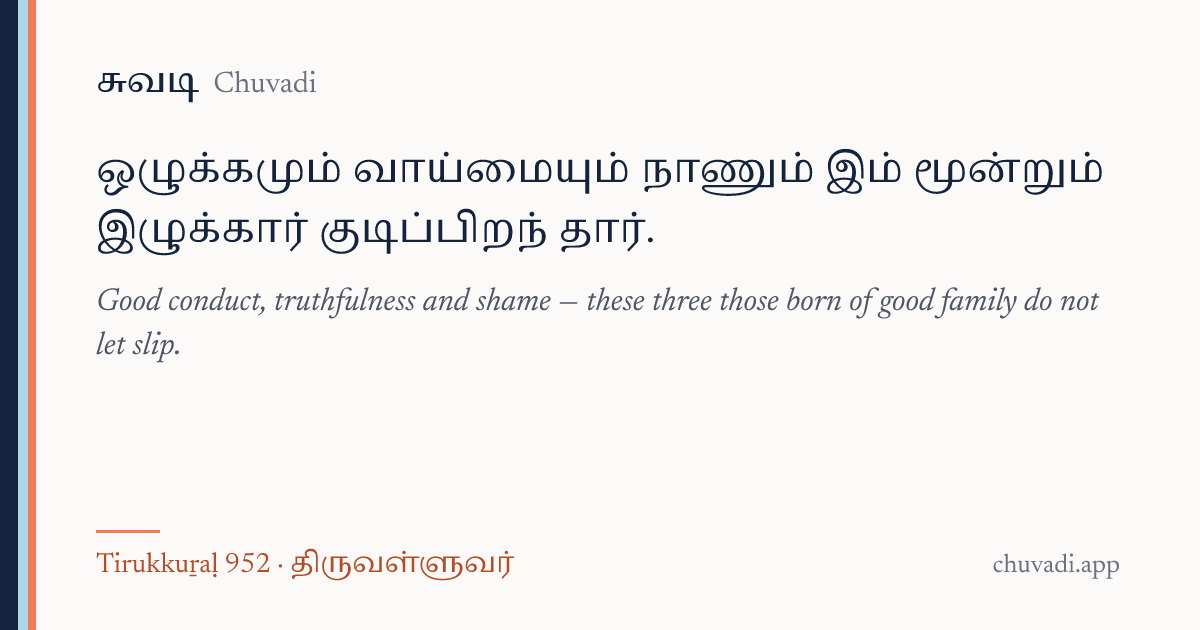
திருக்குறள் 952
பாடல் · The poem
Tap a word to see where else it occurs.
பொருள் · Meaning in TamilAI
நல்ல ஒழுக்கம், உண்மை பேசுதல், பழிக்கு அஞ்சும் நாணம் ஆகிய இம்மூன்றிலிருந்தும் நற்குடியில் பிறந்தவர்கள் ஒருபோதும் தவற மாட்டார்கள்.
குடிமை அதிகாரம். நற்குடியின் அடையாளம் பிறப்பு அல்ல, இந்த மூன்று பண்புகளைக் காப்பதுதான் என்று இக்குறள் மறைமுகமாகச் சொல்கிறது. ‘இழுக்கார்’ என்பது வழுக்கி விழாமல் நிற்பதைக் குறிக்கும் சொல்.
ஆங்கிலம் · English translationAI
Translation
- Good conduct, truthfulness and shame — these three
- those born of good family do not let slip.
What the poem says
Three virtues are listed: oḻukkam, right conduct; vāymai, truthfulness; and nāṇ, shame or modesty. The well-born do not iḻukku, 'slip' or 'fail', in any of them.
The verb iḻukkār, 'they do not slip', presents the virtues as a footing that might be lost. The family's role is to keep one steady on it. The chapter treats good birth less as privilege than as an obligation to keep these standards.
யாப்பு · Metre: veṇpā scansion
வெண்பா · சீர் இணைத்து Scans as a veṇpā once a word printed in two parts is read as one சீர்.
நேர் one letter, short or long, with any consonant after it · நிரை a short letter with the letter after it · a final உ before a vowel is dropped, and ஐ after a word's first letter counts as short.