



தொல்காப்பியம் 1002 · பொருள் 1.56
பாடல் · The poem
Tap a word to see where else it occurs.
பொருள் · Meaning in TamilAI
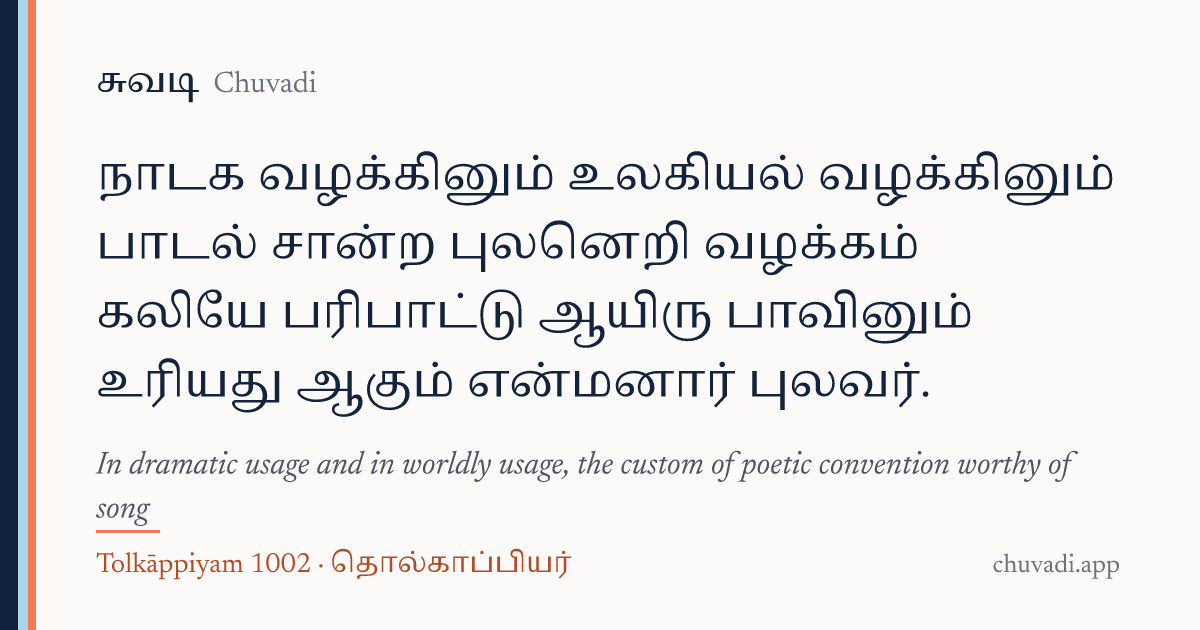
நாடக வழக்கிலும் உலகியல் வழக்கிலும் பாடுதற்குத் தகுந்த புலனெறி வழக்கம் கலிப்பா, பரிபாடல் என்னும் இரண்டு பாவகைகளிலும் வருவதற்கு உரியது என்று புலவர் கூறுவர்.
இளம்பூரணர்
இவர் நாடக வழக்கைப் புனைந்துரை மரபாகவும், உலகியல் வழக்கை உலகில் நடப்பதை ஒட்டிய மரபாகவும் கொண்டு, இவ்விரண்டாலும் அமையும் அகப்பொருள் கலி, பரிபாடல் என்னும் இரு பாக்களுக்கும் சிறப்பாக உரியது எனப் பொருள் கொள்வார்.
நச்சினார்க்கினியர்
இவரும் நாடக வழக்கைச் சுவைபட வருவனவற்றை ஒருங்கு சேர்த்துப் புனைந்து கூறும் மரபாகவும், உலகியல் வழக்கை உலகத்தார் ஒழுகும் முறையாகவும் விளக்குவார்; அகவல் முதலிய பிற பாக்களிலும் அகப்பொருள் வருவதை மறுக்கமாட்டார்.
நாடக வழக்கு என்பது புனைந்து உரைக்கும் மரபு; உலகியல் வழக்கு என்பது உலகில் நடப்பதை ஒட்டியது. அகவல் முதலிய பிற பாக்களிலும் அகப்பொருள் வரும்; ஆயினும் இவ்விரண்டும் அதற்குச் சிறப்பாக ஏற்றவை என்று உரையாசிரியர்கள் விளக்குவர்.
ஆங்கிலம் · English translationAI
Translation
- In dramatic usage and in worldly usage,
- the custom of poetic convention worthy of song
- in both the metres, kali and paripattu,
- is proper, say the poets.
What the poem says
Akam poetry draws on two kinds of usage: nāṭaka vaḻakku "dramatic usage", the idealised conventions of the stage, and ulakiyal vaḻakku "the usage of the world", things as they happen in life. The convention of poetry (pulaṉeṟi vaḻakkam) built from both is especially at home in the two song-metres kali and paripāṭal, which are suited to dialogue and to drama.
The commentators explain that the other metres, such as akaval, also carry akam, but these two are particularly fit for it. The line separating "dramatic" and "worldly" usage is a famous distinction in later criticism.