



தொல்காப்பியம் 1009 · பொருள் 2.5
பாடல் · The poem
Tap a word to see where else it occurs.
பொருள் · Meaning in TamilAI
வெறியாட்டு அறியும் சிறப்பும் கடுஞ்சொல்லும் உடைய வேலன் வெறியாட்டு நிகழ்த்தும் காந்தளும்; பகை மிகுந்தபோது வேந்தரிடையே தனித்துத் தோன்ற விரும்பி, பெரும்புகழ் உடைய போந்தை, வேம்பு, ஆர் என்னும் பூக்களைப் பெரும்படையினர் அணிவதும்; வாடா வள்ளியும்; வீரர் போற்றும் ஓடாக் கழல்நிலையும்; பகைவேந்தன் வீழ்வதை உணர்த்தும் உன்னநிலையும்; மாயோனுக்கு உரிய பெருஞ்சிறப்புடைய பூவைநிலையும்; கடும்போரை ஓட்டி ஆநிரையை மீட்டுத் தருதல், சிறந்த வேந்தனின் பெருமையை எடுத்துரைத்தல், தன் வீரத்தைப் பற்றிய நெடுமொழி கூறுதல் ஆகியவற்றை உடைய கரந்தையும்; வரும் தூசிப்படையைத் தாங்குதல், வாள் பட்டு வீழ்தல் என்னும் இருவகைப் பிள்ளைநிலையும்; வாளால் போரிட்டு வென்று எழுந்தவனுக்கு மகிழ்ந்து பறை முழங்க நாடு அளிக்கும் பிள்ளையாட்டும்; கல் காண்டல், கால்கோள், நீர்ப்படை, நடுதல், சிறந்த மரபில் பெரும்படையல் இட்டு வாழ்த்தல் என்னும் நடுகல் பற்றிய ஆறு நிலைகளும் — ஆக இருபத்தொரு துறைகள் உண்டு.
இளம்பூரணர்
இவர் காந்தள் முதல் நடுகல் பற்றிய ஆறு நிலைகள் ஈறாக உள்ள இருபத்தொரு துறைகளையும் வெட்சியைச் சார்ந்தனவாகக் கொண்டு, ஆநிரை மீட்கும் கரந்தையைத் தனித்திணையாக்காமல் இவற்றுள் அடக்குவார்; போந்தை, வேம்பு, ஆர் என்பவற்றைச் சேர, பாண்டிய, சோழர் பூக்களாக விளக்குவார்.
நச்சினார்க்கினியர்
இவரும் கரந்தையைத் தனித்திணையாகக் கொள்ளாமல் வெட்சியின் மறுதலையாக இதனுள் அடக்குவார்; இத்துறைகளுள் சில வெட்சிக்கு மட்டுமன்றிப் பிற புறத்திணைகளுக்கும் பொதுவாக வரும் என்று கொள்வதாகத் தெரிகிறது. இருபத்தொன்றை இவர் எண்ணும் முறை இங்குச் சரிபார்க்கப்படவில்லை.
போந்தை சேரருக்கும், வேம்பு பாண்டியருக்கும், ஆர் சோழருக்கும் உரிய பூக்கள். ஆநிரை மீட்கும் கரந்தையைத் தனித்திணையாகக் கொள்ளாமல் இப்பட்டியலுள் அடக்குவது உரையாசிரியர் வழக்கு; இருபத்தொன்றை எண்ணும் முறையிலும், இவற்றுள் சில எல்லாப் புறத்திணைக்கும் பொதுவா என்பதிலும் அவர்களிடையே வேறுபாடு உண்டு.
ஆங்கிலம் · English translationAI
Translation
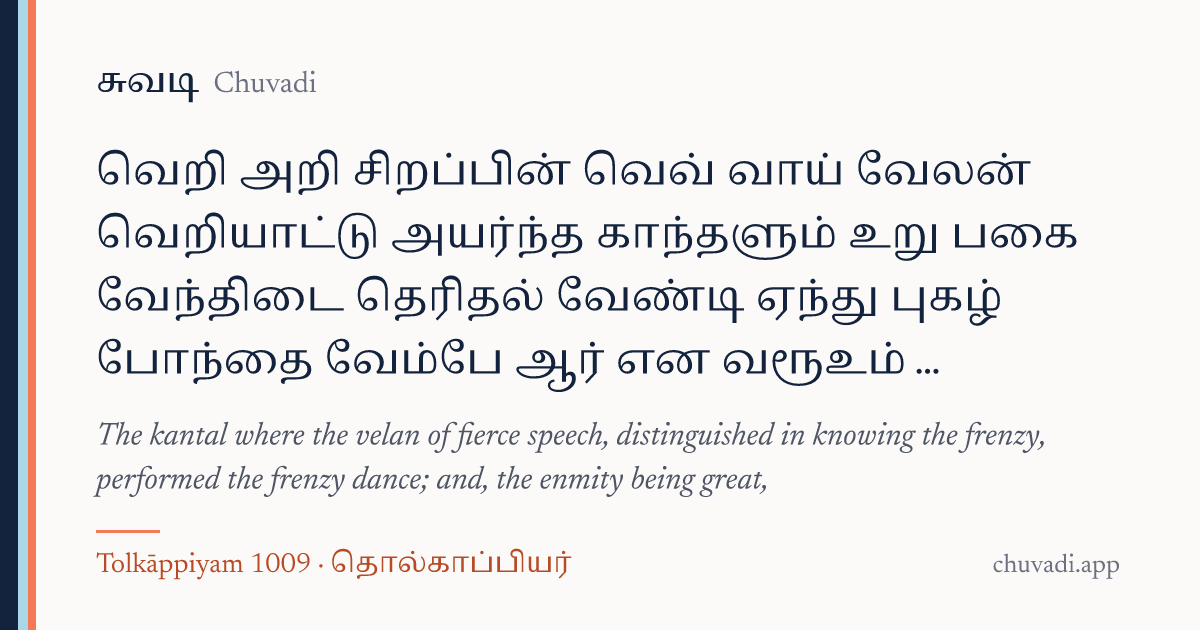
- The kantal where the velan of fierce speech, distinguished in knowing the frenzy,
- performed the frenzy dance; and, the enmity being great,
- wishing to stand out among kings, of lofty fame,
- palmyra, neem and atti, as they come,
- the flowers worn by those of mighty armies;
- the unfading valli; praised by warriors,
- including the state of the anklet that does not flee; the unretreating
- unna state, where the hostile king was set down;
- of the abiding great distinction that Mayon loves,
- the puvai state of unfailing eminent fame;
- driving back the fierce battle, and bringing the cattle back,
- proclaiming the distinction of the worthy king,
- and joining to oneself the boast of foremost valour,
- the karantai of the tradition proper to those; and besides,
- withstanding the advancing vanguard, and falling when the sword strikes home: thus
- the pillai state of two kinds;
- rejoicing in him who rose after fighting with the sword, with drums beating,
- the pillai dance in which land was granted to him;
- seeing the stone, laying its base, bathing it, planting it,
- and praising it with the great offering of worthy tradition: thus
- joined with the stone of six traditions,
- it has the thrice seven turai that were told.
What the poem says
A further list attached to veṭci: twenty-one tuṟai. They include kāntaḷ, the veṟi dance of the vēlaṉ, the priest of Murukaṉ, wearing the kāntaḷ flower; the flowers of the three great kings worn in battle: palmyra (Cēra), neem (Pāṇṭiya) and ār, the ātti (Cōḻa); vaḷḷi, a dance; kaḻal nilai, warriors praising one whose anklet marks him as one who never flees; uṉṉa nilai, with the omen of the uṉṉa tree, foretelling the fall of a hostile king; pūvai nilai, praising a king by likening him to Māyōṉ, whose colour is that of the pūvai flower; karantai, the counter-raid that drives back the raiders and recovers the cattle, with praise of the king and the warrior's boast; the two kinds of piḷḷai nilai, holding the advancing vanguard and falling as one's sword strikes; piḷḷaiyāṭṭu, the celebration in which a victorious warrior is granted land; and the six stages of the naṭukal "hero stone": choosing the stone, its base-laying, its bathing, planting it, and its worship with offerings.
The commentators differ in how they place these: the common reading counts karantai, the rescue of the cattle, inside this list rather than as a separate tiṇai; how the twenty-one are counted and whether some belong to all the puṟam tiṇais in common is discussed among them. The line division is uneven and several items run across lines.