



தொல்காப்பியம் 1011 · பொருள் 2.7
பாடல் · The poem
Tap a word to see where else it occurs.
பொருள் · Meaning in TamilAI
படை செல்லும் ஆரவாரமும், பகைநாட்டில் தீ பரப்புதலும், ஒளிபெற்ற பெருமையும், கொடுத்தலால் வரும் கொடைச்சிறப்பும், நெருங்கிச் சென்று கொன்ற வெற்றியும், அரசனிடம் மாராயம் பெற்ற வீரனின் நெடுமொழியும், பகைவரைப் பொருட்படுத்தாமல் செல்லும் பேராண்மையும், பெருக்கெடுத்து வரும் நீரைக் கல்லணை தடுப்பது போலப் பகைப்படையை ஒருவனே தாங்கும் பெருமையும், வீரர்க்குச் சோற்றுத் திரளை பகிர்ந்தளிக்கும் பெருஞ்சோற்று நிலையும், வென்றவரின் புகழும் தோற்றவரின் தேய்வும், குறையாத சிறப்புடைய கொற்றவள்ளையும், தோற்றோடும் படையைத் தாங்கும் தழிஞ்சியும் சேர்ந்து, வஞ்சிக்குப் பதின்மூன்று துறைகள் உண்டு.
இளம்பூரணர்
இவர் படை இயங்கு அரவம் முதலிய பதின்மூன்றையும் வஞ்சியின் துறைகளாகக் கொண்டு, தழிஞ்சி என்பதைத் தோற்றோரையும் புண்பட்டோரையும் துரத்தாமல் அருளுடன் நடத்துதல் எனப் பொருள் கொள்வார்.
நச்சினார்க்கினியர்
இவரும் இவற்றை வஞ்சித் துறைகளாகவே கொள்வார்; பதின்மூன்றை இவர் எண்ணும் முறையும் சில துறைகளுக்கு இவர் தரும் பொருளும் இங்குச் சரிபார்க்கப்படவில்லை.
தழிஞ்சி என்பதைத் தோற்ற படையினரையும் புண்பட்டோரையும் துரத்தாமல் அருளுடன் நடத்துதல் என்று உரையாசிரியர்கள் விளக்குவர். பதின்மூன்றை எண்ணும் முறையில் சிறிய வேறுபாடுகள் உண்டு.
ஆங்கிலம் · English translationAI
Translation
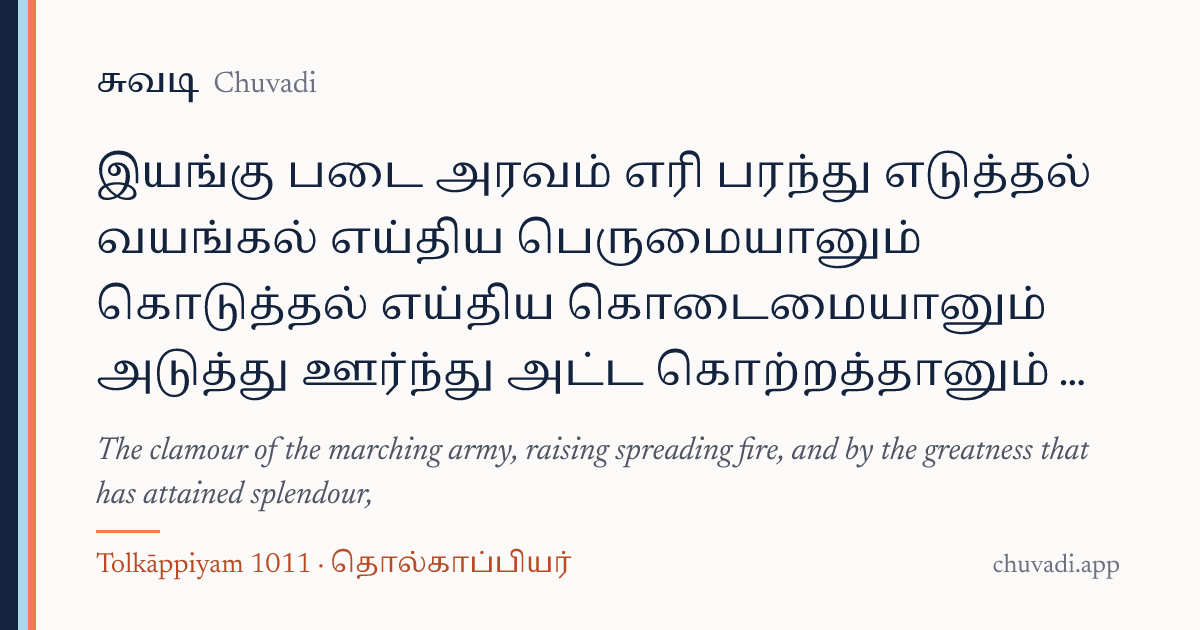
- The clamour of the marching army, raising spreading fire,
- and by the greatness that has attained splendour,
- by the generosity that has attained to giving,
- by the victory of pressing in and slaying,
- by the boast of one who has received the king's honour,
- the side of great valour that drives on, holding the foe as nothing,
- like a stone dam against water rushing in flood,
- and by the greatness of one man holding it back,
- the state of the great rice where the portions are shared,
- the glory of the victors and the waning of the defeated,
- the victory song of undiminished distinction,
- together with tazhinci of those who aid the broken army,
- thirteen turai of surpassing great distinction.
What the poem says
The thirteen tuṟai of vañci: the noise of the advancing army (iyaṅku paṭai aravam); setting fire to the enemy land (eri parantu eṭuttal); the splendour of the king; his generosity in giving; the victory won by pressing close and slaying; the boast (neṭumoḻi) of a warrior who has received mārāyam, the king's honour; the great valour that presses on, counting the enemy as nothing; the greatness of a single warrior who holds back the enemy host like a stone dam against a flood; peruñcōṟṟu nilai, the great feast at which the king shares out balls of rice to his warriors before battle; the glory of the victors and the decline of the vanquished; koṟṟa vaḷḷai, the song of victory; and taḻiñci, the gracious conduct toward a broken army.
Taḻiñci is explained by the commentators as sparing or caring for the defeated and the wounded, rather than pursuing them. The count of thirteen depends on taking "the glory of the victors and the waning of the defeated" as one or two items; the explanations differ slightly.