



தொல்காப்பியம் 1031 · பொருள் 2.27
பாடல் · The poem
Tap a word to see where else it occurs.
பொருள் · Meaning in TamilAI
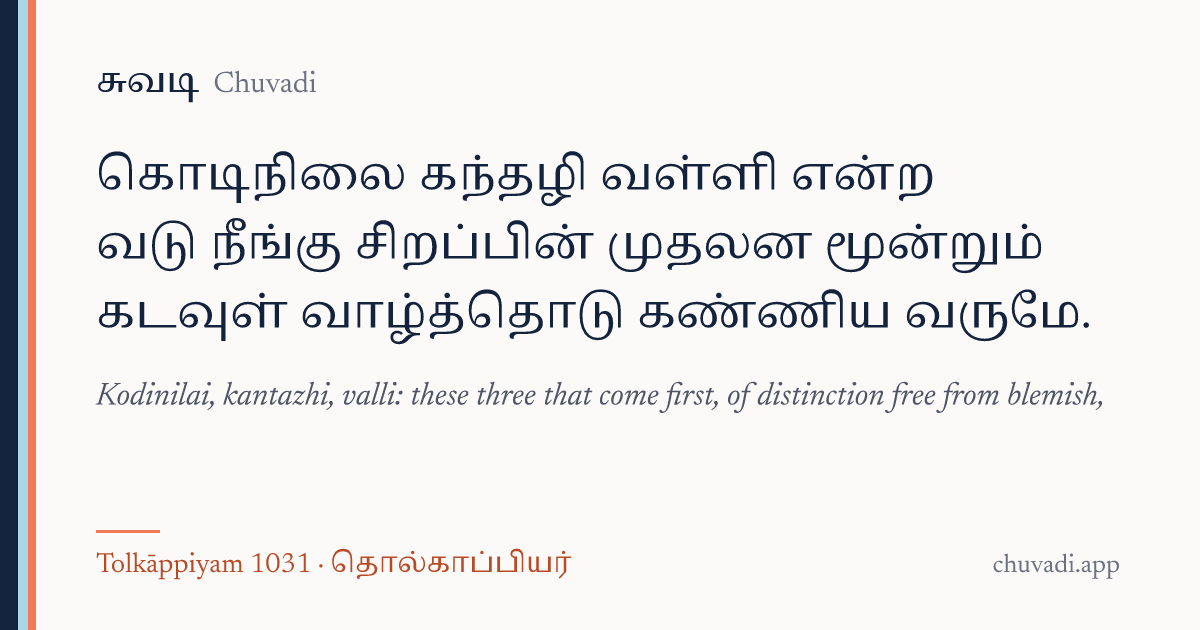
கொடிநிலை, கந்தழி, வள்ளி என்னும் குற்றமற்ற சிறப்புடைய முதன்மையான மூன்றும் கடவுள் வாழ்த்தோடு சேர்ந்து வரும்.
இளம்பூரணர்
இவர் கொடிநிலையைக் கொடியைப் புகழ்வதாகவும், கந்தழியைப் பற்றற்று நிற்கும் இறைப்பொருளைப் புகழ்வதாகவும், வள்ளியை முருகனுக்குரிய கூத்தாகவும் கொண்டு, இம்மூன்றும் கடவுள் வாழ்த்தோடு சேர்ந்து வரும் எனப் பொருள் கொள்வதாக அறியப்படுகிறது.
நச்சினார்க்கினியர்
இவர் இம்மூன்றையும் வேறுவிதமாக, கொடிநிலையை ஞாயிறாகவும், கந்தழியைத் தீயாகவும், வள்ளியைத் திங்களாகவும் கொண்டு, இவற்றை வாழ்த்துவது கடவுள் வாழ்த்தோடு சேர்ந்து வரும் எனப் பொருள் கொள்வதாக அறியப்படுகிறது.
இம்மூன்றின் பொருளில் உரையாசிரியர்களிடையே வேறுபாடு உண்டு. கொடிநிலை கொடியைப் புகழ்வது, கந்தழி பற்றற்ற இறைவனை அல்லது திருமாலின் வெற்றியைப் புகழ்வது, வள்ளி முருகனுக்கு ஆடும் கூத்து என்பது ஒரு விளக்கம்; ஞாயிறு, தீ, திங்கள் என்பது மற்றொரு விளக்கம். ஆகவே இவற்றின் பொருள் உறுதியானது அன்று.
ஆங்கிலம் · English translationAI
Translation
- Kodinilai, kantazhi, valli: these
- three that come first, of distinction free from blemish,
- come intent together with the praise of god.
What the poem says
Three themes, koṭinilai, kantaḻi and vaḷḷi, the foremost and faultless, belong with kaṭavuḷ vāḻttu "the praise of god". Their identification has been debated since the old commentaries. One line of interpretation takes koṭinilai as praise of the banner (of a god or king), kantaḻi as praise of the god who is beyond all attachment, or of Tirumāl's destruction of the demon's fortress, and vaḷḷi as the dance in honour of Murukaṉ. Another old reading takes the three as the sun, fire and the moon.
Because the commentators disagree and the names are not explained in the nūṟpā, the sense of all three terms remains uncertain.