



தொல்காப்பியம் 1034 · பொருள் 2.30
பாடல் · The poem
Tap a word to see where else it occurs.
பொருள் · Meaning in TamilAI
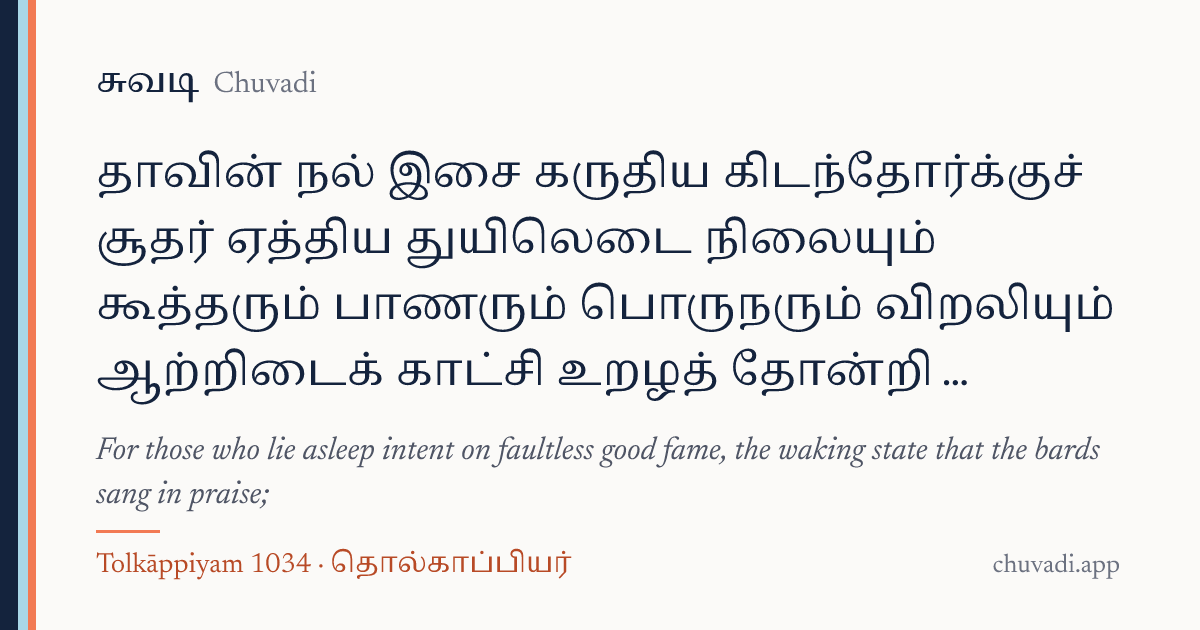
குற்றமற்ற புகழைக் கருதி உறங்கும் அரசனைச் சூதர் புகழ்ந்து எழுப்பும் துயிலெடை நிலையும்; கூத்தரும் பாணரும் பொருநரும் விறலியும் வழியில் ஒருவரை ஒருவர் சந்தித்து, தாம் பெற்ற பெருவளத்தைப் பெறாதவர்க்கு அறிவித்து, அங்குச் சென்று பயன் பெறுமாறு சொல்லும் ஆற்றுப்படைப் பக்கமும்; சிறந்த நாளாகிய பிறந்த நாளில் பகையை நீக்கிக் கொண்டாடும் பெருமங்கலமும்; சிறந்த புகழுடைய மண்ணுமங்கலமும்; பெருமிதத்துடன் போற்றப்படும் குடைநிழல் மரபும்; பகைவரைக் குறித்த வாள்மங்கலமும்; பகைவரின் வலிய மதிலை அழித்தபின் செய்யும் மண்ணுமங்கலமும்; பரிசில் வேண்டி வாயிலில் நிற்கும் கடைக்கூட்டு நிலையும்; பரிசில் பெற்றபின் அச்செல்வத்தைப் புகழ்ந்து விடைபெறும் இருவகை விடையும்; அச்சமும் உவகையும் குறையாமல், நாள், பறவை முதலியவற்றின் நிமித்தங்களைக் கொண்டு காலத்தைக் கருதிக் கூறும் ஓம்படையும் — உலகில் நிகழும் நடைமுறைக் குறிப்புகளால் இவை மூன்று காலத்தோடும் பொருந்தி வரும்.
இளம்பூரணர்
இவர் துயிலெடைநிலை, ஆற்றுப்படை, பெருமங்கலம், மண்ணுமங்கலம், குடைநிழல் மரபு முதலியவற்றையும் பாடாணின் துறைகளாகக் கொண்டு, கூத்தர், பாணர், பொருநர், விறலி ஆகியோர் தாம் பெற்ற வளத்தைப் பிறர்க்கு அறிவித்து ஆற்றுப்படுத்துதலை விளக்குவார்.
நச்சினார்க்கினியர்
இவரும் இவற்றைப் பாடாண் துறைகளாகக் கொள்வார்; இருமுறை வரும் மண்ணுமங்கலம், 'இருவகை விடை' முதலியவற்றுக்கு இவர் தரும் பொருள் இங்குச் சரிபார்க்கப்படவில்லை.
இரண்டு இடங்களில் வரும் மண்ணுமங்கலம் இருவேறு சடங்குகளா, 'இருவகை விடை' எவை என்பன போன்றவற்றில் உரையாசிரியர்கள் வேறுபட்ட விளக்கம் தருவர்.
ஆங்கிலம் · English translationAI
Translation
- For those who lie asleep intent on faultless good fame,
- the waking state that the bards sang in praise;
- dancers and minstrels and drummer-bards and the dancing woman,
- appearing so as to meet one another on the road,
- telling those who have not received of the great wealth received,
- the side where they spoke, so that going they may gain;
- on the special day, putting away enmity,
- the great auspicious rite on the day of birth,
- the auspicious bath of distinguished fame,
- the tradition of the umbrella's shade praised with stately gait,
- the auspicious rite of the sword aimed at the hostile,
- the auspicious bath when the enemy's strong fort is destroyed,
- the state at the gate urging the gift,
- and after receiving, praising the great wealth,
- the two kinds of leave-taking that appear in the course;
- fear and joy without remainder,
- the omens of days and birds and other things,
- including the charge of protection with a view to time:
- by the signs of conduct that come in the world,
- they come intent along with the three times.
What the poem says
The last list of pāṭāṇ themes: tuyileṭai nilai, the bards (cūtar) waking a famous king from sleep with praise; āṟṟuppaṭai, in which dancers, minstrels (pāṇar), drummer-bards (porunar) and the viṟali "dancing woman" meet a fellow artist on the road and, telling of the great gifts they received, direct him to the patron; perumaṅkalam, the king's birthday, when enmities are set aside; maṇṇumaṅkalam, the ceremonial bath, both at a coronation and after the destruction of an enemy fort; the praise of the royal umbrella (kuṭai nilal); vāḷmaṅkalam, the rite of the sword against enemies; kaṭaikkūṭṭu nilai, the bard at the gate urging the gift; the two kinds of viṭai "leave-taking" after receiving gifts, with praise of the wealth received; and ōmpaṭai, counsel for protection drawn from omens of days and birds and from fear and joy, all set out with respect to past, present and future.
Several items are explained differently among the commentators, for example whether the two maṇṇumaṅkalam lines refer to two different rites, and what the "two kinds of leave-taking" are. The final lines close the Puṟattiṇaiyiyal's lists by tying these themes to worldly practice.