



தொல்காப்பியம் 1044 · பொருள் 3.10
பாடல் · The poem
Tap a word to see where else it occurs.
பொருள் · Meaning in TamilAI
தலைவியைத் தன் முன்னிலையாக்கிப் பேசுதல், அவளைத் தன் சொல்லுக்கு உடன்படச் செய்தல், அவளுடைய நல்ல அழகைப் புகழ்ந்து உரைத்தல், அவள் மிகுதியாகச் சிரிக்காமல் அடங்கி நிற்கும் நிலையை உணர்தல், தன் மெலிவை விளக்கிக் காட்டுதல், தன் நிலையைச் சொல்லுதல், "கைவிடேன்" என்று அவளுக்குத் தெளிவு ஊட்டுதல் ஆகிய இவை தலைவனிடம் நிகழும் என்று புலவர் கூறுவர்.
இளம்பூரணர்
இவர் முன்னிலையாக்கல் முதல் தெளிவு அகப்படுத்தல் ஈறாக உள்ளவற்றை இயற்கைப் புணர்ச்சியில் தலைவன் தலைவியை அணுகும் படிநிலைகளாகக் கொண்டு பொருள் கொள்வார்.
நச்சினார்க்கினியர்
இவரும் இவற்றைத் தலைவனின் படிநிலைகளாகவே கொள்வார்; 'நகை நனி உறாஅ அந்நிலை அறிதல்' என்பதற்கு இவர் தரும் பொருள் இங்குச் சரிபார்க்கப்படவில்லை.
இவை இயற்கைப் புணர்ச்சியில் தலைவன் தலைவியை அணுகும் படிநிலைகள் என உரையாசிரியர்கள் கொள்வர். "நகை நனி உறாஅ அந்நிலை அறிதல்" என்னும் தொடரின் பொருள் முழுமையாகத் தெளிவாக இல்லை.
ஆங்கிலம் · English translationAI
Translation
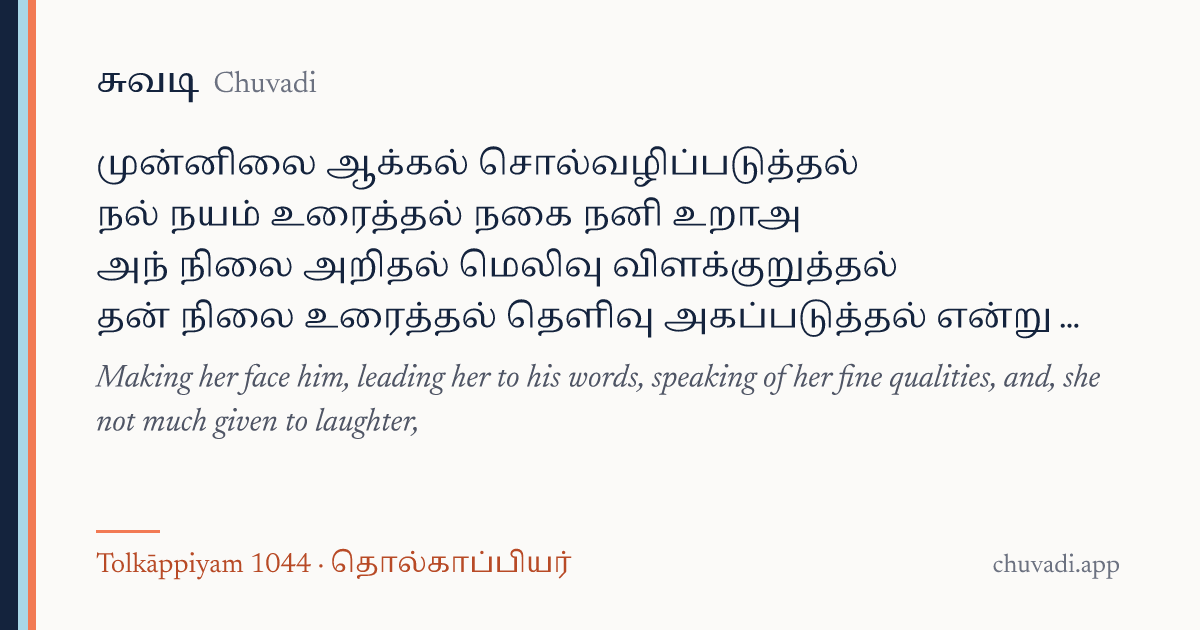
- Making her face him, leading her to his words,
- speaking of her fine qualities, and, she not much given to laughter,
- knowing that state of hers, making plain his own wasting,
- telling his own condition, winning her trust: thus
- such things take place, say the learned.
What the poem says
This nūṟpā lists the hero's steps as he approaches the heroine at the first meeting: muṉṉilai ākkal "bringing her face to face with him", that is, addressing her; colvaḻippaṭuttal "drawing her to respond to his words"; naṉṉayam uraittal "praising her fine beauty"; then perceiving her state, in which she does not laugh freely (a sign of her shyness and inner response); making plain how he wastes away for her; telling his own condition; and teḷivu akappaṭuttal "gaining her assurance", winning her confidence that he will not desert her.
The commentators treat these as moments in the natural union, each of which a poem may take as its occasion. The phrase nakai naṉi uṟā an nilai aṟital is compressed, and its construal (whose laughter, and what state is "known") is not fully certain; we follow the reading that the hero reads her restrained smile as consent.