



தொல்காப்பியம் 1046 · பொருள் 3.12
பாடல் · The poem
Tap a word to see where else it occurs.
பொருள் · Meaning in TamilAI
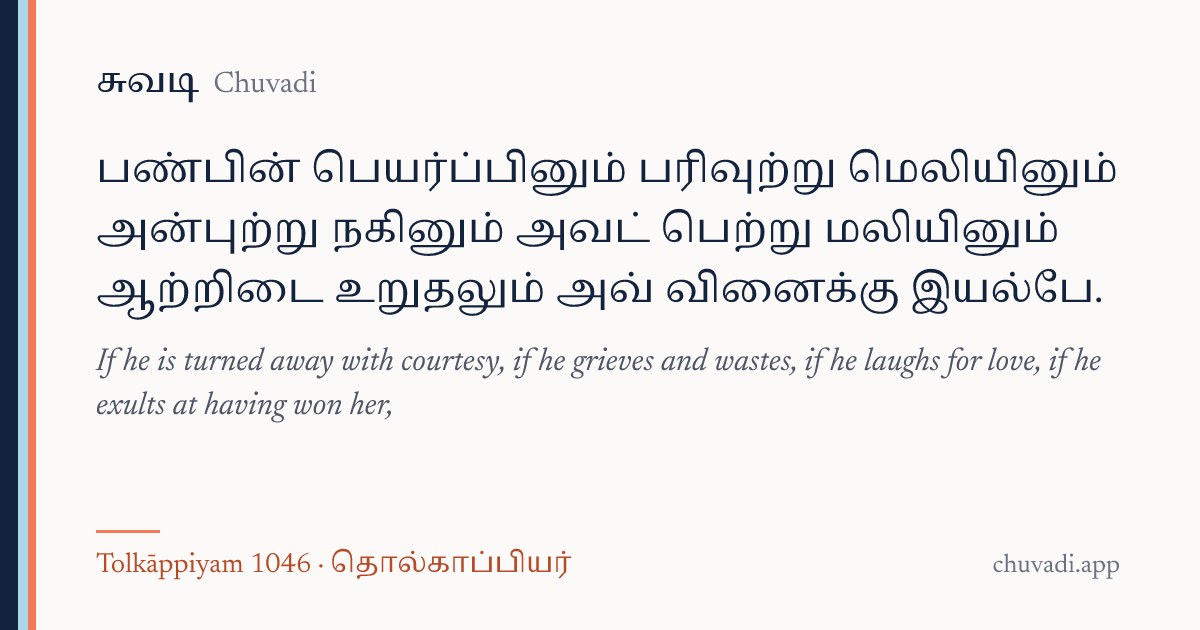
தோழி பண்போடு தலைவனைத் திருப்பி அனுப்பினாலும், அவன் வருந்தி மெலிந்தாலும், அன்பினால் நகைத்தாலும், தலைவியைப் பெற்று மகிழ்ந்தாலும், வழியில் வரும் துன்பங்களை எதிர்கொள்வதும் அந்தக் களவு ஒழுக்கத்துக்கு இயல்பானவையே.
இளம்பூரணர்
இவர் உரையும் இந்நூற்பாவுக்கு மேற்கூறிய பொருளையே தருவதாகக் கொள்ளலாம்; ஒவ்வொரு தொடருக்கும் இவர் கொள்ளும் எழுவாய் இங்குச் சரிபார்க்கப்படவில்லை.
நச்சினார்க்கினியர்
இவர் உரையும் இந்நூற்பாவுக்கு மேற்கூறிய பொருளையே தருவதாகக் கொள்ளலாம்; 'அவ்வினை' என்பதற்கு இவர் தரும் விளக்கம் இங்குச் சரிபார்க்கப்படவில்லை.
இது முந்தைய நூற்பாவில் வந்த தலைவன் கூற்றுகளைத் தொடர்வது என்று கொள்கிறோம். ஒவ்வொரு தொடருக்கும் எழுவாய் தலைவனா தோழியா என்பதும், "அவ்வினை" என்பது எதைக் குறிக்கிறது என்பதும் உறுதியாகச் சொல்ல முடியாதவை.
ஆங்கிலம் · English translationAI
Translation
- If he is turned away with courtesy, if he grieves and wastes,
- if he laughs for love, if he exults at having won her,
- suffering on the way, too, is natural to that undertaking.
What the poem says
This short nūṟpā adds further occasions for the hero's speech: when he is sent away by the friend in a gentle, courteous manner (paṇpiṉ peyarppu); when he grieves and grows thin; when, out of love, he laughs; when he rejoices at having gained the heroine; and when he meets hardship on the way (āṟṟiṭai uṟutal), the dangerous path he travels to the tryst.
The nūṟpā does not state its subjects, and "that undertaking" (a viṉai) is not named; we follow the reading that it continues the hero's situations of the preceding nūṟpā and refers to the course of secret love. Who is the subject of each clause (hero or friend) is open to more than one reading, and the sense here is offered with some hesitation.