



தொல்காப்பியம் 1050 · பொருள் 3.16
பாடல் · The poem
Tap a word to see where else it occurs.
பொருள் · Meaning in TamilAI
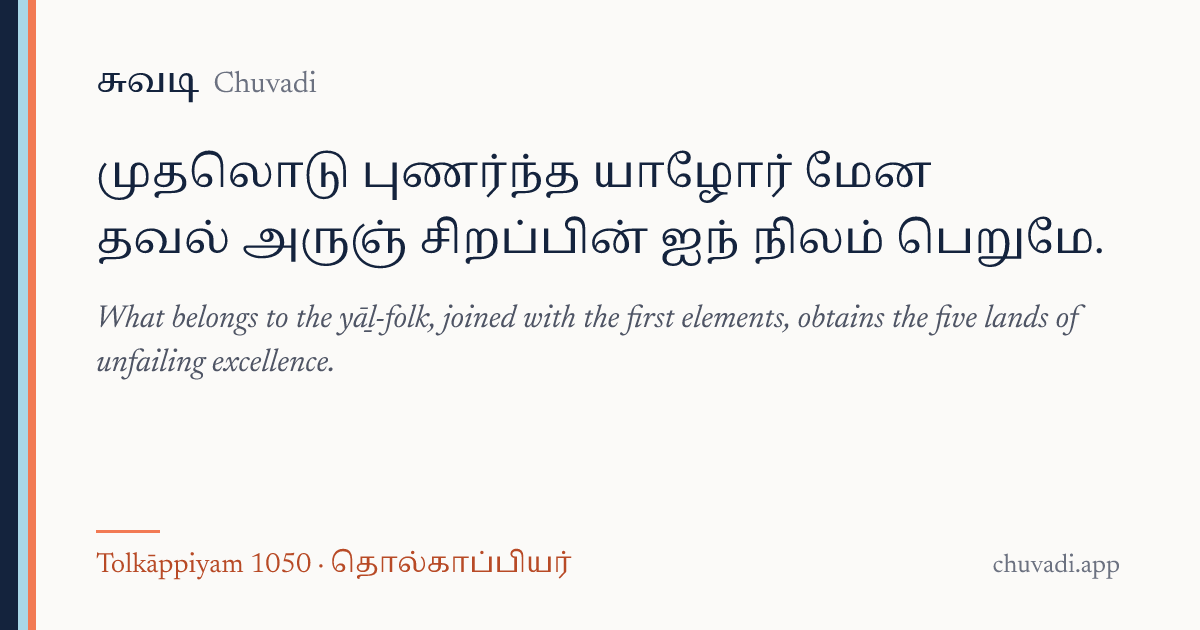
யாழோர் எனப்படும் கந்தருவ மணத்தின் இயல்புடைய களவு, முதற்பொருளாகிய நிலத்தோடும் பொழுதோடும் கூடி, குறிஞ்சி, முல்லை, மருதம், நெய்தல், பாலை என்னும் சிறப்புக் குன்றாத ஐந்து நிலங்களையும் பெறும்.
இளம்பூரணர்
இவர் கந்தருவ மணத்தை ஒத்த களவு முதற்பொருளாகிய நிலத்தோடும் பொழுதோடும் கூடி ஐந்திணைக்கும் உரியதாகும் எனப் பொருள் கொள்வார்.
நச்சினார்க்கினியர்
இவரும் எட்டு மணங்களுள் யாழோர் மணத்தை ஒத்த களவு மட்டுமே ஐந்திணைக்கு உரியது எனக் கொண்டு, 'முதல்' என்பதை அகத்திணையியலில் கூறிய முதற்பொருளாக விளக்குவார்.
எட்டு மணங்களுள் ஏழு கைக்கிளைக்கும் பெருந்திணைக்கும் சென்றன; கந்தருவம் மட்டும் ஐந்திணைக்கு உரியது என்பது கருத்து. "முதல்" என்பது அகத்திணையியலில் கூறிய முதற்பொருள் என உரையாசிரியர்கள் கொள்வர்.
ஆங்கிலம் · English translationAI
Translation
- What belongs to the yāḻ-folk, joined with the first elements,
- obtains the five lands of unfailing excellence.
What the poem says
The gāndharva kind of union ("of the yāḻ-folk", see tol.1035), being joined with mutal, the "first things" of a poem, namely land and time, takes all five lands: kuṟiñci, mullai, marutam, neytal and pālai. That is, the five tiṇai of mutual love are the domain of this form, while the other seven forms went to kaikkiḷai and peruntiṇai.
The phrase "of unfailing excellence" (tavalaruñ ciṟappu) marks the five tiṇai as the best and central part of akam poetry. The commentators read "mutal" here in its technical sense of mutaṟporuḷ, the setting of place and season defined in Akattiṇaiyiyal.