



தொல்காப்பியம் 1059 · பொருள் 3.25
பாடல் · The poem
Tap a word to see where else it occurs.
பொருள் · Meaning in TamilAI
களவு ஊரில் அலராகப் பரவியபோதும், காதல் மகளின் உடலில் வெளிப்பட்டபோதும், அது அளவுக்கு மிகுந்து தோன்றியபோதும், இருவரும் கூடியிருப்பதைக் கண்டபோதும், கட்டுவிச்சியும் கழங்கு பார்ப்பவனும் இது வெறி (தெய்வக் குற்றம்) என ஒத்துக் கூறிய நிலையிலும், வெறியாட்டு நடந்த பின்னும் மகளின் துயர் நீங்காதபோதும், காதல் மிகுதியால் அவள் கனவில் புலம்புதலும், தோழியை வினவுதலும், தெய்வத்தை வாழ்த்துதலும், உடன்போக்கை அறிந்த பின் தோழியோடு சேர்ந்து அதைக் கற்பின் வழியாக ஏற்று நிற்றலும், பிரிவின் பின் வருந்துதலும், மகளின் நெஞ்சுறுதியைக் காணுதலும், இரு குடும்பங்களின் நிலையை ஆராய்தலும் ஆகிய பதின்மூன்று கூற்றுகளும் இவை போன்ற பிறவும் செவிலித்தாய்க்கு உரியவை.
இளம்பூரணர்
இவர் களவு அலராதல், கட்டு, கழங்கு, வெறியாட்டு முதலியவை நிகழும் சூழல்களையும், உடன்போக்கில் சென்ற மகளைத் தேடும் நிலையையும் செவிலிக்குரிய கூற்றுகளாகக் கொண்டு பொருள் கொள்வார்.
நச்சினார்க்கினியர்
இவரும் இவற்றைச் செவிலி கூற்றுகளாகவே கொள்வார்; ஐந்தாம் அடிக்கு இவர் தரும் பொருள் இங்குச் சரிபார்க்கப்படவில்லை.
செவிலி என்பவள் தலைவியை வளர்த்த தாய்; பெற்ற தாயைவிட அவளுக்கு நெருக்கமானவள். உடன்போக்கில் சென்ற மகளைத் தேடிச் சுரத்தில் செல்லும் செவிலியின் புலம்பல்கள் இதற்குச் சான்றாக உரையாசிரியர்களால் காட்டப்படும். ஐந்தாம் அடியின் பொருள் உறுதியாகத் தெரியவில்லை.
ஆங்கிலம் · English translationAI
Translation
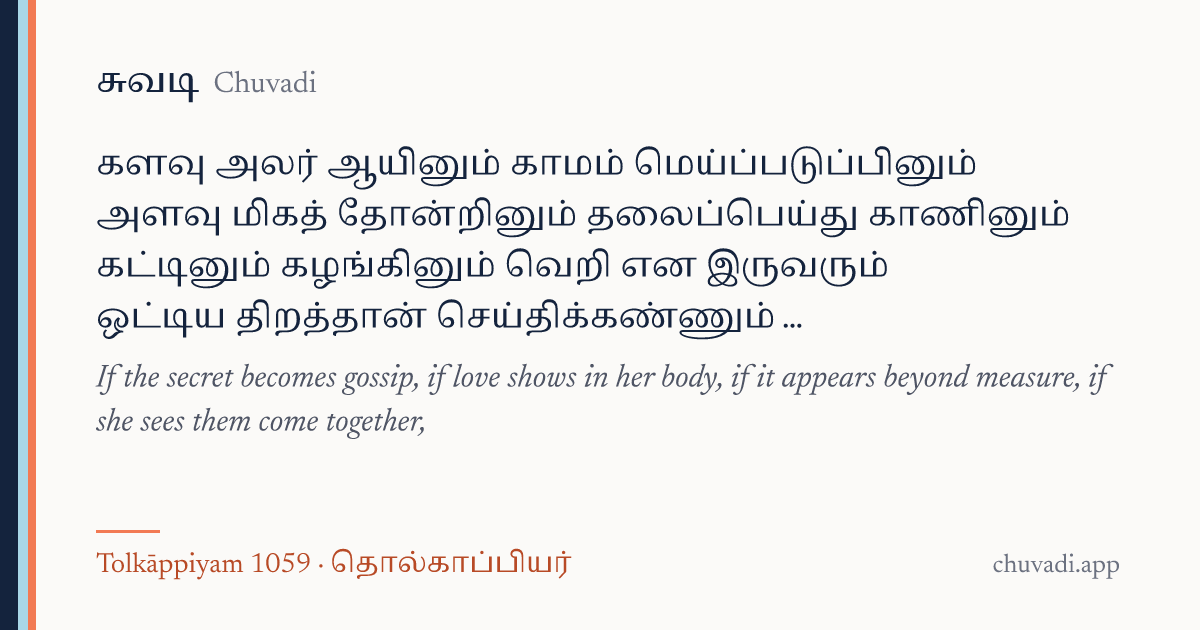
- If the secret becomes gossip, if love shows in her body,
- if it appears beyond measure, if she sees them come together,
- by the knotted cords and by the kaḻaṅku seeds, calling it veṟi, the two
- in the matter of what they did, in the way they agreed;
- if, when the dance has been held, distress still comes upon her;
- crying out in dreams as love overflows;
- questioning the friend, praising the deity;
- after learning of the elopement, joining with the friend
- in standing for the growth of wedded chastity;
- in what remains after the parting; if the daughter's heart is firm;
- in the nature of the matters of the two families:
- with thirteen utterances of these kinds
- and others like them, these belong to the foster-mother.
What the poem says
The situations of the cevili, the heroine's foster-mother or nurse, who in the poems is closer to her than the birth-mother. She speaks when the secret love has become gossip (alar); when love shows in the girl's body (pallor, thinness); when the signs become excessive; when she sees the lovers together; when diviners are consulted, the kaṭṭuvicci with her knotted strings (kaṭṭu) and the reader of kaḻaṅku (molucca) seeds, and the two agree that the girl is possessed and a veṟi dance to Murukaṉ is needed; when the dance is held and the girl still suffers; when the girl cries out in her dreams; when she questions the friend and prays to the god.
After the girl has eloped, the foster-mother, with the friend, accepts it as the way of kaṟpu; she grieves after the separation, notes the girl's firmness of heart, and considers the standing of the two families. These, with others, make thirteen. The commentators illustrate them with poems, especially the laments of the foster-mother who follows the eloped girl into the wilderness. The construal of line 5 is not certain to us.